
Industrial Fencing for Sports Facilities: Complete Guide & Key Considerations
Industrial fencing for sports facilities is one of the most important investments when it comes to protecting athletes, spectators, and property. Whether you’re overseeing a school field, recreational park, or a large stadium in the Chicago, Illinois area, the right fencing creates safe boundaries, deters trespassing, and keeps play zones secure. For property managers and homeowners new to these decisions, selecting the best type can feel overwhelming—what style matches the facility’s needs, how much maintenance is required, and which materials stand up to Chicagoland’s harsh winters? In this guide, we’ll break down the must-knows of industrial fencing for sports facilities, from safety and material trade-offs to realistic installation steps and long-term upkeep. Drawing on the expertise of Chicagoland Fence Pros, you’ll leave ready to ask the right questions, set expectations, and confidently take the next steps to secure your sports environment.
What Is Industrial Fencing for Sports Facilities?
Industrial fencing for sports facilities refers to robust boundary solutions designed to protect athletes, enforce property lines, enhance crowd control, and promote safety for recreational venues. Unlike standard residential fences, industrial-grade options emphasize durability, compliance with local codes, and adaptability to high-traffic, high-impact environments like football fields, tennis courts, skate parks, and more.
- Primary Purposes:
- Safety and injury prevention
- Perimeter security and access control
- Property protection against vandalism or trespassing
- Creating clear viewing lanes and wind barriers
Industrial fences for sports facilities must meet specific standards for height, mesh size, and strength, often regulated by local government or athletic associations. It’s important to check Chicago, Illinois regulations and consult with a professional installer before making any decisions.
Key Benefits of Industrial Fencing for Sports Facilities
The right fencing solution delivers crucial advantages for sports environments:
- Enhanced Safety: Prevents balls from leaving the play area, protects onlookers, and minimizes injury risks.
- Security: Deters unauthorized entry, vandalism, and theft, especially after hours.
- Aesthetics: Professional-looking enclosures boost community perception and can even enhance property value (see more community benefits).
- Compliance: Meets local safety standards and insurance requirements.
- Controlled Access: Helps manage the flow of players and spectators, reducing congestion or crowding.
For more on how fencing impacts property value and safety, see our guide on industrial fencing and property insurance impact.
Major Types of Industrial Fencing Used for Sports Facilities
Choosing the right fence starts with understanding the common options. The most prevalent types for sports settings include:
- Chain-Link Fencing
- Welded Wire Mesh Fencing
- Ornamental (Iron or Aluminum) Fencing
- Composite and Vinyl Fencing
- Specialized Backstop and Ball Containment Systems
Each type presents different trade-offs in cost, lifespan, maintenance, and aesthetics.
Chain-Link Fencing
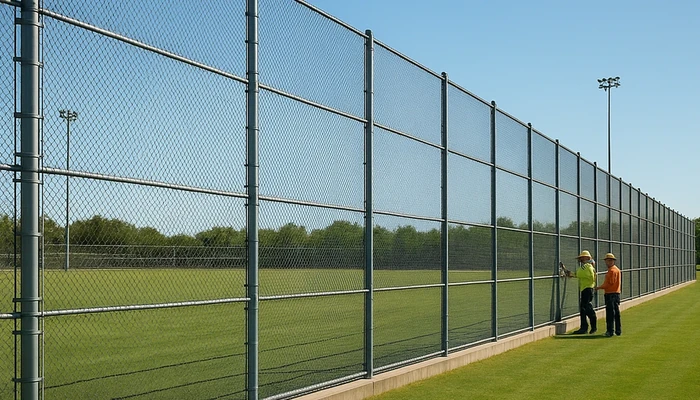
The classic choice for ballfields, tennis courts, and multi-use recreational areas. Chain-link is affordable, offers excellent visibility, and stands up to heavy impacts. Heights often range from 4 to 12 feet and mesh can be customized for different sports. Galvanized steel helps resist rust and Chicago winters.
- Pros: Durable, low cost, easy to repair
- Cons: Limited privacy; can look utilitarian unless coated
Learn more in our dedicated chain-link fencing guide.
Welded Wire Mesh Fencing
Offering higher rigidity than chain-link, welded wire mesh is used for facilities requiring a sleek look or increased security. Panels are often powder-coated to reduce corrosion. Good for soccer enclosures or as safety partitions in multi-sport complexes.
- Pros: Modern appearance, strong barriers, customizable
- Cons: Can be pricier; sometimes more difficult to repair
For panel options, visit our comprehensive industrial fencing panel guide.
Ornamental Iron and Aluminum Fencing
Ideal for facilities that want a refined appearance without sacrificing strength. These fences blend well with park aesthetics, public spaces, and entranceways, providing both security and architectural appeal.
- Pros: Attractive, long-lasting, low maintenance when coated
- Cons: Higher upfront cost; less ball containment than mesh options
Learn about design options in our commercial fence aesthetics guide.
Composite and Vinyl Fencing
For privacy around multi-use courts or storage areas, composite and vinyl fencing are durable, low-maintenance choices. They resist rot, won’t rust, and often come in various colors. However, they are generally not used for high-impact containment.
- Pros: Minimal upkeep, clean look, privacy
- Cons: Costly for large projects; less impact resistance than metal
Explore vinyl and composite options: Vinyl fencing | Composite fencing
Specialized Fencing & Ball Containment Systems
Sports with unique requirements, like baseball backstops or high-flight netting for golf, may require custom-designed solutions. These often combine mesh, padding, or netting with traditional posts for added performance and safety.
Comparison Table: Sports Facility Fence Types
| Type | Cost | Durability | Maintenance | Appearance | Best For |
|---|---|---|---|---|---|
| Chain-link | Low | High | Low | Basic/Utilitarian | Fields, courts |
| Welded wire | Medium | Very High | Low | Modern/Sleek | Multi-sport, high-sec |
| Ornamental | High | High | Very Low | Decorative | Entrances, parks |
| Composite/Vinyl | High | Medium | Very Low | Private/Modern | Storage, multi-use |
Key Considerations Before Choosing Industrial Fencing
Every sports facility faces its own set of priorities. Before selecting a system, consider:
- Intended Use: What sports will be played? Will ball containment or privacy be the focus?
- Frequency of Use: High-traffic venues benefit from heavier-duty materials.
- Climate Conditions: Chicago’s freeze-thaw cycles, snow load, and humidity impact materials differently.
- Local Codes & Association Rules: Chicago, Illinois requires permits and certain safety standards; always check with regulatory bodies.
- Budget: Upfront costs vary, but so do maintenance and repair expenses over time.
- Accessibility: Consider gates for emergency access, maintenance equipment, and crowd flow.
For a checklist of factors to consider, read this installation planning resource.
Understanding Local Codes and Safety Regulations
In Chicago, Illinois and most regions, fencing around sports facilities must comply with local ordinances and possibly additional athletic or insurance requirements.
- Height limits often range from 6 to 12 feet, depending on the sport
- Gate requirements for emergency and ADA accessibility
- Mesh size specifications for certain sports (e.g., tennis vs. baseball)
Always consult current regulations or work with an experienced contractor. For more on fence regulations, see our legal guide.
Installation Process: What to Expect
The installation of industrial fencing for sports facilities typically follows these steps:
- Site Assessment: Measure the area, evaluate terrain, soil, drainage, and layout the boundaries.
- Planning and Permits: Secure necessary permissions, mark underground utilities, and create a timeline.
- Material Delivery & Preparation: Select appropriate materials resistant to local weather.
- Installation: Post setting and fence assembly—timing depends on size and complexity.
- Final Inspection: Ensure all codes are met and the fence is secure, straight, and functional.
For a deeper dive into industrial fence installation, refer to our expectations guide.
Maintenance and Longevity: What to Plan For
No fence is maintenance-free, especially in climates like Chicago’s. Here’s what to expect to keep your investment in top shape:
Routine Upkeep
- Check for damage after severe weather
- Tighten loose bolts or fasteners
- Lubricate gate hinges
- Remove debris, leaves, and snow to prevent corrosion
Material-Specific Tips
- Chain-link: Inspect mesh for rust, reapply protective coatings as needed
- Welded wire panels: Watch for bends; touch up powder coatings
- Ornamental iron/aluminum: Clean periodically; repair scratches to prevent rust
- Vinyl/composite: Power wash occasionally; check connections
Read more about long-term fence care in our article on commercial fence maintenance.
Safety, Security, and Perimeter Protection
Fencing not only separates the play area but also acts as a barrier against unauthorized access and unsafe conditions. Features like anti-climb mesh, secure locking hardware, and post padding (for collision zones) add important layers of protection. For facilities requiring higher security, consult our perimeter security with fencing panels article or look into integrating security systems directly with your fence.
Enhancing Aesthetics and Curb Appeal
A well-designed fence can boost the overall impression of your sports facility. Options such as powder-coated posts, custom colors, and integrated landscaping help create a welcoming yet secure environment. Check our guide to stylish commercial fencing solutions for more ideas.
Realistic Cost Expectations
Budgeting for industrial fencing means planning for more than just materials. Typical costs include:
- Materials (type, finish, height)
- Professional installation
- Permits and site prep
- Ongoing maintenance
Prices vary by design complexity, labor rates, and site conditions (e.g., rocky soils in certain Chicago suburbs may require additional work). Always request a detailed quote before proceeding. For advice on estimating project costs, see our detailed installation analysis.
Common Mistakes to Avoid
- Not consulting local codes or athletic guidelines before building
- Choosing the wrong fencing material for the sport or climate
- Skipping site assessments or ignoring drainage issues
- Trying to DIY large, industrial-scale projects (safety and compliance risks!)
- Neglecting regular inspections—which can lead to costly repairs later
Consulting with a fence specialist, like those at Chicagoland Fence Pros, can help you sidestep these pitfalls.
Making Your Decision: Checklist for Sports Facility Managers
- Confirm your facility’s primary use and sports played
- Set a realistic budget (materials, labor, maintenance)
- Check Chicago, Illinois regulations and permit steps
- Consider the environment: snow, freeze-thaw cycles, rain
- Think about aesthetics and neighboring property context
- Request quotes and installation timelines from qualified contractors
- Plan for regular maintenance, including off-season checks
For personalized recommendations, contact Chicagoland Fence Pros and get expert guidance on matching your needs to the right solution.
FAQ: Industrial Fencing for Sports Facilities
- 1. What is the best fencing for a school sports field?
Chain-link fencing is the most common choice for school sports fields due to its durability, cost-effectiveness, and safety. However, welded wire mesh or ornamental fencing may be chosen for upgraded aesthetics or special sports requirements. Always confirm with local safety guidelines and school administrators.
- 2. How high should industrial fencing be for sports facilities?
Heights vary by sport and local code, but 8–12 feet is typical for ballfields. Tennis courts often require 10–12 feet for proper containment. Check with Chicago, Illinois officials for current regulations.
- 3. How often does sports facility fencing need maintenance?
Inspections after each season or severe weather event are recommended. Preventive upkeep, like tightening bolts or touching up coatings, can extend the lifespan by many years.
- 4. Can fencing improve the appearance of my facility?
Yes. Modern powder-coated metals, custom designs, and integration with landscaping can greatly enhance a facility’s curb appeal while ensuring safety and security.
- 5. What permits are needed for installing sports facility fencing in Chicago?
Typically, permits are required for any new commercial fence installation. Check local Chicago ordinances and consult a licensed contractor to handle the paperwork properly.
- 6. Is there a fencing type that requires the least maintenance?
Vinyl and powder-coated aluminum require the least regular care, but all industrial fences should be inspected for safety and function annually.
- 7. Can recycled or eco-friendly materials be used?
Some composite and metal fences incorporate recycled content. Eco-friendly options are available and can be discussed with your contractor for specific recommendations.
- 8. How do I budget for unexpected repairs?
Reserve 5–15% of the initial installation cost annually for repair and upkeep, factoring in Chicago’s climate variability.
- 9. When is professional installation required?
For most industrial-scale projects, professional installation ensures code compliance, longevity, and optimal safety—especially in public-access sports settings.
- 10. Where can I find more resources or request a consultation?
Read more on our comprehensive industrial fencing guide, or contact Chicagoland Fence Pros for expert help.
Conclusion: Next Steps in Choosing Industrial Fencing
Industrial fencing for sports facilities is crucial for safety, security, and successful operations, especially in challenging regions like Chicago, Illinois. The best systems balance durability, compliance, maintenance, and design. Review your facility’s needs, set realistic budgets, and do not overlook local codes or seasonal maintenance. Ready to take the next step? Request a sports facility fence estimate today, or read more resources on our info hub to make informed decisions for your property.
For expert installation support, product selection, and answers to additional questions, contact Chicagoland Fence Pros. Our team is committed to transparency, clear communication, and providing code-compliant, durable fencing for every sports facility.
—
About Chicagoland Fence Pros
Chicagoland Fence Pros is a trusted local fence company with over 15 years of experience serving homeowners and businesses in Chicago, Illinois and nearby communities. Our specialists bring hands-on expertise in installing, repairing, and maintaining industrial and commercial fencing—from chain-link and ornamental iron to advanced security systems. We emphasize honesty, code compliance, and long-term durability on residential and commercial projects of all sizes. Our team is fully insured and dedicated to helping clients meet their safety, security, and aesthetic goals for every sports facility project.
fence companies in chicago, chicago Industrial Fence Contractors, Best Industrial fence Company Chicago, fence commercial Grayslake, warehouse fence Spring Grove, business fence Gilberts, industrial fence North Edgebrook, business fence Mokena, security fencing North Park, commercial security fence Bedford Park