
Stylish and Functional Commercial Fencing Solutions: A Complete Guide
Choosing the right fencing for your commercial property often feels overwhelming. There’s more at stake than just marking a boundary—safety, privacy, compliance, and the lasting impression your property gives all hang in the balance. As a property manager or first-time buyer in the Chicago, Illinois area, you might wonder: Which fence type truly fits your property’s needs and budget? Which material will withstand Midwest weather and urban challenges? And do you have to sacrifice style for security?
This comprehensive guide addresses these questions and more, equipping you with practical knowledge about stylish and functional commercial fencing solutions. We’ll break down the leading options, compare features, discuss materials, review essential codes and maintenance realities, and explore how your choices can enhance both security and curb appeal. By the end, you’ll feel confident navigating the world of commercial fencing with a clear understanding of your options—informed by the real experience of Chicagoland Fence Pros.
Why Commercial Fencing Matters
Commercial fences serve more than one purpose. They help:
- Protect assets and control access
- Define clear property boundaries
- Comply with local codes and insurance requirements
- Enhance privacy and reduce disturbances
- Boost curb appeal, projecting a professional image
In cities like Chicago, Illinois, extreme weather, high foot traffic, and safety regulations add complexities. A well-chosen fence is an investment in security, compliance, and a positive public impression.
Overview: Popular Types of Commercial Fencing
| Fence Type | Strengths | Drawbacks | Best For |
|---|---|---|---|
| Chain Link | Durable, cost-effective, secure | Limited aesthetics, less privacy | Warehouses, schools, factories |
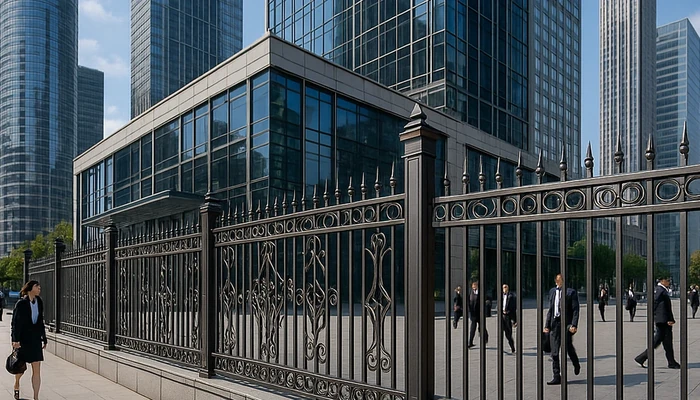
| Ornamental Iron/Aluminum | Elegant, strong, customizable | Higher cost, moderate privacy | Corporate, retail, institutions |
| Vinyl | Low maintenance, versatile, clean appearance | Mid-to-high cost, vulnerable to impact | Offices, healthcare, multifamily |
| Composite | Modern look, high privacy, eco-friendly | Higher initial cost | Urban properties, upscale businesses |
| Wood | Natural appeal, customizable | Maintenance-intensive, less durable | Creative campuses, storefronts |
| Steel/Welded Wire | Maximum security, durable | Industrial look, high price | Banks, utility, data centers |
For a side-by-side view of how major fencing types compare in different sectors, you can see our detailed comparison guide for industries.
Balancing Security, Privacy, and Style
Every commercial fence must strike a balance between safety, privacy, and appearance. Here’s how:
- Security: Look for fence heights of 6+ feet, anti-climb designs, and options to add barbed wire or security gates.
- Privacy: Solid or semi-solid panels block views—composite, wood, and certain vinyl styles excel here.
- Aesthetics: Ornamental iron, decorative aluminum, or well-designed composite/vinyl can boost curb appeal without sacrificing function.
It’s possible to get security and style in one package—just expect some trade-offs depending on your budget and site constraints. You can read more about how fencing improves aesthetics in our curb appeal post.
Materials: Pros, Cons and New Innovations
Material choice affects not just initial cost, but lifespan and maintenance needs. Here’s what to consider:
- Galvanized Steel: Highly durable and rust-resistant (see zinc’s role in fencing for corrosion protection). Best for security but more industrial in appearance.
- Aluminum: Won’t rust, lightweight, powder-coated for color. Great for elegant designs but less robust than steel.
- Vinyl: Resists weathering and needs little upkeep. Limited in high-impact areas.
- Composite: Environmentally friendly, combines recycled wood/plastic, extremely durable—ideal for those seeking both privacy and eco-conscious options.
- Wood: Traditional look, customizable, but needs regular sealing or painting in Chicago’s climate.
For maximum longevity, adherence to coating and fabrication standards is key. Reference industry standards when choosing or specifying security features.
Understanding Design and Functionality
Success lies in combining the right materials, design, and professional installation. Ask yourself:
- Does the fence layout support traffic control and emergency access?
- Are gates, latches, and opening mechanisms appropriate for daily use and weather?
- What’s the impact on sight lines, brand impression, and neighboring properties?
Modern fencing can feature modular panels, integrated bollards, or decorative elements that reflect your property’s unique character. For high-traffic or industrial settings, see our guide to industrial fencing solutions.
Legal & Code Considerations in Chicago, Illinois
Every city—including Chicago—requires commercial fencing to meet building and zoning regulations. Typical requirements include:
- Height limits and approved materials by district
- Setback rules from lots, sidewalks, and utilities
- Visibility (“clear view”) near intersections
- Insurance and ADA compliance for businesses with public access
Always check local guidelines and consult with a licensed professional like Chicagoland Fence Pros. For code-compliant privacy or security solutions, you can request an estimate and get advice tailored to your site.
Maintenance Realities: What to Expect
A fence is only as good as its upkeep. Expect:
- Steel/Iron: Annual inspection for rust; repaint or touch up as needed
- Vinyl & Composite: Wash annually; check for cracks or warping after winter
- Wood: Sealing or painting every 2–3 years; monitor for rot or insect issues
- Hardware: Inspect and lubricate hinges, latches, and security hardware
For detailed tips on maximizing the life of your investment, review our fence maintenance guide.
Integrating Security Features: Gates, Automation, and More
Security isn’t just about the fence panels—the gate system matters just as much. Options include:
- Manual & automatic gates with access controls or remote operation
- Bollards for traffic control (see iron bollard solutions)
- Integration with alarms and security cameras for maximum deterrence (more about integrating fences with security systems)
Advanced features like anti-ram barriers, decorative spikes, and sensor-mounting options can provide a tailored layer of safety for sensitive sites.
Cost Factors and Budget Planning
Commercial fence costs depend on:
- Material type and finish (e.g., galvanized or powder-coated, custom colors)
- Fence length, height, and site accessibility
- Number and type of gates
- Required security or automation features
Initial price isn’t the only consideration. Factor in:
- Lifetime maintenance
- Repair risk due to heavy Chicago-area winters
- Replacement intervals (wood and chain link shorter than composite or coated steel)
For a deeper dive into cost planning, view our installation expectations article. Always request a transparent quote—with no hidden fees—and clarify what’s included before signing any contract.
Eco-Friendly and Sustainable Options
More businesses are seeking fencing solutions that go easy on the planet. Modern options include:
- Fences made from recycled composite or sustainably harvested woods
- Low-VOC and powder-coated finishes
- Reuse of existing posts or concrete footings where possible
Sustainability can influence not only your company reputation but eligibility for certain “green” certifications. Our post on sustainable choices explains more.
Case Studies: Real-World Applications
Urban Office Campus
When a technology firm in downtown Chicago upgraded its perimeter, it chose a combination of decorative aluminum panels and automated sliding gates. The result: a design that echoed their modern brand while keeping access points secure.
Multi-Tenant Retail Plaza
Semi-private vinyl panel fencing defined boundaries, shielded loading areas from street view, and allowed for quick graffiti cleaning—balancing aesthetics and function for property managers.
Industrial Warehouse
Robust galvanized chain link, topped with privacy slats and a card-access motorized gate, met the client’s insurance requirements and eliminated trespassing risk.
To see more examples or request tailored recommendations, contact our team.
Checklist: Planning for Success
- Identify site objectives (security, privacy, appearance, compliance)
- Set a realistic budget—including future maintenance
- Choose materials and styles suited to Chicago’s climate
- Review zoning and code requirements; seek permits early
- Balance security needs with design and welcoming appearance
- Consider integration with security and access control systems
- Work with experienced, code-compliant contractors
For further insights, check our pre-installation checklist.
Frequently Asked Questions (FAQ)
What is the most secure type of commercial fencing?
Welded steel mesh and anti-climb chain link are among the most secure, especially when topped with deterrents like barbed wire. Integration with security gates enhances protection. For specialized sites, see perimeter security panel options.
How do weather and climate in Chicago affect fence choice?
Winters in Chicago, Illinois are harsh. Choose materials resistant to freeze-thaw cycles, moisture, and salt exposure—galvanized and powder-coated metals, vinyl, and composite rank highly. Regular inspections after winter help increase lifespan.
Can commercial fences be both private and decorative?
Yes—composite, vinyl, and wood fences can offer solid panels for privacy while allowing extensive customization for style. Ornamental metal fences can also include privacy inserts or landscaping to improve screening.
Is professional installation necessary, or can I DIY?
While small projects are possible for handy owners, most commercial fencing (especially involving automation, security, or code compliance) is best left to specialists like Chicagoland Fence Pros to ensure safety and long-term value.
How often does commercial fencing need maintenance?
Annual checks are smart for all types—inspect for rust, rot, hardware wear, and impact damage. Material choice and exposure determine the actual maintenance workload. Learn specifics in our maintenance guide.
Are permits required for commercial fencing in Chicago?
Usually, yes. Permit needs depend on fence height, location, and material. Always review city codes or consult with local experts before breaking ground to avoid costly setbacks. Chicagoland Fence Pros helps clients navigate permitting and inspections.
How do automation and security system integration work?
Access control can include automatic gates, cameras, badge access, or smartphone entry. Integration may require electrical work—best coordinated with your fence contractor and security provider. For more on this process, check our security integration article.
What should I expect from a fencing quote?
Expect clear details on materials, lengths, numbers of gates, finishes, warranty, and the scope of work. Chicagoland Fence Pros always provides transparent, itemized quotes—no hidden fees.
Do eco-friendly commercial fencing options really last?
High-quality composite and recycled-material fences offer performance rivaling traditional options, with less maintenance and better resistance to rot or insects. Ensure products meet recognized industry standards for durability. See approaches in our sustainability guide.
Conclusion and Next Steps
Commercial fences are more than just barriers—they are multi-functional investments supporting security, privacy, aesthetics, and compliance. The right choice depends on your site’s unique needs, your desired image, and long-term value calculations. In the Chicago, Illinois area, your fence must withstand tough winters, meet local regulations, and convey the right impression.
For clear, honest recommendations and code-compliant installations tailored to your needs, reach out to our experts. You can request a commercial fencing estimate today, or learn more about Chicagoland Fence Pros and our solutions.
Remember to check local rules, consider total ownership cost, and choose both style and function—the right fence does it all.
About Chicagoland Fence Pros
Chicagoland Fence Pros is a trusted fence company with over 15 years of experience serving homeowners and businesses in Chicago, Illinois and surrounding communities. Known for durable, code-compliant and aesthetically pleasing installations, our team specializes in wood, vinyl, aluminum, steel, and custom commercial projects. Fully insured and deeply familiar with local building codes, Chicagoland Fence Pros focuses on education, transparency, and finding the right solution for your needs.
fence company in the city of chicago, commercial fencing, commercial fence, business fencing North Edgebrook, commercial fence repair Zion, security fencing Bartlett, commercial security fence Bedford Park, commercial fence Evanston, warehouse fence Lakeview, commercial fence Lincolnwood