
Enhancing Perimeter Security with Industrial Fencing Panels: Mistakes, Choices, and What Chicago Property Owners Need to Know
Property protection isn’t just about locking doors—it begins at the boundary. Enhancing perimeter security with industrial fencing panels is a common priority for homeowners and property managers, yet the options and decisions can seem overwhelming. From choosing materials to weighing costs, safety, and aesthetics, the stakes are high: the right fence means peace of mind, while missteps can mean wasted money and ongoing worry.
As specialists with years of local experience, Chicagoland Fence Pros has seen firsthand the difference a well-chosen fence makes in both residential and commercial applications. In this thorough, practical guide, you’ll learn what industrial fencing panels are, critical choices and trade-offs, maintenance realities, legal and code considerations, and how to set realistic expectations from your perimeter security investment. By the end, you’ll confidently understand your options—and know when to call in Chicago professionals for guidance.
Understanding Perimeter Security: Why Industrial Fencing Panels Matter
Perimeter security is the foundational layer for protecting properties from unauthorized access, theft, and vandalism. In the Chicago, Illinois area, where varying weather, urban density, and evolving property codes create specific demands, a robust fence does more than indicate a boundary: it’s a first defense against intrusion and provides psychological deterrence.
Industrial fencing panels differ from typical residential fences by offering:
- Enhanced strength and durability to withstand both environmental and human threats
- Advanced anti-climb and anti-cut features
- Longer lifespan and reduced need for frequent repairs under Midwest conditions
- Flexibility to combine privacy and aesthetics with core security needs
The right panel system can also integrate with monitoring, lighting, and secure entry systems, creating a holistic security perimeter.
Types of Industrial Fencing Panels
Not all industrial fencing is created equal. Here are the most common types property owners and managers should consider, based on their distinct strengths:
| Type | Best For | Security Level | Maintenance | Lifespan |
|---|---|---|---|---|
| Chain Link Panels (with enhancements) | Warehouses, utilities, multi-use properties | Medium-High (with barbed wire, privacy slats) | Low | 15–25 years |
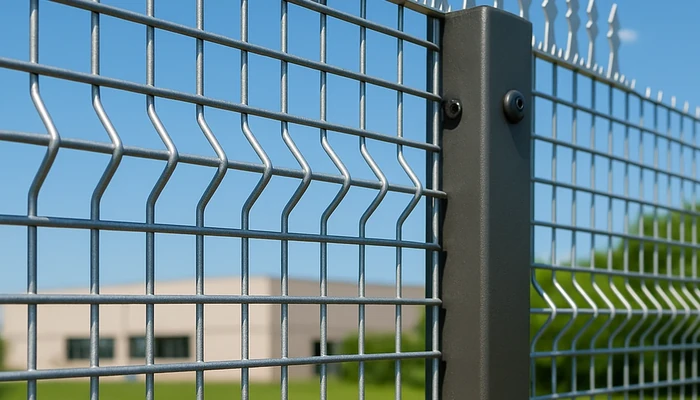
| Welded Wire Mesh Panels | Distribution centers, schools, transit sites | High | Low-Medium | 20–30 years |
| Steel Palisade Panels | High-security, government, critical assets | Very High | Low | 30+ years |
| Ornamental Iron & Aluminum Panels | Commercial, schools, upscale businesses | Medium-High (with security toppers) | Medium | 20–50 years |
| Composite Privacy Panels | Mixed-use, HOA-compliant, aesthetics prioritized | Medium | Low | 25–35 years |
Choosing among these depends on the site’s risk profile, maintenance capacity, desired lifespan, and of course, budget. For a deeper dive into the technical specifications and performance differences, see our Industrial Fencing Panels: A Comprehensive Guide.
Key Features to Look for in Security-Focused Panels
Some deciding factors can make all the difference in real-world security:
- Anti-Climb Designs: Look for narrow gauge meshes, curved or spiked toppers, or tightly spaced pickets. Welded wire and palisade are top performers.
- Anti-Cut Attributes: Thicker gauge wire, reinforced frames, and security fasteners resist tampering.
- Height and Visibility: Typically, higher fences (8’+) deter most intruders, though some codes and HOAs may restrict maximum height.
- Integration: Options for security gates, bollards, lighting or monitoring systems.
For more technical details on features, see our Features of Industrial Fences.
Materials Comparison: Pros, Cons, and Chicago Weather Realities
Chicago’s freeze-thaw cycles, humidity, and urban grime make material choice crucial. Here’s an honest breakdown:
- Galvanized Steel: Extremely durable, strong. Needs professional installation. Vulnerable to eventual rust if coating is damaged.
- Powder-Coated Iron: Offers aesthetics and strength. Requires periodic re-coating to prevent corrosion, but excellent for longevity when maintained.
- Aluminum: Lightweight, rust-resistant. Lower security than steel but sufficient for most commercial/residential uses.
- Composite: Eco-friendly option, withstands moisture. Prioritizes privacy and visual appeal over top-level security.
- Vinyl-Coated Wire: Increases weather protection; can be less durable if low quality.
Always check if chosen panels meet ASTM standards or relevant local codes. For more, review the Aluminum Extruders Council’s specification guide on recognized material standards.
Curtailing Common Mistakes When Selecting Industrial Fencing Panels
After years of fence projects in Chicago, Chicagoland Fence Pros has identified several pitfalls property owners fall into:
- Prioritizing cost over purpose: Skimping upfront can mean higher replacement or repair costs down the road.
- Ignoring local zoning or HOA rules: Non-compliance leads to fines and forced removals.
- Underestimating maintenance: E.g., iron needs coating; chain link may require routine tension checks.
- Forgoing professional guidance: Complex sites may need custom solutions to avoid safety and liability risks.
Learn more about the decision process in Choosing Your Industrial Fencing Contractor.
Practical Installation Considerations: Site, Codes, and Workmanship
Every perimeter is unique: slopes, underground utilities, adjacent structures, and access needs all affect design and placement. Installation phases usually include:
- Site assessment and permits: Always verify local municipal or HOA requirements.
- Clearing and prep: Remove obstructions, identify utilities (call 811 Chicago utility locate).
- Professional installation: Ensure posts are set to depth and level, especially crucial in freeze-prone regions.
- Inspection: Confirm compliance and workmanship before sign-off.
As a responsible fence company, Chicagoland Fence Pros stresses the importance of code compliance at every step. For more on codes and what to expect, visit Legal Requirements for Commercial Fencing.
Cost Expectations: Upfront and Ongoing Investment
Costs can vary widely, but expect a quality industrial security panel project (materials and professional installation) to range from $40–$150 per linear foot, depending on height, material, and site complexity.
Don’t forget:
- Permit and inspection fees
- Custom fabrication or powder coating needs
- Periodic maintenance for longevity (especially Chicago winters!)
The right panel system is a long-term investment in property value and safety. For specifics by type and sector, compare with Comparison Of Commercial Fencing For Different Industries.
Maintaining Perimeter Security: Inspection and Upkeep
To maximize security, all fencing panels require periodic checks and care:
- Inspect for rust (steel or iron), cracks (composite), loose fasteners, or signs of cutting
- Trim vegetation to avoid concealment or damage
- Lubricate and inspect gates, locks, and hinges
- Reapply coatings or finishes as recommended by manufacturer
As always, severe damage or signs of sabotage should be handled by professionals. See Maintain Your Commercial Fence and Extend Its Life for best practices.
Integrating Fencing with Access Control and Security Systems
For many commercial and multifamily properties, fencing is only one layer. Top results come from integrating:
- Automatic gates and barrier arms
- Surveillance cameras or motion sensors
- Lighting for visibility and deterrence
- Alarmed entry points or monitoring systems
Discover practical integration approaches at Integrating Commercial Fences with Security Systems.
Checklist: Setting Realistic Expectations for Your Security Fence
- Clarify your site’s specific risks (vandalism, trespass, wildlife, etc.)
- Balance budget with long-term value
- Get multiple quotes with detailed breakdowns
- Confirm local permit/code demands
- Plan for routine maintenance and adjustment
- Consider professional help for complex installations or repairs
Reputable companies like Chicagoland Fence Pros provide transparent, itemized proposals and guidance tailored to your property.
Frequently Asked Questions (FAQs)
- What is the most secure type of industrial fencing panel?
Steel palisade and heavy-gauge welded wire mesh panels offer the highest security for most non-military and non-airport properties. The best choice also considers your site’s unique vulnerabilities.
- How can I make existing chain link fencing more secure?
Add privacy slats, barbed wire, or razor wire, and reinforce gates. For advanced needs, consider retrofitting anti-climb mesh or upgrading posts.
- Do industrial panels require much maintenance?
Most need minimal routine care: periodic inspections, debris removal, and fastener checks. Metal types may need coating touch-ups in harsh climates.
- Are permits required for industrial fencing in Chicago?
Yes, the City of Chicago and many suburbs require permits, especially for fences above 6 feet, those facing public ways, or near easements. Always check your municipality’s requirements before work begins.
- Is it possible to get both privacy and high security?
Yes! Composite panels and opaque PVC-coated mesh offer privacy, while palisade or heavy mesh focuses on pure security. Many combinations are possible.
- How do I choose between steel and aluminum panels?
Steel offers maximum strength for high-security needs, while aluminum excels for corrosion resistance and ease of handling in less-demanding applications.
- What about integrating access control or security cameras?
Most panel systems can be adapted for automation and surveillance. Plan system integration before installation for best results.
- How long does an industrial fence installation take?
For average projects, expect 1–2 weeks from site prep to completion; custom security enhancements or large/commercial sites may take longer. Factor in permit/inspection timelines.
- Will a new fence increase my property value?
Professionally installed security fencing can boost value by reassuring buyers/tenants and reducing liability—especially for businesses and multi-family properties.
- Who should I contact for a professional assessment?
Schedule an on-site evaluation with an experienced local provider like Chicagoland Fence Pros for an honest, detailed consultation and a transparent quote.
Conclusion: Taking the Next Step in Perimeter Security
Choosing the right industrial fencing panels is an essential part of safeguarding your property and people. By understanding the available options, materials, code requirements, and best practices for ongoing maintenance, you equip yourself to make decisions that protect your investment without regret.
If you’re still unsure which solution fits your needs, request a fence estimate for your Chicago area property or contact Chicagoland Fence Pros for expert, code-compliant advice. Discover even more on fence upgrades, security innovations, and local codes through our Industrial Fencing: A Comprehensive Guide.
About Chicagoland Fence Pros
Chicagoland Fence Pros is a professional fence company with over 15 years installing fences in the Chicago, Illinois area. We serve homeowners and businesses with a focus on security, privacy, and curb appeal. Our team specializes in wood, vinyl, aluminum, and steel fencing for residential and commercial projects, always ensuring licensed, insured, and code-compliant installations tailored to Midwest needs.
chicago fence companies, chicago Industrial Fence Contractors, Best Industrial fence Company Chicago, commercial fence Glencoe, fence commercial Winnetka, access control fence Schiller Park, commercial fence repair Norridge, commercial fence repair Oak Park, business fence Vernon Hills, industrial fence Lockport