 Skip to content
Automated Gate Solutions: The Future of Security Explained
In a world where property security and convenience are more important than ever, automated gate solutions are rapidly becoming the standard for homeowners and property managers seeking peace of mind. Whether you’re concerned about unauthorized access, want to streamline property entry, or are simply curious about modern security upgrades, understanding the future of automated gate solutions is crucial. This guide will equip you with everything you need to know: from system options and technological advancements, to costs, maintenance, and compliance tips—especially relevant for those in the Chicago, Illinois area. As fence experts with years of experience in both residential and commercial projects, Chicagoland Fence Pros is here to provide clear, honest insight into making the most informed security decision for your property.
What Are Automated Gate Solutions?
Automated gate solutions—also known as automatic, electric, or motorized gates—refer to property entrance gates that operate using powered mechanisms rather than manual labor. By integrating smart technologies, sensors, or remote access tools, these gates offer an advanced method for securing the perimeter of homes, apartment complexes, and business premises.
- Residential Use: Enhance privacy and peace of mind for families and guests.
- Commercial Applications: Secure parking lots, warehouses, and controlled sites.
Automated gates can come in various forms, such as swinging, sliding, and articulated gates, each suited to different property layouts and preferences.
Why Are Automated Gates the Future of Property Security?
The drive toward automated gate adoption is fueled by more than just convenience. With increasing safety concerns and technological advancements, property owners now expect security systems to do more. Automated gate solutions are evolving to:
- Allow flexible, programmable access control for multiple users.
- Integrate with video surveillance and alarm systems.
- Provide robust deterrents against unauthorized entry or theft.
- Accommodate smart home technologies and mobile control.
- Offer design choices that complement the property’s aesthetic.
In addition to upping your security game, these solutions can boost property value, meet insurance stipulations, and create a sophisticated first impression.
The Main Types of Automated Gates
Selecting the right automated gate for your property involves knowing what types are available. The ideal choice balances security needs, available space, code compliance, and preferred style.
Swing Gates
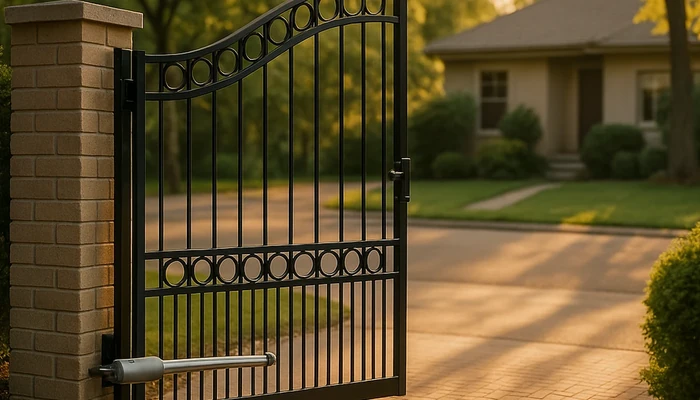
Swing gates operate on hinges, swinging inward or outward like traditional doors. They’re popular for residential properties due to their classic appearance and relatively straightforward installation. However, they require ample clearance and may not be ideal for sloped driveways or high-traffic commercial areas.
Sliding Gates
Sliding gates move horizontally along a track and use less forward/backward space. They are commonly chosen for commercial sites or properties with limited driveway depth. Sliding systems often require less maintenance in snowy climates but demand correctly leveled ground and periodic cleaning of the tracks.
Vertical Lift and Pivot Gates
These specialized systems are perfect for sites with minimal lateral space. The gate either lifts vertically or pivots to open, typically favored for industrial security or urban environments.
Bi-Fold and Telescopic Gates
Bi-fold gates fold in sections while opening, and telescopic gates ‘stack’ their panels. Both are engineered for restricted spaces, offering a combination of speed, security, and style.
| Gate Type | Best For | Space Needs | Typical Use |
|---|---|---|---|
| Swing | Residential | Large arc clearance | Driveways, gardens |
| Sliding | Residential/Commercial | Side space, flat terrain | Parking, lots |
| Vertical Lift/Pivot | Commercial/Industrial | Minimal | Compact, urban sites |
| Bi-Fold/Telescopic | Any | Very compact | Modern, custom designs |
Key Technologies Powering Modern Automated Gates
Rapid innovation is transforming automated gate systems. Modern solutions now include:
- Access Control Systems: Including keypads, intercoms, RFID cards, and smartphones.
- Smart Technology Integration: Gates compatible with home automation systems, security cameras, and alarm sensors.
- Remote Operation: Use of mobile apps, remotes, and wireless devices for convenient, off-site control.
- Safety Features: Obstacle detection, emergency manual release, photo-eye sensors, and battery backup.
- Sustainable Options: Solar-powered motors and energy-efficient mechanisms.
Staying up-to-date on these innovations is essential for anyone selecting a futureproof solution. Learn more about modern trends in automated gates to see what’s possible.
Materials: How Gate Material Affects Security and Longevity
Automated gates are available in several materials, each with specific strengths:
- Steel: Offers superior strength and resistance to impact, best for high-security areas.
- Aluminum: Lightweight, rust-resistant, and ideal for custom designs.
- Wrought Iron: Highly durable with an elegant appearance, but may require more maintenance in Midwestern climates.
- Wood: Provides natural warmth and privacy, but needs weatherproofing and regular care—especially in the Chicago, Illinois area.
- Composite: Blends low maintenance with the look of wood, a smart choice for many homeowners.
Material selection should reflect both your security goals and Chicago’s demanding weather. Explore wood fence solutions or wrought iron options here.
Design, Aesthetics and Customization Considerations
Your property’s gate is more than just a security tool—it’s also part of your curb appeal. Automated gate solutions allow for extensive customization:
- Modern, classic, or ornate styles to match your architecture.
- Powder coatings, custom colors, or decorative elements.
- Panel inserts for increased privacy or branding for businesses.
- Seamless integration with existing fencing and landscaping.
Review our guide to different automatic gate styles for privacy for inspiration.
Cost Factors: Investment and Value
The cost of automated gate solutions is shaped by several factors:
- Type (swing, sliding, lift, etc.) and size of the gate.
- Choice of materials.
- Level of technology and automation selected.
- Site conditions (terrain, existing structures, utilities).
- Installation complexity and electrical requirements.
On average, residential systems in Chicago, Illinois may range from several thousand to tens of thousands of dollars. Commercial installations can vary more widely. Remember, durability, security, and ongoing dependability are a key part of your return on investment. Always request a detailed, transparent quote—something Chicagoland Fence Pros is proud to provide.
Installation: Professional vs. DIY
While smaller DIY kits exist, professional installation is strongly recommended for automated gate systems, especially in climates like Chicago’s, which demand robust, code-compliant solutions. Professional installers will:
- Assess the property for optimal gate placement and safety.
- Ensure compliance with all city and HOA codes.
- Complete reliable power and control wiring.
- Calibrate safety systems and automation features.
Improper installation can lead to malfunction, voided warranties, and safety hazards. Learn the critical aspects of automated gate installation for more detail.
Maintenance and Longevity Tips
Proper maintenance extends life and reliability:
- Inspect hardware and moving parts regularly.
- Apply lubrication and clear tracks of debris.
- Replace worn sensors or controls as needed.
- Test safety features monthly (such as auto-reverse and photo-eyes).
- Address weather-related wear—Midwest winters can be tough on gates.
See our preventive maintenance tips for a longer-lasting solution. Most manufacturers recommend annual professional servicing.
Safety and Compliance: Meeting Local Codes
Safety is a non-negotiable element of automated gate solutions. All installations must:
- Comply with city and state safety standards.
- Include emergency manual releases accessible to residents and the fire department.
- Avoid pinch or crush points.
- Install signage and train users on proper operation.
Review safety standards for automatic gate installation and always check for code updates. For further reading, professional organizations such as DASMA regularly publish best practices and standards for automated gate safety.
Integrating Modern Access Control
Today’s gate systems can offer more than just ‘open’ and ‘close’. Access control devices can:
- Program unique codes or credentials for different users or delivery services.
- Log entry and exit events for detailed records.
- Integrate with smart home or building management platforms.
Understand more about access control strategies for commercial fencing to keep your property secure and efficient.
Environmental and Sustainable Innovations
Many property owners are seeking eco-friendly automated solutions. Options now include:
- Solar-powered gate motors to reduce electricity use.
- Recyclable or sustainably-sourced gate materials.
- Low-power standby modes for energy efficiency.
See our article on the environmental benefits of automatic gates and solar-powered gate systems for more guidance.
Legal Considerations for Automated Gates
Proper permitting and compliance protect both your investment and community safety. Important legal steps include:
- Securing building permits specific to automated gate systems.
- Ensuring installations meet zoning and accessibility requirements.
- Documenting safety devices and regular inspection routines.
For a detailed look, see our primer on legal aspects of automatic gate installation in Chicago, Illinois.
Realistic Expectations: The Pros and Trade-Offs
- Pros: Enhanced security, convenience, property value, and design flexibility.
- Trade-Offs: Upfront investment, power requirements, periodic maintenance, and the need to stay current with technology and regulations.
Automated gate solutions are not “set and forget”—ongoing care is needed, especially where tough weather and city codes apply.
Frequently Asked Questions
What are the critical safety features I should look for in automated gates?
Key safety features include auto-reversing sensors, manual release mechanisms, photo-eye detection, and clearly labeled emergency controls. These help prevent accidents and are often required by local code.
Can I retrofit my existing manual gate with automation?
Yes, many gates can be automated if structurally sound and compatible with available motor kits. However, your installer should evaluate compliance with safety standards and electrical codes first.
How does winter weather in Chicago affect automated gates?
Snow, ice, and freezing temperatures can challenge gate motors and tracks. Choose weather-rated components, keep mechanisms clean, and consider heaters or weather hoods for exposed systems.
How do I choose between swing and sliding gates?
Base your decision on available space, terrain, intended traffic, and local codes. Sliding gates are best for limited front-to-back clearance; swing gates suit wider, flat, open driveways.
Are automated gates vulnerable to hacking?
Most reputable systems employ encrypted protocols, but like any smart device, regular software updates and secure passwords are a must. Choose systems from trusted manufacturers and stay vigilant.
What maintenance does my automated gate system need?
Regular visual inspection, lubrication, safety sensor testing, track/domestic cleaning (for sliding gates), and scheduled annual professional servicing are recommended.
How long does an automated gate system last?
With proper installation and preventive care, automated gate systems can last 10–20 years or more. Material choice and exposure to weather are key longevity factors.
Does my HOA or city require special permits for automated gates?
Most areas—including Chicago, Illinois—require permits and inspections. Always check local codes and HOA rules before beginning installation to avoid costly fines or removal.
Are automated gates more secure than traditional manual gates?
Yes, they offer programmable access, activity logs, integration with alarms, and automatic locking—all of which improve security over basic manual systems.
Can automated gates work during a power outage?
Many systems include a manual override; some have backup batteries or can be connected to generators. Discuss options with your installer at purchase.
Next Steps: Bringing Automated Gate Solutions to Your Property
Automated gate solutions stand at the intersection of safety, convenience, and smart technology—paving the way for the future of property security. By understanding the available systems, integrating the right technology, and planning for ongoing maintenance, you set your property up for long-term protection and peace of mind. Remember, regulations and site conditions matter: always consult local professionals.
If you’re thinking about upgrading your property with an automated gate, request a personalized estimate from our team. Or, if unsure where to start, read more on adapting gate systems to your environment.
About Chicagoland Fence Pros
Chicagoland Fence Pros is a professional fence company with over 15 years installing fences and automated gate solutions in the Chicago, Illinois area. The team specializes in code-compliant, durable, and attractive installations for both homeowners and businesses—working with wood, vinyl, aluminum, steel, and more. Licensed, insured, and committed to the highest safety standards, Chicagoland Fence Pros sets the bar for honest advice, transparent pricing, and customer peace of mind.
fence contractor in chicago, gate opener chicago, gate opener repair, gate opener repair Niles, gate opener repair Winnetka, security gates Libertyville, sliding gate East Ravenswood, swing gate Bedford Park, swing gate Glendale Heights, automatic gate St Charles
