
Commercial Fences and Access Control: Strategies Guide
Securing a commercial property or a large residential complex comes with a unique set of challenges. Modern perimeter security is about much more than just building a fence—it’s about making informed decisions that balance security, privacy, aesthetics, durability, and regulatory compliance. That’s why understanding commercial fences and access control strategies is essential for homeowners or property managers who may be exploring options for the first time.
In this in-depth guide, we’ll break down core concepts, material options, access control technologies, trade-offs you need to consider, and provide a realistic look at what to expect at each phase of the process. Drawing on experience from Chicagoland Fence Pros, serving Chicago, Illinois and nearby areas, our goal is to ensure you finish with clear knowledge and practical steps for your own fence and gate project.
Why Commercial Fencing and Access Control Matter
High-quality commercial fencing and effective access control protect your property from trespassing, theft, and vandalism. However, the benefits go beyond security alone:
- Privacy for tenants or employees
- Improved curb appeal and property value
- Compliance with local safety codes and insurance requirements
- Controlled entry/exits with tracking features
- Enhanced safety for sensitive locations (utilities, schools, warehouses)
From our experience as a fence company in Chicago, Illinois, investing in the right combination of fencing and gate automation is often a proactive move—protecting your investment for years to come.
Key Types of Commercial Fences
Choosing a fence type isn’t just about visual style; different materials and construction methods affect security, durability, and long-term costs. Here are the main options:
| Fence Type | Best Uses | Pros | Cons |
|---|---|---|---|
| Chain Link | Warehouses, schools, sports areas | Affordable, secure, low-maintenance | Less privacy, industrial look |
| Metal/Steel | Businesses, restaurants, parking lots | High strength, custom styles, durable | Higher initial cost, periodic painting |
| Aluminum | Decorative perimeter, mixed-use | Rust-proof, stylish, low-weight | Not as strong as steel for high-threat sites |
| Composite/Vinyl | Office parks, condos, privacy | Low-maintenance, diverse colors | Moderate cost, may not suit industrial areas |
| Wood (treated) | Restaurants, apartment courtyards | Natural look, good privacy | Requires sealing, repairs over time |
For a deeper look at specific designs and materials, see our dedicated guides, like wood fences in Chicago and chain link fencing options.
Understanding Access Control Systems
Access control for commercial fencing means managing who enters and exits. Systems range from mechanical locks to modern electronic solutions. Here’s what to consider:
- Manual Gates: Lock with padlock or simple key; affordable but less secure
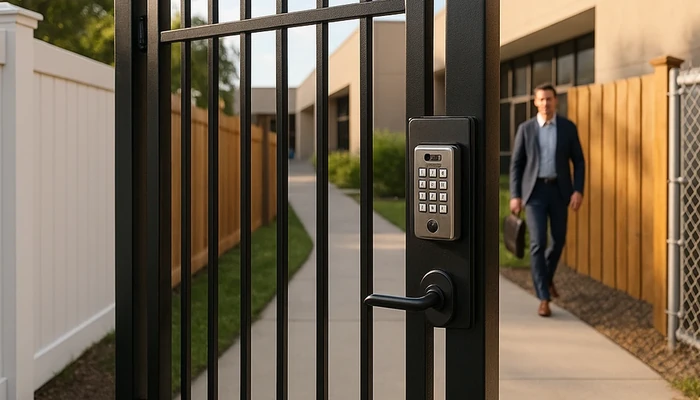
- Keypad/Code Entry: Employees enter a code to access
- Card Readers: Controlled by access cards or fobs
- Intercom & Video: Visual/audio verification before entry
- Automatic/Gated Entry: Motor-powered gates, triggered by authorized devices or remote control
- Integrated Systems: Combines barriers, alarms, surveillance, and entry logs
Advanced solutions support user tracking, temporary guest accesses, or integration with security cameras. For up-to-date trends, see Modern Trends in Automatic Gates.
Strategic Planning: Steps for Success
Every commercial project should follow a logical series of steps to achieve the right outcome. Here’s a proven planning process:
- Clarify Your Objectives: Security, privacy, traffic flow, compliance, appearance.
- Assess the Site: Terrain, utilities, existing surfaces, weather patterns in Chicago, Illinois.
- Check Local Codes: Building codes, ADA requirements, and business insurance often set minimums (external standards available at ASTM International).
- Evaluate Materials: Consider climate, lifespan, and maintenance needs.
- Choose Access Control: Match gate and technology to actual usage and risks.
- Ensure Integration: Gates, alarms, lighting, and surveillance should work in concert.
- Get Clear Quotes: Seek transparent, itemized estimates for both installation and potential repairs.
- Plan Maintenance: Long-term value requires regular checks, especially for automated gate systems.
Pro tip: Engage contractors with knowledge of cold weather installation and code-compliance—crucial for reliability in Chicago, Illinois climates.
Trade-Offs: Security, Aesthetics, and Practicality
Commercial fencing and access control involve several trade-offs:
- Security vs Openness: Tall, opaque fences boost security and privacy but may impact visual appeal or zoning approval.
- Upfront vs Long-Term Cost: Lower-cost solutions may require more frequent repairs or lack advanced features.
- Technology vs Simplicity: High-tech gates offer flexibility and logging but need more maintenance and backup planning.
- Aesthetics vs Maintenance: Ornamental or wood fencing provides a pleasing look but usually requires more upkeep than chain link or composite.
Discussing your priorities with experts like Chicagoland Fence Pros can clarify what matters most and help customize recommendations for your use case.
Installation, Codes, and Regulation Basics
Compliance is paramount. Local codes and standards ensure that your investment is legal, safe, and insurable. It’s important to:
- Review fence height, materials, gate placement, and visibility requirements.
- Consult with local zoning boards or HOAs if applicable.
- Ensure accessibility requirements are met for commercial gates (see standards from ASTM International).
- Select contractors who are licensed and insured and who provide transparent documentation.
Always double-check actual rules before signing contracts or breaking ground. For deeper insight, our post on Legal Aspects Around Automatic Gate Installation is very helpful.
Integration: Fences, Gates, and Security Technology
The most effective commercial protection comes from integrating multiple elements:
- Barrier: The physical fence or wall
- Gate System: Manual or automatic, with robust locking
- Entry Management: Mechanical, electronic, or biometric access
- Surveillance: Cameras or motion sensors
- Lighting: Deterrent and for nighttime visibility
- Remote Monitoring: Virtual management of entry logs and incidents (see AMPP.org’s resources for security education)
For best results, your security plan should integrate these components, not just install them separately.
Maintenance and Long-Term Care
Proper maintenance is essential for reliability and appearance. Recommendations for Chicago, Illinois include:
- Annual inspection for rust, wear, or storm-related damage.
- Periodic cleaning (especially for vinyl, composite, and aluminum systems).
- Lubrication and testing for automated gates.
- Prompt repair of any breach or malfunction.
- Updating codes or access permissions if staff/tenants change.
Discover best practices in Automatic Gate Maintenance Tips.
Comparing Fence and Access Control Solutions
| Solution | Security Level | Access Type | Ideal For |
|---|---|---|---|
| Chain Link + Manual Gate | Basic | Key/Padlock | Storage, low-risk areas |
| Steel + Automatic Gate | High | Card, keypad, intercom | Businesses, high-traffic |
| Composite + Electronic Gate | Moderate | Card/keypad | Office parks, condos |
| Steel + Integrated Access | Very High | Video, biometrics | Financial, sensitive sites |
Common Mistakes to Avoid
- Skipping formal site assessment (missed hazards or utilities)
- Ignoring local zoning/building codes
- Focusing only on upfront cost, neglecting maintenance
- Choosing overly complex technology your staff won’t use or maintain
- Failing to integrate lighting or cameras for complete deterrence
- Selecting a contractor without proven experience in commercial installations
FAQ: Commercial Fences and Access Control
- What fence type is most secure for a business?
Steel or heavy-gauge chain link with minimum footholds and anti-climb features provide high security. Combine with automatic gates and electronic access for best results.
- Are there Chicago-specific rules for commercial fence heights?
Yes, Chicago, Illinois and most surrounding areas have requirements for height maximums, materials and sight lines. Consult local authorities or your contractor before finalizing plans.
- How do automatic gates work with commercial fences?
Automatic gates are motor-powered openings that can be integrated with your fence line and paired with electronic entry, intercom, or remote controls—ideal for managing busy entrances.
- What’s the difference between card access and keypad entry?
Card access requires a physical fob or card, while keypad entry uses a code. Card access offers stronger tracking and can be deactivated quickly if needed.
- Can fences and gates be retrofitted with new access technology?
In most cases, yes. Many older fences can accommodate new gate motors, keypad systems, or access controls, though some retrofits may require structural upgrades.
- What is the average maintenance cost for a commercial fence?
Costs vary; expect to budget for annual inspections, minor repairs, and periodic service for automatic gates—typically 1-3% of project cost per year.
- Are security systems like cameras required by code?
Not always, but they’re recommended for many commercial properties. Some insurance policies or sensitive business types may require them. Check with your provider.
- How can I ensure code compliance?
Work with licensed, experienced contractors who provide documentation and understand local and national standards like those available from ASTM International.
- Should my fence contractor also handle access control installation?
Many full-service companies like Chicagoland Fence Pros coordinate both projects, ensuring smooth integration and accountability.
- Can I get a clear estimate for repairs or upgrades?
Reputable companies provide transparent, itemized quotes. You can request an estimate from Chicagoland Fence Pros with no obligation.
Conclusion: Smart Steps for Strong Perimeter Security
Creating a secure, compliant, and appealing commercial fence and access control system requires planning and expertise. Evaluate your unique needs, understand the roles of fence and gate systems, consult with professionals, and always value long-term reliability over shortcuts. If you’d like tailored guidance, talk to our commercial fence specialists today for help with your project in Chicago, Illinois.
For further reading on gate security, innovations, and maintenance, explore resources like Revolutionizing Security: Automatic Gate Systems or Preventive Maintenance for Automatic Gates.
About Chicagoland Fence Pros
Chicagoland Fence Pros is a professional fence company with over 15 years of experience helping homeowners and businesses in Chicago, Illinois and nearby communities improve security, privacy, and curb appeal. Specializing in commercial and residential projects using wood, vinyl, aluminum, steel, and composite materials, Chicagoland Fence Pros is committed to clear education, honest recommendations, and code-compliant installations. Our team is licensed, insured, and dedicated to transparent, reliable service every step of the way.
fence contractor chicago, electric gate, automatic gate, automatic gate repair North Park, access control gate Plainfield, access control gate Maywood, security gates Buffalo Grove, access control gate St Charles, automatic gate Northlake, swing gate Tinley Park