
Integrating Commercial Fences With Security Systems: A Comprehensive Guide
Businesses and property managers face increasing challenges in securing their assets. Integrating commercial fences with security systems is no longer just an option—it’s a necessity for effective perimeter security. But what does this integration really look like? How do you ensure your fence and electronic security work together seamlessly, especially considering Chicago’s unique climate and local codes? This guide will walk you through the key options, trade-offs, and realistic expectations. We’ll cover the essentials, modern systems, common pitfalls, and practical tips—helping you plan confidently for safer, smarter boundaries. If you need advice, Chicagoland Fence Pros brings years of experience in both fence installation and security integration across Chicago, Illinois.
Why Integrate Commercial Fencing With Security Systems?
Traditional fences provide a first layer of protection against unauthorized access and set clear boundaries. However, as threats become more sophisticated, property owners are looking for solutions that blend physical security with technology. Integrated systems combine fence barriers with electronic security—delivering better monitoring, faster response times, and enhanced deterrence capabilities.
- Increase intrusion deterrence and detection
- Real-time alarms, video surveillance, and automation
- Comply with insurance and local safety requirements
- Support 24/7 monitoring of vulnerable or high-value sites
This integration is particularly valuable for Chicago, Illinois businesses where weather, visibility, and urban density pose unique perimeter security challenges.
Core Components of Integrated Fence Security
Modern integrated systems typically feature a blend of these elements:
- Physical Barriers: Steel, aluminum, chain link, composite, or vinyl fencing designed for strength and durability.
- Electronic Detection: Sensors for movement, vibration, or attempts at breaching the fence line.
- CCTV Cameras: Video surveillance for real-time monitoring and evidence recovery.
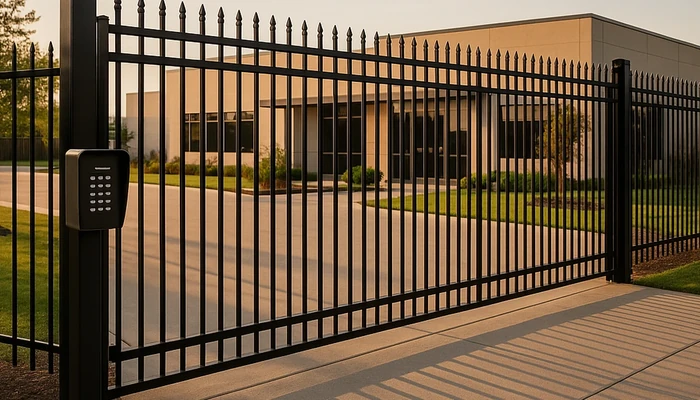
- Access Control: Automated gates with card readers, keypads, or biometric authentication.
- Alarm Notification: Audible, visual, or remote alerts triggered by suspicious activity.
- Integration Platforms: Software tying fence security into broader building management or security networks.
Standards-based integration—such as ONVIF-compliant equipment—ensures devices work together. Learn more about open security integration standards.
Popular Commercial Fence Types for Security Integration
Different fence materials offer varying levels of security, integration compatibility, and maintenance needs. Here’s a summary:
| Fence Type | Security Level | Integration Ease | Common Uses | Maintenance |
|---|---|---|---|---|
| Chain Link | Basic–Medium | Easy: works with sensors/cameras | Utilities, warehouses, schools | Low |
| Wrought Iron | High | Good: rigid, supports tech mounts | Office parks, urban sites | Medium |
| Steel/Aluminum | High | Excellent: modular for sensors/gates | Factories, commercial properties | Low to Medium |
| Composite / Vinyl | Medium | Moderate: depends on design | Retail, apartment complexes | Low |
| Wood | Low–Medium | Challenging for electronics | Residential, some commercial | Medium |
For in-depth comparisons, see our guide on commercial fencing options for different industries.
Security System Technologies for Perimeter Integration
Pairing a commercial fence with the right security technology amplifies protection. Today’s options include:
- Contact Sensors – Detect gates opening or panels being moved.
- Vibration/Intrusion Sensors – Trigger alarms when the fence is disturbed.
- CCTV Surveillance – Record and transmit activity along fence lines.
- Automated Gates – Control authorized vehicle and pedestrian access.
- Lighting/Warning Sirens – Deter intruders and aid night surveillance.
- Integrated Cloud Platforms – Centralize alerts, logs, and remote control.
When selecting technology, check compatibility and adherence to standards. Refer to industry resources like the Door & Access Systems Manufacturers Association standards.
Planning an Integrated Fence and Security System: Key Steps
- Assess Your Property: Map assets, sensitive areas, visibility issues, and public access points.
- Set Clear Objectives: Prevent trespassing? Monitor deliveries? Deter theft or vandalism?
- Select the Right Fence Type: Balance security needs, aesthetics, and budget. Professional input helps avoid future problems.
- Choose Compatible Security Tech: Select devices rated for outdoor use and local weather. Favor open standards and scalable platforms.
- Follow Codes and Insurance Requirements: In Chicago, fence height, placement, automation, and alarms may be regulated. Always verify with local authorities.
- Plan for Maintenance and Upgrades: Ensure wiring, sensors, and devices are easily accessible for routine checks.
If unsure, consult experts. Understand what to expect during commercial fencing installation for step-by-step help.
Common Integration Mistakes and How to Avoid Them
- Ignoring Local Codes: Failing to comply can trigger fines or forced removals.
- Mismatching Technology: Using incompatible fence types or electronics causes malfunctions and gaps.
- Underestimating Chicago’s Weather: Electronic devices, motors, and sensors must be rated for freezing temperatures and heavy storms.
- Neglecting Long-Term Maintenance: Integration points and wiring are vulnerable to weather and tampering.
- Poor Planning for Future Expansion: Choose systems that support upgrades as your needs evolve.
See more on maintaining your commercial fence and maximizing longevity.
Cost Considerations: What to Budget For
The overall cost depends on several factors:
- Fence type and length
- Level and type of electronic security
- Local code requirements (permits, height, automation)
- Installation complexity
- Ongoing maintenance (repairs, tech updates)
Budget can vary from a few thousand dollars for a basic camera-integrated chain link setup, to much higher for custom wrought iron fences with biometric access. Always request a transparent quote and discuss both upfront and recurring costs with your installer. For guidance on durable choices, read about maximizing commercial fence durability.
Legal, Insurance, and Code Compliance
Compliance is essential for any integrated perimeter solution. In Chicago, Illinois:
- Fences typically require city permits; check regulations for height and location.
- Alarm and camera systems may have notification or privacy requirements.
- Some commercial insurance policies mandate specific security levels for coverage.
Always verify up-to-date requirements with city officials or your insurance provider before investing. See our guide to legal requirements for commercial fencing.
Integrating Fences With Other Building Security
For maximum effectiveness, fence security should tie into other building systems:
- Linking gate access to employee ID systems
- Connecting alarms to on-site or remote monitoring stations
- Coordinating video feeds with indoor surveillance
- Automating alerts for after-hours activity
This approach also improves audit trails and reduces false alarms.
Maintaining and Upgrading Integrated Systems
Integration means all components must be checked routinely. Tips:
- Schedule seasonal inspections for physical and electronic hardware.
- Test sensors, alarms, and cameras after harsh weather.
- Replace worn or outdated tech promptly—security threats change.
- Document and retain maintenance records for insurance and compliance.
For tips on ongoing care, see our hub: maintain your commercial fence and extend its life.
Real-World Examples of Successful Fence–Security Integration
- Warehouse Distribution Center: Wrought iron perimeter fence with integrated CCTV and badge-access gate, reducing theft losses by over 30% in the first year.
- School Campus: Chain link fencing with tamper alarms and panic notification tied to administrative offices, meeting local and insurance requirements.
- Healthcare Facility: Aluminum fencing combined with biometric-controlled automatic gates, providing audit trails and personnel access logs.
These cases illustrate how different sectors benefit from blending physical and electronic solutions tailored to their specific site and regulatory needs.
Frequently Asked Questions: Commercial Fence and Security System Integration
- Can I add electronic security to an existing fence?
Often, yes. Many modern sensors and cameras are designed for retrofitting. However, some older or wooden fences may not readily support electronic mounting or concealment of wiring.
- What’s the best fence material for security integration?
Steel, aluminum, and chain link fences typically offer the best combination of strength and compatibility with electronic devices.
- Are there codes in Chicago for fence height and alarms?
Yes. Local building codes govern height, location, and alarm requirements. Always check with city zoning before installation.
- How often should I maintain the system?
At least semi-annually, with extra checks after severe weather or incidents. Consistent maintenance keeps your investment effective.
- Can integrated systems be managed remotely?
Yes. Many modern systems offer remote access and monitoring via secure apps or web interfaces.
- Will insurance costs decrease if I add perimeter security?
Some insurers offer premium discounts or improved coverage if you document adequate perimeter security. Check with your provider.
- What are ONVIF-compliant devices, and why do they matter?
ONVIF is an open standard for security equipment, ensuring products from different brands work together. Learn more here.
- Do I need professional installation?
Almost always, yes. Installing integrated systems involves electrical, structural, and code considerations best handled by certified professionals.
- Are there eco-friendly options for security fencing?
Yes. Some metal and composite fences use recycled materials, and newer low-energy security systems help lower environmental impact.
- Where can I get a detailed quote or consultation?
Contact a reputable, local commercial fencing and security expert such as Chicagoland Fence Pros for a tailored assessment.
Conclusion: Building a Secure and Future-Ready Perimeter
Integrating commercial fences with security systems is a wise investment for any Chicago-area business seeking to protect assets and meet evolving safety standards. The ideal solution combines the right fence, appropriate technology, and sound planning for weather, codes, and long-term upkeep. To discuss a custom security plan or get a quote, request a fence estimate from our specialists. Resources like our comprehensive guide to industrial fencing offer additional insights. Remember to check local codes and seek professional support for the best results.
When you’re ready to take the next step, reach out to the experts at Chicagoland Fence Pros. Our team is ready to help you plan, install, and maintain your integrated perimeter security solution.
About Chicagoland Fence Pros
Chicagoland Fence Pros has over 15 years of experience serving homeowners and businesses in Chicago, Illinois and nearby communities. Our team specializes in the installation, repair, and integration of wood, vinyl, aluminum, steel, and composite fencing for both residential and commercial projects. We prioritize transparent quotes, code-compliant work, and honest advice, ensuring every installation meets local safety standards. Chicagoland Fence Pros is fully licensed and insured, offering guidance every step of the way for your peace of mind.
fencing contractors chicago, commercial fence repair chicago, commercial security fence chicago, commercial fence repair Buffalo Grove, access control fence Forest Glen, industrial fencing Plainfield, security fencing Island Lake, security fencing Forest Park, industrial fence Lake In The Hills, security fencing Batavia