 Skip to content
Temporary vs Permanent Security Fencing for Chicago Construction Sites: An In-Depth Guide
When starting a construction project in the Chicago, Illinois area, one of the first safety and security decisions you’ll face is choosing between temporary and permanent security fencing. In a city with strict building codes, diverse weather, and active construction zones, the right perimeter barrier protects your site, keeps people safe, and reduces liability. But with so many fence options and factors—site duration, budget, theft concerns, city rules, and future plans—it’s easy to feel overwhelmed by the trade-offs.
This guide will walk you through the differences between temporary and permanent security fencing for Chicago construction sites. We’ll break down key features, materials, installation approaches, code considerations, realistic costs, and maintenance expectations. By the end, you’ll understand which fencing solution best fits your timeline, budget, and security needs.
At Chicagoland Fence Pros, we’ve helped property owners and managers across Chicago find code-compliant, durable fencing for evolving projects. Here’s what you need to know before making your decision.
Why Construction Site Security Matters
Construction sites in Chicago, Illinois are magnets for theft, vandalism, and accidental injury. Tools, building materials, and heavy machinery are targets for crime, while neighborhood foot traffic increases the risk of someone inadvertently wandering onto a site. Proper fencing helps to:
- Control access and mark clear boundaries
- Protect workers, the public, and property
- Comply with city safety and insurance requirements
- Reduce the risk of theft and costly delays
Choosing the right fencing system isn’t just a legal formality; it’s a proactive step in responsible project management.
Temporary Security Fencing: Definitions, Types, and Best Uses
What Is Temporary Security Fencing?
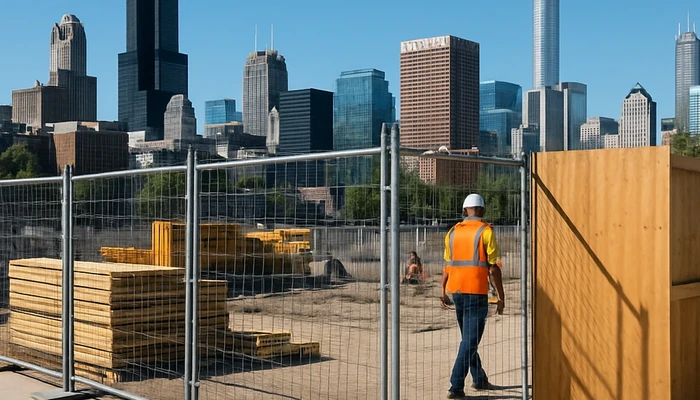
Temporary fencing is a movable barrier system designed for short-to-medium-term use. It’s installed quickly using non-permanent posts or weighted bases and removed or moved as the project evolves. In Chicago, temporary fencing is common in these scenarios:
- Shorter construction projects
- Phased job sites or rolling work zones
- Special events and crowd control
- Emergency situations (e.g., fire damage, storm cleanup)
Main Types of Temporary Fences
- Chain Link Panels: Freestanding metal frames with chain link mesh; offered in 6-ft or 8-ft heights for general job site security.
- Mesh Rolls with T-Posts: Lightweight plastic or metal mesh installed on temporary stakes or posts.
- Steel Barricades: Crowd control barriers for tight spaces or limited areas.
- Privacy Screening: Windscreens can be added to improve privacy, limit dust spread, and reduce visual clutter.
Pros and Limitations of Temporary Fencing
| Pros | Cons |
|---|---|
| Fast to install and remove | Less robust against determined intrusion |
| Lower initial cost | Can tip in severe Chicago wind if not anchored |
| No permanent foundations needed | Minimal curb appeal |
| Adaptable to changing site layouts | Requires consistent inspection/maintenance |
For more on fence materials and security features, review this guide from the American Galvanizers Association on design safety and durability.
Permanently Installed Security Fencing: Definitions, Options, and Applications
What Is Permanent Security Fencing?
Permanent security fencing refers to barriers that are anchored with buried posts or footings and made to last years with minimal movement. Unlike temporary panels, these fences are built for long-term site safety, property demarcation, aesthetics, and ongoing value after the initial project is completed.
Common Permanent Fence Types for Construction Sites
- Chain Link Fences: Durable, cost-effective, and a staple for long-term site security. Available with barbed wire or privacy slats for added protection.
- Steel or Aluminum Panel Fencing: Adds strength and a professional appearance; often chosen for sensitive or high-risk sites.
- Wrought Iron and Ornamental Fences: Higher-end, both secure and visually appealing—suitable for properties with historical or upscale needs.
Permanent fencing is best for sites that will need security after construction, such as warehouses, utilities, schools, or when the owner intends to repurpose the fence for the finished project boundary.
Cost Comparison: Temporary vs Permanent Security Fencing
One of the biggest considerations for Chicago-area projects is cost—not just upfront, but over the life of the project. Here’s a breakdown of typical expenses (all estimates; actual costs may vary):
| Fence Type | Typical Upfront Cost (per linear foot) | Typical Duration/Use |
|---|---|---|
| Temporary Chain Link Panel | $8–$15 (rental), $18–$30 (purchase) | 1 week to 12 months |
| Permanent Chain Link Fence | $15–$35 | 10–20 years |
| Steel/Aluminum Panel | $30–$100 | 20+ years |
| Wood/Vinyl (for site perimeters) | $25–$50 | 10–20 years |
Temporary fencing is less expensive upfront for short-term use but becomes less cost-effective if you face longer or recurring projects. Permanent fencing is a bigger investment at the start, but can serve for many years with proper care. When considering costs, always include relocation/removal fees for rental fences, and ongoing maintenance for permanent installations.
If you’re unsure which investment fits your long-term security needs, request a construction fence estimate tailored to your site requirements.
Choosing Fencing Materials: Factors for Chicago’s Climate
Chicago’s freeze-thaw cycles, heavy snows, strong winds, and temperature swings mean that fence materials and installation methods must be carefully considered:
- Galvanized Steel: Highly resistant to rust, offering long life even with wet or salty winter conditions. See official design recommendations.
- Aluminum: Lightweight, corrosion-resistant, ideal for sites with less risk of impact or vandalism.
- Composite/Wood: Rarely used for strictly security applications but can work as attractive site boundaries with privacy in mind.
- Poly Mesh: Only for lowest-risk, very short-term projects; not suitable for areas needing security or strength.
Whatever material you choose, ask about local code requirements, especially regarding fence height, sightlines, and post depth to handle Chicago’s deep ground freezes.
Chicago Building Codes, Permits, and Compliance Rules
Construction site fencing is regulated by city building codes and sometimes by neighborhood associations. In Chicago, fence rules cover:
- Minimum and maximum fence heights
- Materials allowed or restricted
- Post depth and spacing
- Visibility for drivers and pedestrians
- Access for fire and emergency services
- Proper signage and warning notices
Permitting is almost always required for permanent fences, and often for larger temporary installations. Check with the City of Chicago’s department of buildings or use a professional familiar with local code for guidance. For details on code-compliant approaches, read through design resources here.
Security Features: Enhancing Protection on Construction Sites
Whether you choose temporary or permanent fencing, you can improve security through smart add-ons and upgrades:
- Barbed wire or anti-climb toppers
- Lockable gates for controlled access
- Motion-activated lighting along fence lines
- Privacy or wind screens to reduce visual temptation and dust
- Integration with security camera systems (see this guide on fence-security integration)
Consult resources like the Door & Access Systems Manufacturers Association for information about gates and automated entry systems for construction security.
Installation and Maintenance: What to Expect
Temporary Fencing Installation
Temporary panels can usually be installed in a few hours using simple anchoring bases or pins. Make sure fence lines are properly stabilized and checked frequently—especially after heavy wind, snow, or storms common in Chicago. Move or adjust panels as your site needs change.
Permanently Installed Fencing
Permanent fences require post excavation, setting in concrete, and careful alignment. Plan for several days from start to finish (weather-dependent). Regular maintenance—checking for loose panels, rust, or damage—is key to maximizing the long-term value.
For further reading on best practices and mistakes to avoid, see what to expect during commercial fencing installation.
When to Choose Temporary vs Permanent Security Fencing
Here’s a quick-reference checklist for which solution may be best in common scenarios:
| Situation | Recommended Fence Type | Why? |
|---|---|---|
| Short-term, single-phase project | Temporary fencing | Quick, affordable, and relocatable |
| Project with multiple site phases/moves | Temporary fencing | Can shift as you go |
| Securing a site before and after building | Permanently installed fence | Long-term investment in property value and safety |
| High-theft/vandalism risk | Permanently installed (with security upgrades) or heavy-duty temporary fence | Better deterrence and durability |
| HOA/neighborhood aesthetic rules | Permanently installed fence | Better curb appeal and code compliance |
Linking Fence Choices to Your Project Goals
Security, site organization, and budget all impact your final fence selection. But thinking ahead—considering ongoing property use, future needs, and compliance—will protect your investment and provide peace of mind. For more guidance on balancing cost, security, and long-term curb appeal, read our article on the benefits of commercial fencing or learn about commercial fence types and best practices.
FAQs: Temporary and Permanent Security Fencing in Chicago
- 1. Do I need a permit for temporary construction fencing in Chicago?
For most large construction sites, yes—a permit is required, especially if the fencing borders public sidewalks or streets. Check with the City of Chicago as requirements may vary by project size and type.
- 2. How tall should my construction fence be for security?
Most sites use a 6-foot minimum for security; 8-foot and barbed wire toppers are allowed where higher risk warrants. Confirm with city codes before installing.
- 3. Can permanent fencing be reused after construction?
In many cases, yes—especially chain link or aluminum panel fences. Plan your project boundary with future use in mind to maximize value.
- 4. How do temporary fences withstand Chicago weather?
Quality temporary panels are designed for moderate wind and snow but can fail if not properly stabilized. Weight bases and additional bracing are often necessary in exposed locations.
- 5. What’s the best maintenance routine for permanent security fences?
Regular inspections, touch-up painting (if steel/wrought iron), lubrication of gates, and prompt repair of any damage. For more see how to maintain your commercial fence.
- 6. Are there privacy options for construction fencing?
Yes! Temporary fences can be fitted with wind/privacy screens. Permanent fences can use slats, solid panels, or decorative infill for added privacy.
- 7. How do I decide between renting and buying temporary fencing?
If your project runs less than 6–8 months, renting may be most efficient. For longer or recurring use, purchasing or investing in permanent fencing may offer better value.
- 8. What are the risks of inadequate construction fencing?
Insufficient fencing raises the risk of theft, accidents involving the public, liability issues, code violations, and project delays. Investing in the proper fence pays dividends in safety and peace of mind.
- 9. Are certain fence materials prohibited in Chicago?
Some materials (e.g., unfinished wood, certain plastics) may be restricted for visual, fire, or durability reasons. Always confirm with local code or a knowledgeable fence company before ordering materials.
- 10. Can security features be added later?
Yes—whether temporary or permanent, gates, anti-climb devices, and electronic security systems can often be retrofitted as needs evolve.
Conclusion: Making the Right Fence Choice for Your Project
Understanding the key differences between temporary and permanent security fencing will help you make smarter, safer decisions for your Chicago construction site. Weigh site duration, risk, cost, future plans, and local regulations before choosing.
If you’d like advice tailored to your project, contact Chicagoland Fence Pros for an honest assessment and transparent, no-pressure quote. For more inspiration, check out our resources on commercial fencing designs and boosting curb appeal for your next project.
About Chicagoland Fence Pros
Chicagoland Fence Pros is a professional fence company with over 15 years of experience installing residential and commercial fences in the Chicago, Illinois area. Our team specializes in wood, vinyl, aluminum, and steel fences, delivering security, privacy, and curb appeal for homeowners, property managers, and businesses. We are fully licensed, insured, and dedicated to code-compliant, honest fencing solutions for all projects big and small. Chicagoland Fence Pros proudly serves Chicago, Illinois and surrounding communities.
fence companies chicago, business fencing, access control fence Fence Installation Chicago, fence commercial Bartlett, business fence Northfield, security fence Grayslake, access control fence North Center, commercial fence Orland Park, industrial fence Forest Glen, warehouse fence Mokena
