 Skip to content
The Benefits of Commercial Fencing: Security, Privacy, and More Explained
Choosing the right fence for your commercial property can feel overwhelming, especially if you’re deciding for the first time. With so many fence materials, styles, and installation methods available, it’s easy to be unsure about what really matters—be it security, enhancing privacy, or boosting curb appeal. Understanding the benefits of commercial fencing gives you the clarity you need to make informed decisions and set realistic expectations. In Chicago, Illinois, where urban environments and weather extremes call for thoughtful choices, getting expert guidance is vital. This guide from Chicagoland Fence Pros breaks down the essential advantages of commercial fencing, highlights your available options, and outlines key considerations unique to business owners and property managers. By the end, you’ll know which fencing features deliver real value and how to plan a secure investment for years to come.
Why Commercial Fencing Matters for Your Property
Commercial fencing does much more than draw property lines. Its main purpose is to protect people and assets, creating a clear boundary while keeping unauthorized individuals out. Whether you manage a facility, retail store, or apartment complex, the right fence can reduce liability risks, prevent accidents, and reassure both staff and visitors. Beyond day-to-day operation, commercial fencing plays a pivotal role in projecting professionalism and maintaining compliance with local safety and building codes.
- Security – Discourages theft, vandalism, and trespassing through physical deterrence.
- Privacy – Controls visibility, sensitive areas, and restricts access where needed.
- Aesthetics – Boosts curb appeal and reinforces your company image.
- Insurance & Value – May help lower insurance premiums and increase property value as a long-term asset.
Types of Commercial Fences and Their Unique Advantages
The best fence for your property depends on its use, required level of security, and the look you want to achieve. Let’s compare some popular commercial fencing options and their distinct benefits:
| Fence Type | Main Benefit | Best For |
|---|---|---|
| Chain Link | Cost-effective, durable, quick installation | Businesses with large perimeters, schools, warehouses |
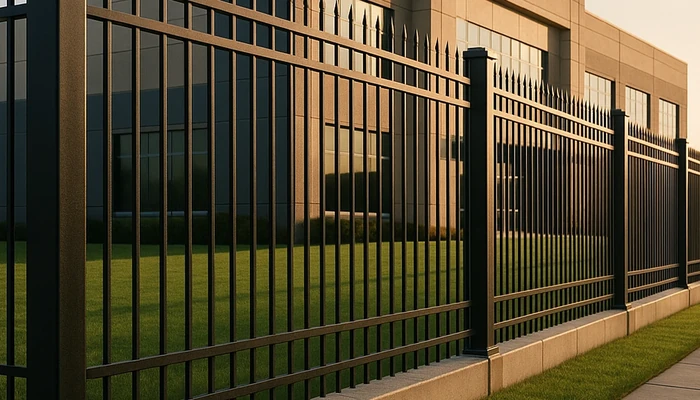
| Wrought Iron | Elegant appearance, high security | Historic, upscale, or high-visibility locations |
| Vinyl | Low-maintenance, privacy, weather-resistant | Office parks, apartments, medical facilities |
| Wood | Natural look, good privacy, flexible designs | Restaurants, boutique shops, traditional settings |
| Aluminum | Rust-resistant, lightweight, decorative | Pools, storefronts, ornamental borders |
Each material offers distinct strengths and trade-offs. For a deeper comparison, see our guide to commercial fencing for different industries.
Key Security Benefits of Commercial Fencing
Effective security starts with a strong perimeter. Fencing acts as the first—and sometimes only—physical barrier between your property and the outside world. Benefits include:
- Access Control: Gates and keypad entry systems allow you to manage who comes and goes. Paired with security cameras, fencing helps monitor all activity along your property line.
- Deterrence: High fences with anti-climb features and reinforced posts discourage attempts at intrusion.
- Protection of Assets: Properly installed fences reduce the risk of theft or damage to equipment, inventory, and vehicles.
For maximum security, explore integration with electronic systems—many businesses in Chicago, Illinois are now combining fencing with motion sensors and lighting.
Industry standards, such as those discussed in the American Fence Association’s University Online, detail how specifications can affect overall protection.
Boosting Privacy and Noise Reduction with the Right Fence
Privacy is often a top priority for businesses, especially those handling sensitive operations. Solid panel fences (like vinyl or treated wood) block unwanted views and define protected zones. In crowded or urban areas, fencing can also help quiet noise coming from the street or neighboring properties, making your environment more comfortable for employees and visitors.
- Visual Barriers: Prevent prying eyes and create confidential spaces for loading, meetings, or storage.
- Sound Dampening: Solid or layered fence systems can reduce traffic noise, which is particularly helpful if your facility is near busy Chicago roads.
For more insight, learn about noise reduction with industrial fences.
Aesthetic and Branding Impact of Commercial Fencing
Your fence is often the first thing people see when approaching your business. A stylish, well-chosen fence can reinforce your brand and convey a sense of order and reliability. Modern options such as ornamental iron, custom aluminum, or colored vinyl can be matched to your company’s colors or architectural style.
- Professional Curb Appeal: Clean lines and thoughtful materials catch the eye of clients and tenants.
- Custom Designs: Many commercial fences can incorporate logos, lighting, or other branding details.
For design inspiration, check our guide to boosting curb appeal with commercial fencing.
Maintenance and Longevity: What to Expect
The durability of your commercial fence will depend on both the material and the Chicago-area climate. Regular care extends the life of wood (staining, sealing), while vinyl and aluminum typically need just periodic cleaning. Steel and iron may require periodic inspection and rust protection—refer to best practice guidelines such as those described by the American Galvanizers Association for more on corrosion resistance.
- Vinyl and aluminum: Low maintenance, occasional wash.
- Wood: Needs annual maintenance, but offers a timeless look.
- Iron/steel: Paint or treat for rust every few years, particularly in harsh winters.
Learn how to maintain your commercial fence and extend its life.
Legal and Code Considerations in Chicago, Illinois
Before installing or replacing a fence, be sure to check zoning rules, building codes, and any homeowner association (HOA) restrictions relevant to your site in Chicago, Illinois. Permit requirements, height limits, and set-back rules can affect your choices, and failure to comply could lead to costly changes after-the-fact. Working with a seasoned contractor—such as Chicagoland Fence Pros—means you benefit from local expertise and code compliance.
For more details, see our deep dive into legal requirements for commercial fencing.
Cost vs. Value: Realistic Expectations for Commercial Fences
It’s important to understand the full cost of ownership—not just the initial installation estimate. Factors influencing pricing include material, fence height, complexity, and site preparation. Some fences require more frequent upkeep; others offer long-term savings through minimal maintenance. Transparency up-front, such as provided by Chicagoland Fence Pros, helps avoid surprises.
- Initial Investment: Materials and installation labor.
- Maintenance: Annual inspections, repairs, and coatings.
- Long-Term Value: Improved security and reputation offset ongoing costs in many cases.
Curious about budgets and trade-offs? Our team can help you request a fence estimate that fits your needs.
When to Replace, Repair, or Upgrade Your Commercial Fence
Sometimes, repairs aren’t enough. Watch for signs like leaning sections, broken fasteners, recurring rust, or large gaps that compromise safety. If your fence no longer meets your business’s needs—or if it can’t be brought up to code—replacement may be the best investment. Consider upgrades for additional privacy, security, or to modernize your property’s appearance.
- Structural damage or advanced rot in wood or posts
- Mismatched or outdated styles after renovations
- Persistent repair issues point to material fatigue or installation defects
Need an expert assessment? Talk to the professionals at Chicagoland Fence Pros for honest guidance, or explore options with iron railings or vinyl fence upgrades for your business.
FAQs
What are the key benefits of commercial fencing?
Commercial fencing enhances security, privacy, and property value while improving aesthetics and helping businesses meet local safety codes. It can deter theft or vandalism, establish clear boundaries, and present a professional appearance to clients and staff.
How do different commercial fence materials compare?
Materials vary in their benefits: chain link is cost-effective and durable, vinyl is low-maintenance and great for privacy, wrought iron provides security and aesthetics, wood has a natural look, and aluminum is lightweight and rust-resistant. Choose based on your needs and site specifics.
Does a commercial fence add value to my property?
Yes, installing a quality fence often increases property value by improving curb appeal, providing extra security, and potentially lowering insurance costs. It also makes your site more attractive to tenants and buyers looking for turnkey facilities.
What should I know about fence maintenance for commercial properties?
Maintenance depends on the material: vinyl and aluminum need little more than occasional washing, wood fences require annual staining or sealing, and iron or steel should be inspected and treated for rust as needed. Proper maintenance extends lifespan and performance.
Are there specific codes or permits required for commercial fences in Chicago, Illinois?
Yes, commercial fence projects in Chicago, Illinois typically need to comply with local zoning and safety codes, including height restrictions, set-back rules, and sometimes permits. Always check city requirements before installation and work with a contractor who understands local regulations.
Can commercial fences reduce noise on my property?
Yes, certain types of fences—particularly solid panel styles in vinyl or wood—can help absorb and block noise from busy streets or adjacent businesses, making your environment quieter and more pleasant.
How does fencing contribute to workplace safety?
Fences define secure perimeters, direct visitor and vehicle flow, keep unauthorized persons out, and can protect employees from nearby hazards such as traffic. Effective perimeter fencing is an essential part of most safety protocols.
Is professional installation necessary for commercial fences?
While experienced property managers may handle some small repairs, professional installation ensures your fence is safe, compliant, and built to last—especially given Chicago’s climate and unique site challenges. It’s always recommended for larger projects.
What are signs that my commercial fence needs repair or replacement?
Common signs include rotting or warped wood, persistent rust, loose or leaning sections, and out-of-date designs. If repairs are frequent or your fence no longer meets safety or privacy needs, consider a full upgrade.
fencing company chicago, chicago Industrial Fence Contractors, Best Industrial fence Company Chicago, business fencing Glendale Heights, fence commercial Rolling Meadows, industrial fencing Grayslake, business fence Huntley, business fence Alta Vista Terrace, security fencing Long Grove, industrial fence Hampshire
