
Comparison Of Commercial Fencing For Different Industries: An In-Depth Guide
Choosing the right commercial fence can feel overwhelming, especially for those comparing options for the first time. With so many materials, styles, and security features available, making an informed choice is crucial—whether you’re safeguarding a factory, managing an office complex, or enhancing privacy for a retail property. The impact of climate, durability, maintenance, and even local building codes cannot be ignored, especially in cities like Chicago, Illinois, where weather and urban design play a significant role. This comprehensive guide breaks down the comparison of commercial fencing for different industries, outlining key considerations, fence types, realistic trade-offs, and what every property manager or owner should know before deciding. By the end, you’ll have the clarity and confidence to select a fence solution that matches your security, privacy, and design needs. For professional insights specific to the Chicago, Illinois area, the experts at Chicagoland Fence Pros can help advise on installation, material choices, and compliance.
Understanding Commercial Fencing Needs by Industry
Every industry brings its own perimeter security and design priorities. What works well for a logistics hub might be wrong for a school or retail center. Start by assessing your site’s primary requirements:
- Security: Deter intrusion, protect assets, and ensure controlled access.
- Privacy: Shield sensitive areas from view or separate public and private spaces.
- Aesthetics: Enhance curb appeal to attract clients and tenants, or reflect corporate image.
- Durability: Resist climate, wear and vandalism, especially in urban environments like Chicago, Illinois.
- Compliance: Meet insurance, safety, and local building code requirements (always check with authorities before installing).
Common Types of Commercial Fencing
Most commercial fence solutions fall into a handful of core categories. Below, we compare the most common types by strengths and typical applications.
| Fence Type | Best For | Key Benefits | Considerations |
|---|---|---|---|
| Chain Link | Warehouses, utilities, storage yards | Affordable, quick to install, low maintenance | Less privacy, industrial look, may require upgrades for high security |
| Ornamental Steel/Aluminum | Corporate offices, schools, mixed-use | Professional appearance, strong, customizable | Higher initial cost, periodic maintenance for steel |
| Vinyl | Offices, medical centers, retail | Clean look, good privacy, low maintenance | Can be less impact-resistant, color fade possible |
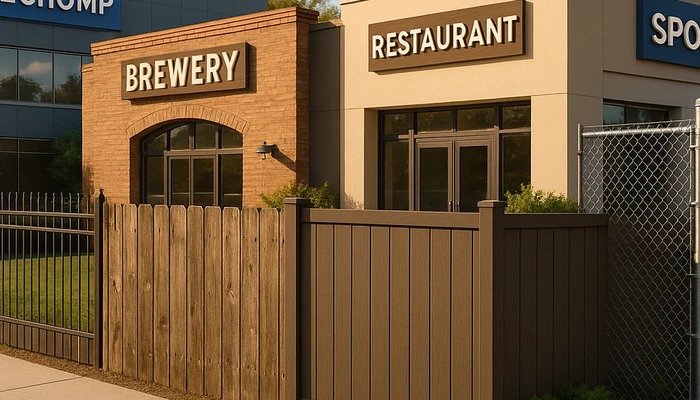
| Wood | Restaurants, boutique retail, residential | Natural aesthetics, customizable | Higher maintenance, may weather in Chicago climate |
| Welded Wire & Security Mesh | Government, transport, data centers | High security, scalable, long lifespan | Higher upfront cost, utilitarian look |
| Composite | Modern offices, LEED projects | Eco-friendly, durable, attractive | Costlier than wood or vinyl, limited colors |
Manufacturing and Industrial Facilities
Manufacturing plants and warehouses in the Chicago, Illinois area typically prioritize perimeter security and ease of access management. Chain link fencing, often with added privacy slats or barbed wire, is popular thanks to low cost and rapid installation. For facilities needing heightened protection and durability, welded wire mesh or steel palisade solutions offer robust, climb-resistant barriers.
- Key Factors: Security, industrial durability, compatibility with access control.
- For more on industrial fencing technology, see features of industrial fences.
- Where corrosion is a risk, ask your contractor about hot-dip galvanizing for superior rust protection.
Education Facilities: Schools & Campuses
Schools, colleges, and daycare centers must balance security with a welcoming environment. Ornamental aluminum or vinyl picket fences often strike the best note: secure, attractive and maintenance-friendly. Fencing should be tall enough to deter climbing, with smooth tops to prevent injury.
- Considerations: Student safety, code compliance, easy access for staff.
- For sports fields or playgrounds, chain-link fencing with PVC coatings is common. For more, see industrial fencing for sports facilities.
Retail, Office Parks & Commercial Complexes
Retail centers and mixed-use developments care about curb appeal alongside security and privacy. Decorative metal or composite fencing is regularly used near storefronts, while chain link or vinyl may secure service areas or parking lots behind the scenes.
- Key Needs: Brand aesthetics, customer and employee safety, access management.
- Vinyl fences offer excellent privacy for restaurant patios or shopping malls and typically require little maintenance even in Chicago’s changing seasons.
- Read more about how commercial fences boost aesthetics at this design guide.
Logistics, Transportation, and Utilities
For airports, rail yards, or utility substations, the focus is on intrusion prevention and code compliance. High-security mesh fences, sometimes with anti-climb features and integrated access gates, are frequently specified. Chain link or welded wire mesh remain cost-effective solutions for large perimeters but may require upgrades in sensitive or high-traffic zones.
- Special Considerations: Regulatory requirements, integration with security systems, rapid repair options.
- More details can be found in our guide to enhancing perimeter security.
Healthcare and Hospitality Properties
Hospitals, hotels, and senior living communities have unique privacy, safety, and ADA compliance needs. Vinyl or aluminum fencing delivers a blend of privacy, modern design, and safety. Gates should incorporate easy-access hardware and emergency egress features in compliance with local laws.
- Pro Tip: Always verify municipal rules and fire codes, which may require specific locking hardware or clearances.
Agricultural and Green Industry Properties
Agricultural businesses—from nurseries to urban farms—benefit from fencing that protects property lines, livestock, and crops. Wood and welded wire are both common, with electric options sometimes deployed to keep animals in or out. For a deep look at farm fencing, check out this application guide.
Comparing Materials: Security, Maintenance & Lifespan
Material choice impacts security, appearance, cost, and the long-term care required. Here’s a side-by-side look:
| Material | Security Level | Maintenance | Expected Lifespan |
|---|---|---|---|
| Chain Link (Galvanized) | Good (Upgrade with barbed wire/slats) | Low | 15–25 years |
| Steel/Aluminum | Very Good to Excellent | Medium (for steel; low for aluminum) | 20–30 years |
| Vinyl | Good (privacy + some security) | Very Low | 20+ years |
| Wood | Moderate (with privacy benefits) | High | 10–15 years (may weather faster in Chicago, Illinois) |
| Welded Wire Mesh | Excellent | Low | 25–40 years |
| Composite | Good | Low | 25+ years |
For highly corrosive environments, coatings and galvanization can significantly extend lifespan (learn about zinc galvanization).
Building Codes, Compliance & Insurance Requirements
Commercial fences must meet local building codes and, in some cases, specialized standards for safety or accessibility. Chicago-area regulations often dictate fence height, materials, setbacks, and, in special cases, transparency (see-through requirements) for visibility. Always:
- Check city or county codes before purchasing or installing fencing.
- Align with insurance requirements, especially for high-value or hazardous sites.
- Document all approvals and inspections for compliance and warranty protection.
If your project involves controlled access, ADA requirements, or environmental impact questions, consult trusted resources, such as accredited industry organizations like AMPP.
Cost Considerations: Initial and Long-Term
Commercial fence budgets may range from a few thousand dollars for a basic chain link perimeter to tens of thousands for decorative or high-security solutions. Factors include:
- Material costs (steel, vinyl, wood, composite, mesh, etc.)
- Fence height, length, and gate quantity
- Site preparation (removal of old fencing, grading, permits)
- Installation complexity (custom curves, slopes, security integration)
- Maintenance needs (regular painting, power-washing, repairs from winters in Chicago)
Always get an on-site quote from a reputable contractor. For approximate price ranges and budgeting, see commercial fence budgeting tips.
Maintenance and Longevity Tips by Industry
Each fence type brings match maintenance needs. For example, wood requires yearly inspections and sealing, while steel needs anti-corrosion checks. In Chicago, Illinois, freeze/thaw cycles and de-icing agents can accelerate wear. Periodic professional assessments extend lifespan and ensure continued safety. For maintenance best practices, see our maintenance guide.
Integrating Security Technology
Modern fences can support a wide array of security upgrades:
- Electric gates and automated openers
- Access control (keypads, card readers, video surveillance)
- Alarm and sensor integration for high-security applications
- Anti-climb features, privacy slats, or barbed/razor wire
Integrating technologies with your perimeter fence ensures a layered defense. Learn more at this security integration guide.
Environmental Sustainability Considerations
For businesses with green initiatives or LEED goals, sustainable materials such as recycled composites or responsibly sourced wood are increasingly available. Some modern metal systems use advanced coatings or recycled materials for longer life and reduced impact. Review eco-friendly fence options for your next project.
Case Studies: Examples From Different Industries
Warehouse Security Upgrade
A Chicago distribution center replaced aging chain link with a welded wire mesh solution, adding electronic gate access and security lighting. This balanced long-term durability and reduced labor costs, with enhanced perimeter security.
School Campus Redesign
A local K-12 school upgraded from wood picket to ornamental aluminum fencing for higher safety and far less ongoing maintenance, while improving the overall look of the campus.
Retail Plaza Image Boost
By switching to decorative composite fencing around an outdoor patio, a restaurant property improved its appearance and weather resiliency, while spending less on annual repairs and repainting.
FAQs: Commercial Fencing for Different Industries
- What is the most secure type of commercial fence?
Welded wire mesh and high-security chain link with upgrades (like barbed wire or anti-climb features) offer outstanding protection for most industries. - How does climate affect fence choice?
In areas like Chicago, material durability against freeze/thaw, moisture, and de-icing chemicals is key. Galvanized and coated options last longer in these conditions. - Can I use residential-type fences in commercial properties?
Some vinyl, wood, or aluminum styles are suitable, especially for offices or retail, but always check local codes and ensure the structure meets business-grade requirements. - Are there regulations about fence height or style?
Yes. Each city, including Chicago, has specific requirements for commercial fencing. Always confirm restrictions before finalizing designs. - What maintenance does a commercial fence need?
Depends on materials—wood needs regular staining or sealing, while vinyl and metal require cleaning and occasional hardware checks. - How can technology improve my fence’s security?
Adding cameras, alarms, automated gates, and anti-climb features provides greater deterrence and control. - What’s the typical lifespan of a commercial fence?
Vinyl, steel, and mesh systems last 20–30 years with minimal upkeep. Wood typically lasts 10–15 years in harsh climates. - Do all fence installers handle permits?
Experienced contractors like Chicagoland Fence Pros typically assist with permits and compliance—but always confirm during the quoting process. - How do I choose the right fence type for my industry?
Start by ranking your priorities: security, privacy, cost, and appearance. Consult with a local expert familiar with your industry and geographic area. - How do I maintain my fence during Chicago winters?
Regular snow removal, inspecting for frost heaving or corrosion, and prompt repairs after storms help keep your fence in good shape.
Conclusion: Making the Right Choice for Your Industry
Commercial fencing is never one-size-fits-all. The ideal solution balances security, compliance, aesthetics, and cost for your field—be it education, logistics, retail, or hospitality. By comparing options thoroughly and seeking expert input when necessary, you’ll protect your assets and investment for years to come. For tailored advice or to request a professional estimate, you can talk to our fence specialists or contact Chicagoland Fence Pros for local, code-compliant solutions that suit your industry and site.
About Chicagoland Fence Pros
Chicagoland Fence Pros brings over 15 years of experience helping homeowners and businesses in Chicago, Illinois and surrounding communities choose and install commercial, industrial, and residential fences tailored to their unique needs. Specializing in materials like wood, vinyl, aluminum, composite, and steel, the team at Chicagoland Fence Pros ensures every project meets local building codes and achieves the right balance of security, durability, and curb appeal. The company is fully licensed, insured, and committed to honest guidance on every job.
fence company chicago il, industrial fence, commercial security fence, warehouse fence Forest Park, commercial fence repair Mundelein, access control fence Wilmette, commercial fence repair West Chicago, fence commercial Alta Vista Terrace, industrial fencing North Park, business fence Island Lake