
Industrial Fencing: A Comprehensive Guide
Choosing the right fence for your property is a decision that impacts security, privacy, and value—especially when it comes to industrial fencing. Whether you’re a homeowner, property manager, or a business owner in Chicago, Illinois, the options and trade-offs can feel overwhelming: durability vs. budget, security features, building codes, and maintenance requirements. This comprehensive guide to industrial fencing will cut through the noise. You’ll learn about different fence types, materials, key considerations, installation tips, and maintenance essentials. Drawing on years of experience from Chicagoland Fence Pros, we’ll help you separate fact from myth and set realistic expectations for your next perimeter security project.
Understanding Industrial Fencing: What Is It and Why Does it Matter?
Industrial fencing refers to barrier solutions specifically engineered for large-scale, high-traffic, and security-sensitive environments—such as factories, warehouses, transportation hubs, and commercial complexes. These fences prioritize security, durability, and code compliance, but also influence aesthetics, privacy, and even insurance premiums.
- Purpose: Limit access, increase safety, deter trespassing, and safeguard assets.
- Main features: Sturdy construction, anti-climb and anti-cut options, and often integrated with gates or surveillance.
- Common industries: Manufacturing, utilities, logistics, retail centers, public infrastructure, and multi-family residential complexes.
Choosing the correct industrial fence can mean the difference between peace of mind and costly vulnerabilities. In the Chicago, Illinois area, weather resistance and local regulations add further layers to the decision-making process.
Industrial Fence Types: Pros, Cons & Use Cases
Industrial fences come in various forms, each offering unique benefits and potential limitations. Here’s a closer look at the most widely used types:
| Type | Best For | Strengths | Potential Drawbacks |
|---|---|---|---|
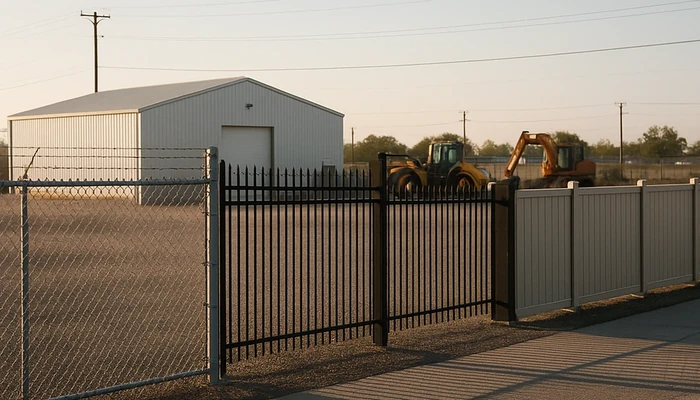
| Chain Link | Factories, sports facilities, storage yards | Economical, durable, low maintenance | Basic security, limited privacy |
| Steel/Wrought Iron | High-security sites, institutional & civic buildings | Very strong, customizable, long lifespan | High cost, periodic maintenance needed |
| Aluminum | Commercial plazas, schools, parks | Rust-resistant, lightweight, modern look | Less impact-resistant than steel |
| Vinyl | Retail centers, mixed-use, storage | Low maintenance, clean aesthetics, privacy options | Potential for cracking in cold climates |
| Composite | Urban offices, modern commercial settings | Eco-friendly choices, consistent color, privacy | Higher upfront cost |
| Wire Mesh | Airports, power substations, logistics | Scalable, secure, customizable mesh size | Minimal privacy, may need added treatments |
To compare these options for different industries, see our Comparison Of Commercial Fencing For Different Industries resource. For sports facilities, special consideration is required—learn more in Industrial Fencing for Sports Facilities.
Industrial Fencing Materials: Durability, Maintenance & Climate Considerations
Material selection is crucial for lasting value. Each material responds differently to weather, environmental exposure, and regular use:
- Galvanized Steel: High strength and corrosion resistance; ideal for security, but may require periodic painting in harsh climates.
- Powder-Coated Iron: Premium appearance and robust protection; susceptible to chipping if impacted.
- Aluminum: Will not rust, lightweight; best for environments with exposure to salt or moisture.
- Composite Panels: Blend of wood fiber and recycled plastics offers a lower-maintenance, eco-friendly solution.
- Vinyl: Resistant to rot and insects; less suited to heavy industrial abuse.
- Wire Mesh: Customizable gauge for the desired deterrent level; higher maintenance if exposed to debris or weather extremes.
In Chicago’s freeze/thaw cycles, attention to foundation depth and anti-corrosion treatments is essential. From our experience as a fence company in Chicago, Illinois, proper material selection and professional installation play a major role in longevity.
Key Features for Security and Functionality
Modern industrial fencing offers features beyond a simple barrier. Here are the top considerations:
- Anti-Climb Design: Tight mesh, angled tops, or smooth finishes discourage scaling attempts.
- Anti-Cut Technology: Thicker wires, welded mesh, or double-skin panels resist tampering and intrusion.
- Integrated Security: Compatibility with CCTV cameras, lighting, motion sensors, and smart access gates.
- Privacy Add-Ons: Slats, screens, or opaque panels can block views for heightened privacy.
- Noise Reduction: Specialized panels can help mitigate industrial noise—see more at Noise Reduction with Industrial Fences.
To go deeper into critical features, visit Features of Industrial Fences.
Safety, Compliance & Building Codes
Safety and compliance are non-negotiable. Check state and city codes for height restrictions, setbacks, and security regulations. Homeowners’ associations (HOAs) may have their own rules. In Chicago, Illinois, frost lines, zoning, and anti-graffiti requirements should be discussed early.
For authoritative standards on fence construction and materials, consult the ASTM compilations and Security Industry Association standards.
Legal requirements, including insurance impacts, are covered in our reference guides: Legal Requirements for Commercial Fencing and Industrial Fencing: Impact on Value/Insurance.
Installation Process: Steps, Timeline & Professional Tips
Proper installation begins with planning. Key steps include:
- Evaluate your property and goals—security needs, privacy, and layout.
- Check local zoning, utilities, and permit requirements.
- Choose materials and finishes suitable for your climate and use case.
- Mark boundaries and layout—double-check property lines.
- Install posts with proper footing, considering Chicago’s freeze/thaw cycles.
- Secure fencing panels or mesh, ensuring plumb and alignment.
- Add gates, access control, and security enhancements as needed.
- Inspect, adjust, and ensure code compliance before use.
For an in-depth overview of what to expect, read Expectations During Commercial Fencing Installation. Always consult professionals—industrial fences require specialized equipment and knowledge.
Ready to start your project? Request a fence estimate for your commercial or industrial property from our experienced team.
Maintenance and Longevity: Protecting Your Investment
Regular maintenance ensures optimal performance and long-term value. Steps include:
- Inspections: Check for rust, damage, or loose fittings every 3–6 months.
- Cleaning: Remove debris, vegetation, or chemicals that could corrode or damage the surface.
- Rust-proofing: Apply coatings (where needed), especially on steel and iron components.
- Hardware checks: Tighten hinges, locks, and fasteners regularly.
- Panel repairs: Address dents, cracks, or cuts quickly to prevent escalation.
For specific advice on commercial fence upkeep, see Maintain Your Commercial Fence and Extend Its Life.
Balancing Aesthetics, Security & Budget
Every property has unique requirements. Balancing design, functionality, and costs is an art:
- Aesthetics: Ornamental options and color treatments can help fences blend with or enhance your architecture.
- Security Priorities: Assess where high-security features (anti-climb, CCTV, etc.) pay for themselves vs. where standard fencing may suffice.
- Life-cycle Costs: Less expensive upfront options can become more costly over time if repairs, repainting or replacements add up.
- Eco-Friendly Choices: Composite and recycled materials can be both functional and environmentally conscious.
- Insurance & Property Value: Quality fencing can reduce risk and potentially lower insurance rates—learn more at Industrial Fencing: Impact on Value/Insurance.
Need help prioritizing your needs? Here’s a guide to key factors before installing commercial fences.
Frequently Asked Questions: Industrial Fencing
- What qualifies as industrial fencing?
Industrial fencing includes any barrier system designed primarily for security, durability, and managing access in commercial or infrastructure settings. It typically uses heavy-duty materials, complies with local codes, and integrates security features.
- Is chain link secure enough for industrial use?
Chain link is economical and durable, but for high-security applications, consider add-ons like barbed wire, privacy slats, or opting for welded mesh or steel panels. Each site’s needs will differ.
- How do I maintain an industrial fence in harsh climates like Chicago?
Inspect regularly for rust or freeze damage, ensure posts are deep enough below frost lines, and promptly address any signs of wear. Material choice (such as galvanized steel or aluminum) is especially important for Chicago’s variable weather.
- What are the insurance benefits of upgrading to industrial fencing?
High-quality, code-compliant fencing can reduce risks like trespassing, vandalism, and liability, which may lead to lower insurance premiums—contact your provider for property-specific advice.
- Which factors matter most when balancing cost and security?
Key factors include material durability, fence height, anti-tamper features, and long-term maintenance costs. Investing in higher-quality initial installation often lowers expenses over time.
- Are there standards I should know about?
Yes, look for compliance with ASTM standards (see compilation) and the Security Industry Association (SIA industry standards) for material, strength, and installation guidelines.
- Can you integrate gates and automation with industrial fences?
Yes, most industrial fence systems can incorporate automatic or manual gates, security controls, and even smart access features. Learn more about automatic security gates and access.
- How long does installation usually take?
Timing varies with site size, material, and weather—most projects range from several days to a few weeks. Factors such as soil prep, permitting, and weather delays should be discussed before work begins.
- How do you minimize noise and visual impact?
Choose privacy panels or noise-reducing designs, use color coatings or landscaping for screening, and consider layout options for minimal exposure.
- When should I contact a professional?
If your project involves substantial security requirements, complex site layouts, or code compliance concerns, it’s best to consult experts. Professional installation ensures lasting results and peace of mind, especially in the Chicago, Illinois region.
Closing Thoughts: Making the Right Industrial Fence Decision
Choosing industrial fencing goes beyond picking materials—it’s about ensuring your property’s safety, value, and peace of mind. With realistic expectations, attention to codes, and advice from experienced professionals like Chicagoland Fence Pros, you can navigate even complex projects with confidence.
For help customizing your solution, read our guide to selecting an industrial fencing contractor. Ready to secure your property? Talk to our fence specialists or request a customized estimate today.
About Chicagoland Fence Pros
Chicagoland Fence Pros is a professional fence company with over 15 years of experience helping homeowners and businesses in Chicago, Illinois and nearby communities improve security, privacy and curb appeal. Our team specializes in fence installation, repair, and perimeter security for both residential and commercial projects. We work with wood, vinyl, aluminum, steel, and composite materials—always focusing on code-compliance and transparent advice from planning through final inspection. Chicagoland Fence Pros is fully licensed and insured, committed to honest, durable craftsmanship on every project.
fence company chicago illinois, chicago Industrial Fence Contractors, Best Industrial fence Company Chicago, access control fence West Chicago, security fence St Charles, industrial fencing Plainfield, commercial fence Lake Bluff, security fencing Skokie, security fencing Glencoe, fence commercial Maywood