
Its Benefits, Types, and Installation Process of Perimeter Fencing
Choosing the right fence can transform how you feel about the safety, privacy, and appearance of your property. With so many options available, first-timers often wonder: which fence is actually best for security, which lasts in harsh climates, and what does a typical installation involve? In the Chicago, Illinois area, questions around local codes, durability, and curb appeal are especially common. Understanding the benefits, types, and installation process of perimeter fencing is crucial for making a decision that balances cost, style, longevity, and peace of mind. This guide will walk you through the essentials—from comparing fencing materials to installation steps and ongoing care—so you can feel confident about your next move. As professionals at Chicagoland Fence Pros, we bring years of hands-on expertise and honest advice to help you select the right perimeter solution for your needs.
Understanding Perimeter Fencing: What and Why
Perimeter fencing refers to the physical barriers built along property boundaries to define, protect, and enhance space. It’s used for residential yards, commercial lots, schools, and industrial sites alike.
Why invest in perimeter fencing?
- Security: Deter trespassers, keep children and pets safe, and restrict unwanted access.
- Privacy: Block outside views and create a personal retreat or confidential business setting.
- Safety: Delimit hazardous areas such as pools or equipment zones.
- Property Value: Well-chosen fencing can boost curb appeal and resale potential.
- Legal Boundary: Clearly mark the extents of your property and avoid neighbor disputes.
Key Benefits of Perimeter Fencing
Modern fencing solutions offer more than a physical barrier. Here are some main benefits:
- Deterrence: Visual and physical obstacles discourage unauthorized entry or vandalism.
- Customization: Choose height, color, material, and design to suit your goals.
- Noise Reduction: Certain solid fences help muffle street or industrial noises.
- Environmental Control: Shield landscaping from wind, debris, or animal intrusions.
- Compliance: Meet local codes for safety, insurance, and zoning requirements.
Interested in how fences can specifically impact your property’s value? See this guide on fence value impacts.
Major Types of Perimeter Fencing
No two properties are the same. The best fence for you depends on your priorities—security, privacy, aesthetics, and longevity.
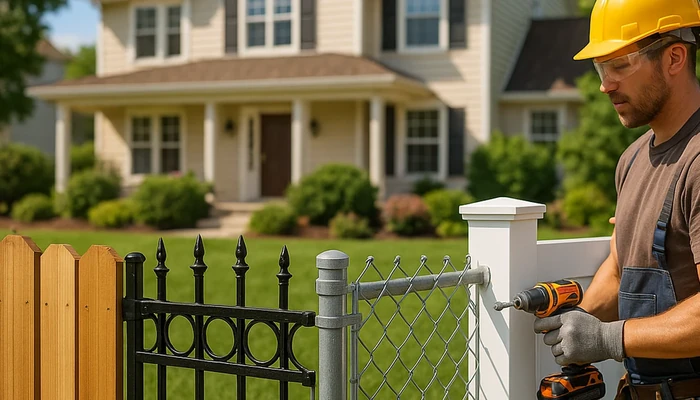
Wood Fences
- Classic look, highly customizable in height and style
- Materials: Cedar, pine, redwood, and more (explore types of wood for fencing)
- Strong privacy, moderate to high cost, requires maintenance
For a practical look at wooden fences, see how to craft a durable lumber fence.
Vinyl Fences
- Low maintenance, resistant to weather and rot
- Best for privacy or decorative uses
- Easy to clean, long lifespan, available in many styles
- Check out our vinyl fence installation service for local expertise.
Metal Fences (Aluminum, Steel, Wrought Iron)
- Extremely durable, long-lasting, and secure
- Ideal for security (often used in commercial properties)
- Require less maintenance than wood, but may need anti-rust coatings
- Find more details at galvanizing and fabrication standards.
- Learn about wrought iron fence options in Chicago.
Chain Link and Mesh Fences
- Affordable, quick to install, and very durable
- Ideal for large properties, pets, and sports areas
- Lower privacy but strong security (see are chain fences safe for pets?)
Composite Fences
- Blend of wood fibers and recycled plastics
- Resistant to rot, insects, and fading
- Moderate-to-high cost, low maintenance (composite fence details)
Other Types
- Electric/Automated Gates: High-security, remote access (benefits of electric gates)
- Decorative (Picket, Lattice, Split Rail): More aesthetic, less secure
- Temporary Fencing: Used for events, construction (temporary chain fence advice)
Comparison Table: Common Fence Types
| Type | Cost* | Privacy | Lifespan | Maintenance |
|---|---|---|---|---|
| Wood | $$–$$$ | High | 15–25 yrs | Moderate–High |
| Vinyl | $$$ | High | 20–30 yrs | Low |
| Metal (Steel/Wrought Iron) | $$$–$$$$ | Low–Med | 25–50 yrs | Low–Moderate |
| Chain Link | $–$$ | Low | 15–30 yrs | Low |
| Composite | $$$ | High | 25–35 yrs | Low |
*Costs can vary by region and materials. Always request an updated estimate.
Main Installation Process of Perimeter Fencing
Professional fence installation follows several key steps, whether for a home, business, or public property. While every project is unique, here’s the general order:
- Site Assessment & Planning
- Mark property boundaries with a survey or locator
- Discuss needs, preferences, and local codes
- Identify underground utilities (utility, code, and industry resources)
- Obtaining Permits and HOA Approval
- Chicago, Illinois requires permits for most types—I.e., height, placement, materials
- HOA or neighborhood associations may have style or height restrictions
- Design and Material Selection
- Choose fence type, color, and features (gates, post caps, privacy slats)
- Balance budget and long-term needs
- Prepping the Area
- Remove vegetation, debris, or old fencing
- Mark posts and gate locations
- Installing Fence Posts
- Dig post holes (depth varies by fence type/height, usually 2’+ in Chicago winters)
- Set posts in concrete for stability
- Confirm alignment and plumb
- Attaching Rails, Panels, or Mesh
- Install horizontal rails or attach individual panels/boards
- Chain link or mesh stretched between poles
- Hanging Gates & Hardware
- Fit gates (swing, slide, or rolling) securely to allow smooth operation
- Install latches, locks, or automation as needed
- Final Inspection & Finishing Touches
- Walk through site for alignment, sturdiness, safety, and code compliance
- Apply stains, sealants, or protective coatings if required
Every good fence begins with a strong plan. For a detailed DIY mesh fence example, see our step-by-step guide.
Critical Factors to Consider Before Installing a Perimeter Fence
- Local Building Codes: Always verify regulations for height, setbacks, and materials in Chicago, Illinois, to avoid costly mistakes (navigation guide).
- Soil and Drainage Conditions: Clay, sand, or moisture can affect fence post stability.
- Climate and Maintenance: Midwest winters and humidity require weather-resistant choices (climate-based fence materials).
- Neighbors and Shared Boundaries: Communicate with neighbors to avoid disputes and plan for shared costs if needed.
- Purpose and Functionality: Is the goal mainly privacy, security, or curb appeal?
Maintenance and Longevity Tips
Proper care extends a fence’s lifespan and reduces major repair costs. Here’s what to expect by fence type:
- Wood: Regularly check for rot, staining/sealing every 2–5 years, repair loose boards promptly.
- Vinyl: Occasional soap and water wash; inspect for cracks after winters.
- Metal: Look for rust annually, touch up scratches, oil moving parts, consider galvanizing tips (fabrication considerations).
- Chain Link: Tighten sagging mesh, cut back invasive plants, check post anchors after frost heave.
For robust wire fencing advice, visit our wire fencing guide.
Safety, Codes, and Legal Considerations
Fencing installations are subject to safety and zoning codes. In the Chicago, Illinois area:
- Permit requirements can cover height, location, appearance, and even post spacing.
- Specific codes exist around pool areas, schools, and commercial properties.
- Compliance with the Americans with Disabilities Act (ADA) and local safety standards is often required for gates or public areas (see industry resources for compliance).
When in doubt, consult local officials or experienced contractors like Chicagoland Fence Pros before starting work.
Common Mistakes to Avoid with Perimeter Fencing
- Forgetting to get permits before starting work
- Improper boundary measurement—leading to neighbor disputes
- Choosing materials based only on upfront price, not long-term value
- Ignoring critical drainage issues, causing fence failure
- Skipping routine maintenance, resulting in premature repairs
Our team at Chicagoland Fence Pros always recommends careful planning and quality materials for durable, beautiful results. Request a fence estimate.
FAQs About Perimeter Fencing
- What is the strongest type of perimeter fencing?
Steel and wrought iron fences are among the most robust options, especially when galvanized for rust resistance. These materials offer high security and can withstand severe weather found in Chicago, Illinois.
- Do I really need a permit for a fence project?
Yes, most permanent fences in Chicago require permits for installation. Requirements vary by municipality and HOA. Always check local codes before starting work.
- Can I install a perimeter fence myself?
Some simple fences can be DIY projects. However, larger or more complex installations (like steel or for sloped terrain) generally require professional skills and tools. Safety and code compliance are critical.
- How do I maintain my fence over time?
Follow manufacturer guidance for maintenance. Most wood fences need stain or sealant; metal requires rust inspections; vinyl should be kept clean. Quick repairs prevent small problems from growing.
- Does a new fence increase my property value?
Often, yes—especially with quality materials and attractive design. Privacy, security, and curb appeal matter to future buyers.
- What’s the difference between commercial and residential perimeter fencing?
Commercial fencing tends to be taller, more secure, and often involves more robust or specialized materials (e.g., anti-climb mesh, bollards, automation). Residential fencing places more emphasis on aesthetic and privacy.
- How do I choose the best material for my Chicago property?
Consider climate (“freeze-thaw” cycles), maintenance willingness, and the function (privacy vs. security). Materials like vinyl, composite, and galvanized metal are popular for their resilience.
- How long does installation usually take?
Residential projects can take 1–3 days; commercial or complex projects may last a week or more. Weather, permitting, and site prep can affect the timeline.
- Who do I contact for repairs or advice in Chicago, Illinois?
Reach out to experienced professionals like Chicagoland Fence Pros for honest answers and fast service.
- Can I combine fence types on my property?
Yes! Many homeowners mix styles for curb appeal and cost savings—like privacy fencing in the backyard with decorative picket in front. Our fence design ideas cover great combinations.
Summing Up: Making the Right Choice for Your Perimeter Fence
Installing the right perimeter fencing adds safety, privacy, value, and peace of mind to your property. From wood and metal to composite and mesh, each type offers unique strengths to suit different purposes and budgets. Remember, thoughtful planning—balancing materials, local codes, climate, and design—leads to the best long-term outcome. Homeowners in Chicago, Illinois should factor in harsh weather, soil conditions, and strict local permit rules when making decisions. For expert guidance or to request a tailored fence estimate, contact the specialists at Chicagoland Fence Pros today.
Looking for more details on specific materials, regulations, or DIY installation? Explore our resources like choosing electric gates or maintenance tips.
—
About Chicagoland Fence Pros
Chicagoland Fence Pros is a professional fence company with over 15 years of experience helping homeowners and businesses in Chicago, Illinois and nearby communities improve security, privacy, and curb appeal. Our team specializes in residential and commercial fences—including wood, vinyl, aluminum, steel, and custom solutions. We’re known for our honest advice, clear estimates, and meticulous, code-compliant installations. Fully licensed and insured, Chicagoland Fence Pros is committed to quality, safety, and long-term value on every project.
fence company in the city of chicago, residential fences chicago, garden fence chicago, garden fence Huntley, residential fence replacement Berwyn, residential fence repair Forest Park, residential fence replacement Northfield, residential fences Buffalo Grove, dog fence West Chicago, dog fence Broadview