
Iron Railings: A Timeless Choice for Fencing – A Complete Guide for Homeowners and Property Managers
Choosing the right fence for your property can feel overwhelming—with so many materials, designs and promises, it’s easy to get lost in the details. Iron railings: a timeless choice for fencing, offer a blend of durability, security, and elegance that has stood the test of time. In the Chicago, Illinois area, extreme weather and local codes make it even more important to pick a fence that looks great and lasts. Whether you’re searching for ways to boost curb appeal, enhance safety, or simply want a fencing solution that reflects classic beauty, this guide explains everything you need to know about iron railings. By the end, you’ll clearly understand your options, the trade-offs, and how iron stacks up against other fencing types—so you can invest with confidence. Chicagoland Fence Pros, with years of Chicago climate experience, is here to share honest, practical advice throughout this in-depth guide.
What Makes Iron Railings Timeless?
Iron fences have secured and beautified properties for centuries. Their enduring popularity comes from several key attributes:
- Exceptional durability: Resistant to physical damage and harsh weather.
- Security and safety: Difficult to breach, deterring trespassers and providing a clear property boundary.
- Aesthetic versatility: Complement historic homes and modern constructions alike with countless designs and finishes.
- Long-term value: Well-maintained iron can last for decades, outliving lower-cost alternatives.
From our experience as a fence company in Chicago, Illinois, these benefits consistently draw both homeowners and property managers to iron railings—whether for front yards, stairways, balconies, or perimeter security.
Types of Iron Railings
Not all iron railings are the same. The two main types used in fencing projects are:
- Wrought iron railings: Famous for their strength and intricate, hand-forged designs. They’re malleable, so artisans can create custom curves, twists, and scrolls.
- Cast iron railings: Produced by pouring molten iron into molds. These often feature ornate, repeatable patterns and can be an affordable option for decorative projects.
While both deliver the hallmark look and feel of iron, wrought iron is favored for heavy-duty or custom security fencing, while cast iron is more common for ornamental accents. Modern alternatives like tubular steel or aluminum mimic iron’s look but may differ in weight, longevity, and security.
Comparison Table: Iron vs. Other Fence Materials
| Material | Durability | Maintenance | Aesthetic Flexibility | Security | Lifespan | Relative Cost |
|---|---|---|---|---|---|---|
| Wrought Iron | Very High | Moderate (rust prevention) | Very High (custom options) | High | 50+ years with care | High |
| Cast Iron | High | Moderate | High | Medium-High | 40+ years | Moderate-High |
| Wood | Moderate | High (sealing/painting) | High | Medium | 15-20 years | Low-Moderate |
| Vinyl | Moderate | Low | Moderate | Low-Medium | 20-30 years | Moderate |
| Aluminum | High | Low | Moderate-High | Medium | 30+ years | Moderate |
| Chain Link | High | Low | Low | Medium-High | 20+ years | Low |
For more side-by-side details, see our wood fence comparison and aluminum fences guide.
Designs and Customization Options
Iron railings truly shine in their design versatility. Some of the most popular design choices include:
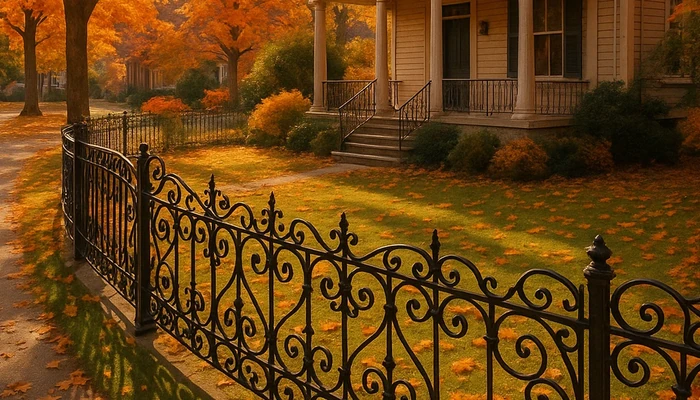
- Traditional scrollwork: Curves, twists, and ornamental leaves or rosettes.
- Modern minimalist: Clean, straight lines with geometric patterns.
- Historic reproductions: Adaptations of classic fence designs for restoration projects.
- Color and finish: Durable powder-coated finishes reduce rust and allow for black, bronze, metallic, or custom colors.
- Height, spacing and picket tips: Adapted for privacy, security, or safety needs.
For inspiration, explore detailed examples in our posts on classic and functional iron railing design and trends in iron railing design.
Realistic Expectations: Lifespan, Maintenance, and Upkeep
Iron railings are built to last: With professional installation and periodic care, you can expect 40-60 years or more from high-quality wrought or cast iron. However, unlike vinyl or aluminum, iron does require some regular maintenance to prevent corrosion and keep it looking its best:
- Inspect annually for rust spots, especially in areas with paint scratches or constant moisture exposure.
- Clean as needed with mild soap and water.
- Touch up paint or powder-coat finishes any time you notice chipping or exposed metal.
- For stubborn rust or older fences, thorough sanding and repainting may be necessary every 10–15 years.
Using low-VOC paints and cleaners, as recommended by Green Seal, can minimize environmental impact—an important consideration for many property managers and eco-conscious homeowners.
For advanced tips on protecting your fence through Chicago winters, read Iron Railings: Resistance to Weather Conditions.
Security, Codes, and Safety Considerations
Iron railings are naturally secure due to their strength. But a few design details can make a significant difference:
- Opt for tight vertical pickets to prevent climbing.
- Choose a sufficient fence height for privacy and deterrence.
- Consider pointed or decorative finials for added security and style.
Always confirm your project meets local building codes and—if applicable—HOA rules and historical district standards. In Chicago, permits and specific design guidelines may apply, especially for front yard fences or properties in landmark areas. If unsure, consult a professional fence contractor with local experience, such as Chicagoland Fence Pros.
For commercial security applications (like bollards or automatic gates), see iron bollards installation and automatic gates options.
Cost Factors and Budgeting for Iron Railings
Iron fence installation costs depend on several variables:
- Design complexity: Custom patterns and heavy ornamental work increase costs over simple, pre-fabricated panels.
- Fence length and height: More material and labor raises the price.
- Site conditions: Uneven ground, rock, or the need for existing fence removal can add to the bill.
- Finish options: Powder-coated finishes may raise upfront costs but reduce long-term maintenance.
As a rough guideline, iron fencing generally costs more than wood or vinyl but less than custom masonry. Always get a clear, written estimate from a reputable local company. For more on pricing and budgeting fencing projects, see our resource on fence installation for businesses or residential fence options.
Environmental Impact of Iron Railings
Iron’s long lifespan and recyclability make it a responsible fencing choice. Many iron railings incorporate a significant proportion of recycled material, reducing manufacturing impact. Paints and cleaners can also be chosen with the environment in mind—see this Green Seal guide for how to identify safer products for your outdoor metalwork.
For further reading, check our post on the environmental impact of recycled iron handrails.
Iron Railings in Chicago: Local Insights
Homeowners in Chicago, Illinois often ask how iron railings perform against bitter winters, ice, and road salt. Quality iron, installed correctly with anti-corrosive treatments and well-anchored footings, is an excellent long-term investment even in tough climates. Some local considerations:
- Look for finishes designed for freeze-thaw cycles and salt resistance.
- Gaps between pickets should comply with safety and code requirements.
- Check for landmark or historic district rules affecting front yard appearance.
- For city code questions, local professionals monitor updates and can advise on compliance—see DASMA’s industry resources for standards.
If you’re planning a project in a high-traffic, urban area or restoring a historic building, browse our guides to iron railings for restoration projects and enhancing home aesthetics.
Simple Maintenance Checklist for Iron Railings
- Spring: Inspect for rust, touch up paint, lubricate hinges and latches.
- Summer: Clean gently and check for loose fasteners after storms.
- Fall: Remove leaves and debris to prevent moisture buildup.
- Winter: Clear snow buildup, avoid corrosive de-icing chemicals near the base.
Regular upkeep goes a long way in extending your railings’ life and maintaining their appeal. For more tailored tips, read our article on key aspects in iron railings.
Frequently Asked Questions: Iron Railings for Fencing
1. How long do iron railings really last?
With regular cleaning and rust prevention, expertly installed iron railings can last 40–60 years or even longer. Occasional repainting may be required to maximize lifespan, especially in harsh climates like Chicago.
2. Are iron railings safe for children and pets?
Yes—customizable picket spacing and smooth designs prevent entrapment or accidental injury. Notify your installer of any safety concerns, and review local code minimums for spacing and height to ensure compliance.
3. How do I prevent my iron fence from rusting?
Choose a professional powder-coated finish or regularly paint exposed metal with quality, exterior-grade paint. Promptly treat chips or scratches and keep railings clear of debris and standing water.
4. What’s the difference between wrought iron and cast iron railings?
Wrought iron is hand-worked, malleable, and highly durable—ideal for customized or high-security railings. Cast iron is molded, offering elaborate patterns at a lower price but can be more brittle. Each has unique advantages depending on your needs.
5. Can iron railings be repaired if damaged?
Minor rust or paint damage can typically be repaired with sanding and refinishing. Bent or broken sections may require welding or replacement by a skilled professional. Older, historic railings can often be preserved with restoration techniques.
6. How does iron compare to vinyl, aluminum, or wood fencing for residential properties?
Iron outperforms wood on longevity and security, while aluminum offers similar look with less weight and maintenance. Vinyl is more affordable but lacks the classic styling and strength of iron. Choose based on your priorities for cost, upkeep, and appearance.
7. Will an iron fence increase my property value?
Iron railings, especially when well-maintained and expertly chosen for your architecture, can significantly boost curb appeal and perceived value. Many buyers are drawn to classic metalwork, especially in established neighborhoods.
8. What regular maintenance tasks do homeowners need to perform?
Regular cleaning, annual inspections for rust, touch-up painting, and tightening or lubricating hardware are recommended. For most residential properties, a thorough check 1–2 times a year is sufficient.
9. Are there eco-friendly options for cleaning or painting iron railings?
Yes! Many modern paints and cleaners are low in volatile organic compounds (VOCs). Learn more from this Green Seal guide.
10. When is it best to call a professional?
For complex repairs, code compliance, custom fabrication, or large installations, always contact a qualified fence specialist. Professional installation ensures correct structure, security, and long-term performance, especially in regions with harsh weather.
Summary and Next Steps
Iron railings have earned their place as a fencing classic, combining unmatched durability with timeless design. If you value longevity, security and style—and are willing to invest a little time in regular care—they may be the perfect choice for your Chicago-area property. For more information, inspiration, and guidance on related materials, see our guides on vinyl fencing and chain link fences. Ready to discuss your options or receive a transparent estimate?
Request an iron railing estimate or contact Chicagoland Fence Pros to talk to fence specialists with local expertise and clear advice.
About Chicagoland Fence Pros
Chicagoland Fence Pros has over 15 years of experience helping homeowners and businesses in Chicago, Illinois and surrounding areas improve security, privacy, and curb appeal. Our team specializes in code-compliant installations of iron, wood, vinyl, aluminum, and composite fences—handling residential, commercial, and specialty perimeter projects. We’re dedicated to honest guidance, transparent quotes, and the best fence for every property. Fully licensed, insured, and focused on building solutions that last for decades in the Midwest climate.
fence chicago, iron railings chicago, railing replacement chicago, metal railings North Halsted, metal railings Romeoville, wrought iron railings Fox Lake, stair railings Winnetka, custom iron railings Hampshire, metal railings Lockport, handrails Buffalo Grove