
Automatic Gate Emergency Access in Chicagoland: Fire Department Access, Backup Power, and Safe Egress
When investing in an automatic gate for your home or building in Chicago, Illinois, safety and compliance are just as important as convenience and aesthetics. Many property owners wonder: what happens when emergency services need to enter, or if a power outage strikes? How can families, tenants, and visitors safely get out in all scenarios? These aren’t just hypothetical questions—local codes, real-world safety, and the unique challenges of Chicago’s climate all play a part in reliable, secure gate operation.
This comprehensive guide breaks down everything you should know about Automatic Gate Emergency Access in Chicagoland: Fire Department Access, Backup Power, and Safe Egress. You’ll learn how trusted providers like Chicagoland Fence Pros address emergency requirements, integrate backup systems, and design access for quick response and safety. By the end, you’ll be able to evaluate your options clearly and feel confident your automatic gate supports not just security, but total peace of mind.
What is Automatic Gate Emergency Access? Why Does It Matter?
Emergency access refers to methods and features built into automatic gates that allow first responders, residents, and essential personnel to open the gate quickly and safely during urgent situations—regardless of power or normal access control. In Chicagoland, where winter storms, blackouts, and medical incidents can happen, planning for these situations is critical.
- Legal compliance: Most local fire codes require specific solutions for life-safety and fire department access (see Chicago Building Code).
- Life-saving speed: Seconds count for first responders. The right access can mean smoother rescues, reduced property damage, and less risk to occupants.
- Risk mitigation: Poorly planned gates can trap residents during power outages or mechanical failures, increasing liability for property managers.
Choosing an emergency-capable system isn’t just a technical detail—it’s a vital consideration for families and property owners alike.
Chicago Fire Department Requirements and Local Codes
Every region interprets fire and building codes uniquely. In the Chicago, Illinois area, fire department access rules are strict to support public safety. Some of the key requirements include:
- Accessible Override Devices: Gates must have a fire department-approved override—usually a lockbox, keyed switch, or strobe sensor.
- Manual Release: All automatic gate systems must include a manual release mechanism that’s easy to use, clearly marked, and accessible from the entry side.
- Power Failure Provisions: In the event of electrical failure, the gate should default to a fail-safe (unlocked/free) or be equipped with emergency battery backup.
- Unobstructed Egress: Residents and occupants need a means of egress that is operable at all times without the need for special knowledge, effort, or key.
The Chicago Building Code, along with guidelines from groups like Door & Access Systems Manufacturers Association International (DASMA), provides more detailed standards. Always check municipal regulations and consult with local professionals to ensure full compliance.
Types of Emergency Gate Access Solutions
There are several proven solutions for ensuring emergency access and safe egress. Below is an overview of popular options used in Chicago-area installations:
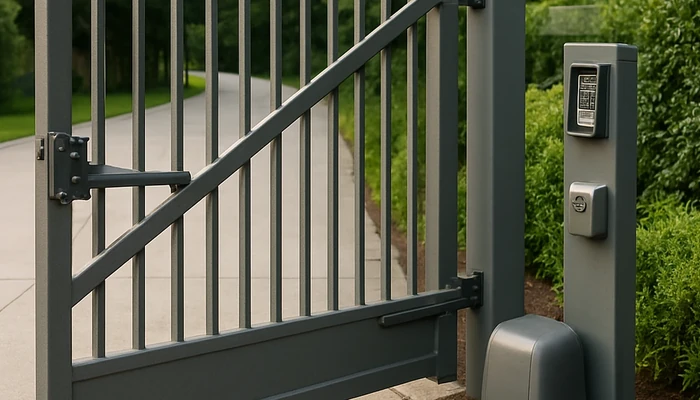
- Fire Department Lockboxes: Mounts at the gate, allowing fire personnel to access a master key or manual gate release.
- Strobe-Sensitive Receivers: Devices that open the gate upon flashing lights from emergency vehicles (common in larger residential and commercial properties).
- Key Switches and Knox Switches: Secure exterior switches activated by first responders using a standardized fire department key.
- Manual Release Levers: Enable gate opening by hand if power or electronics fail—must be easy to find and operate under stress.
- Pedestrian Egress Gates: Smaller, code-compliant side gates with panic hardware for walk-through egress at all times.
- Backup Power Systems: Battery backups, sometimes supplemented by solar, keep the gate functional through short-term outages.
| Solution | Primary Benefit | Typical Use | Limitations |
|---|---|---|---|
| Lockbox/Key Switch | Fire/law access | All gates | Must be kept up-to-date with FD |
| Strobe Receiver | Hands-free responder entry | Communities, commercial | May need calibration for FD strobes |
| Manual Release | Works when power fails | Residential & all gates | Must be within reach outside gate |
| Battery Backup | Power continuity | All automatic gates | Limited runtime (varies by setup) |
| Pedestrian Egress Gate | Unblocked exit | Multi-tenant, commercial | Requires separate security |
Backup Power and Gate Operation During Outages
Chicago’s weather brings harsh winters, thunderstorms, and occasional outages. To guarantee Automatic Gate Emergency Access in Chicagoland even when the grid is down, most systems should include a backup power source:
- Battery Backups: Rechargeable batteries power the gate’s motor and controls for a set period (2–24 hours depending on system and use).
- Solar-Assisted Options: While less common, solar panels can support emergency operations or trickle charge batteries between uses—a benefit in long outages (For a deeper look, visit our post on solar energy and automatic gates).
- Manual Override: Regardless of battery, all systems should have a labeled, easily operated manual release for complete failsafe protection.
Every system should be tested regularly and serviced to ensure batteries don’t degrade over time. Experienced installers like Chicagoland Fence Pros will advise on backup sizing and maintenance plans suited to Chicago’s unique conditions.
Safe Egress: Ensuring Families and Residents Can Exit
Equally important as emergency entry is unimpeded egress. Fire codes demand that residents, tenants, and visitors can always exit a property, regardless of circumstances. Primary egress solutions include:
- Panic Hardware: Push bars and levers on pedestrian gates, opening without keys or special effort, even if main gate fails.
- Automated Egress Timers: Some gates unlock automatically after a set period, or when smoke/fire is detected.
- Visibility and Signage: Clear marking of exits and manual release mechanisms is a code requirement and best practice.
- Routine Drills/Instructions: For multi-unit properties, communicating egress procedures to all residents reduces risk and confusion in real emergencies.
For more on gate safety and compliance, see our in-depth guide on safety standards for automatic gate installation.
Trade-Offs: Security, Usability, and Code Compliance
Designing the right emergency access solution is always a matter of balance. Here are some key trade-offs to consider:
- Security vs. Access: More entryways and override options may aid first responders, but can also introduce weak points if not properly controlled.
- Convenience vs. Tamper-Resistance: Devices like fireman’s switches must be secure from misuse but fast to operate under stress.
- Code vs. Community Needs: Some neighborhoods (especially HOA-managed) may have specific preferences for aesthetics or noise, which must not conflict with code requirements.
Experienced professionals factor in all these elements during planning, always prioritizing life-safety and legal compliance.
Recommended Maintenance: Keeping Your Gate Emergency-Ready
Regular maintenance is critical—especially in Chicago’s freeze/thaw cycles, where batteries and moving parts are under stress. Best practices include:
- Monthly Function Tests: Ensure manual releases and override devices are operational and not obstructed.
- Battery Checks: Replace and test backup batteries as often as the manufacturer recommends (at least annually).
- Winter Readiness: Lubricate hinges, check for freeze-ups, and verify snow/ice cannot block paths to release levers.
- Code Updates: Review new local fire/building updates yearly—what was compliant last year may require updates now. See Structure Magazine Codes & Standards for emerging national trends.
For deeper advice on extending lifespan and avoiding costly repairs, see our full preventive maintenance guide.
Integrating Emergency Access in Your Automatic Gate Design Process
Emergency readiness isn’t an afterthought—it should be part of planning from day one. Steps to ensure the right setup include:
- Discussing your property’s needs and risks with a specialist (such as Chicagoland Fence Pros).
- Reviewing local codes and HOA rules for fire department requirements.
- Selecting trusted, code-compliant devices and access methods (shown earlier in this guide).
- Designing for visibility, labeling, and ease of use in all weather conditions.
- Scheduling regular servicing and testing of all safety-critical systems.
To explore Chicago-specific design tips and real-world challenges, consult our post on environmental adaptations for automatic gate installation.
Environmental and Social Impacts of Gate Emergency Access Systems
The impact of a well-planned emergency gate system extends beyond individual safety:
- Community Confidence: Residents and tenants feel safer knowing emergency services can access or exit quickly if needed.
- Insurance and Liability: Properly equipped gates may reduce insurance costs or mitigate legal exposure in emergencies.
- Sustainability: Solar-assisted backups and low-maintenance gates also have positive environmental impacts. See our environmental benefits guide for more details.
For a deeper look at community and safety aspects, visit our social impact of automatic access discussion.
FAQ: Automatic Gate Emergency Access in Chicagoland
How does the Chicago Fire Department access automatic gates in emergencies?
They use approved devices such as fire department lockboxes, key switches, or strobe sensors. These allow responders to override the gate immediately—consult your installer to ensure proper setup.
What happens if the power goes out—will my automatic gate trap people?
No. Quality systems feature backup batteries and a manual override that allows gates to be opened by hand from the inside and/or outside, meeting code requirements.
Do all automatic gates require backup power in Chicago?
While not legally required for all installations, backup power is strongly recommended—especially in multi-unit or commercial settings—to maintain emergency access during outages.
What’s the difference between a fireman’s switch and a lockbox?
A fireman’s switch is a universal keyed switch used by responders, while a lockbox contains a key or release mechanism secured for fire personnel. Both are accepted solutions; their use depends on local codes and fire department practices.
Is regular maintenance needed for emergency access features?
Absolutely. Backup batteries degrade over time and override mechanisms need to be kept clear of debris, rust, or ice. Test monthly and have gates professionally serviced.
Can I use solar power for emergency gate backup in Chicago?
Yes. Solar is an effective supplement for backup batteries, though it’s less reliable in long, cloudy winters. Discuss with your installer if solar integration is right for your property.
How do I know if my gate is code-compliant?
Check Chicago Building Code and look for certifications from authorities like DASMA. Working with a local expert ensures your installation meets all requirements and is properly documented.
Are manual release levers safe from tampering or misuse?
Modern systems feature secure covers, visible labeling, and placement strategies to balance safety and prevent unauthorized use.
What about pedestrian gates for egress in gated communities?
Pedestrian egress gates with panic hardware are a must for safe occupant exit, especially in multi-unit properties. They ensure exit without special knowledge or keys in all circumstances.
How can I future-proof my gate for changing codes or technology?
Choose modular systems that allow upgrades and work with professionals committed to ongoing support and code updates.
Conclusion: Making Smart Choices for Emergency Access & Safety
When planning an automatic gate in the Chicago, Illinois area, prioritizing emergency access isn’t just a legal checkbox—it’s essential for protecting lives, property, and peace of mind. By knowing the requirements for fire department entry, ensuring backup power, and providing reliable egress features, homeowners and property managers can design systems that perform under stress. Regular maintenance and partnership with experienced providers—like Chicagoland Fence Pros—are the best path to safety and compliance. Ready to review your gate options or update an older system? Request a gate access review or explore residential fence solutions today.
About Chicagoland Fence Pros
Chicagoland Fence Pros is a trusted fence company with over 15 years of experience serving homeowners and businesses in Chicago, Illinois and nearby communities. Specializing in wood, vinyl, aluminum, and steel fences—along with secure, code-compliant automatic gates—our team delivers residential and commercial projects that prioritize safety, privacy, and lasting value. Fully insured, licensed, and dedicated to local building standards, we help clients navigate choices with honest advice and reliable support.
fence company in chicago, access control gate, swing gate Chicago, access control gate Mount Prospect, automatic gate repair Waukegan, automatic gate Wheaton, security gate Wilmette, gate opener repair Glenview, gate opener North Edgebrook, driveway gate Forest Glen