
Steel Posts: The Future of Fence Construction
Choosing the right fence for your property goes far beyond simply picking a style. For homeowners and property managers—especially those in the Chicago, Illinois area—the stakes are higher due to harsh winters, local building codes, and a strong need for dependable privacy and security. As you research your options, you’ll likely encounter debate about materials, longevity, and value. Increasingly, one answer stands out: steel posts. In this comprehensive guide, we’ll demystify “Steel Posts: The Future of Fence Construction,” exploring their advantages, the science behind their performance, practical comparisons with other materials, realistic installation and maintenance insights, and how to set expectations before tackling a fence project. By the end, you’ll have clarity and confidence for your next fencing upgrade—with support from local experts like Chicagoland Fence Pros.
Understanding Steel Posts: What Makes Them Different?
Steel posts have become a game changer in modern fence construction. Unlike traditional wood or basic aluminum, steel offers unique properties that bring real benefits for Chicago’s demanding climate and the expectations of today’s property owners.
- Strength & Longevity: Steel maintains rigidity and resists rot, pests, and shifting ground better than wood or vinyl.
- Weather Resistance: Properly treated steel withstands moisture, freeze-thaw cycles, and high winds common in the Midwest.
- Security Upgrades: Heavier and harder to breach, steel posts enhance perimeter and privacy fencing.
- Adaptability: Can be paired with wood, vinyl, or composite infill for aesthetic flexibility.
- Code Compliance: More and more Chicago-area regulations encourage or require code-compliant, durable posts for lasting safety.
The Evolution of Fence Construction: Why Steel Posts Now?
Traditionally, most perimeter fences relied on wood posts—readily available and easy to work with, but prone to issues over time (rot, splitting, insect damage, frost heaving). As property values rise and maintenance costs become a concern, the move toward steel is accelerating.
- Modern Galvanization: Today’s steel posts are coated or galvanized to resist rust, extending usable life by decades.
- Improved Coatings & Paints: Common finishes help prevent corrosion even in salty or wet environments.
- Precision Engineering: Uniform sizing and engineered strength make for easier installation and longer, straighter fence lines.
- Compatible Accessories: Brackets, caps, and infill panels are designed for seamless assembly.
For a deeper dive into choosing fence materials based on local climate, explore our guide on Choosing the Best Fence Materials Based on Climate.
Types of Steel Posts and Fence Systems
Steel posts are not one-size-fits-all. Understanding your options helps you choose the right system for your needs, property type, and style preference.
1. Round Galvanized Steel Posts
- Most often used in chain link fences.
- Resist corrosion, affordable, quick to install.
- Good for security, sports, pet containment.
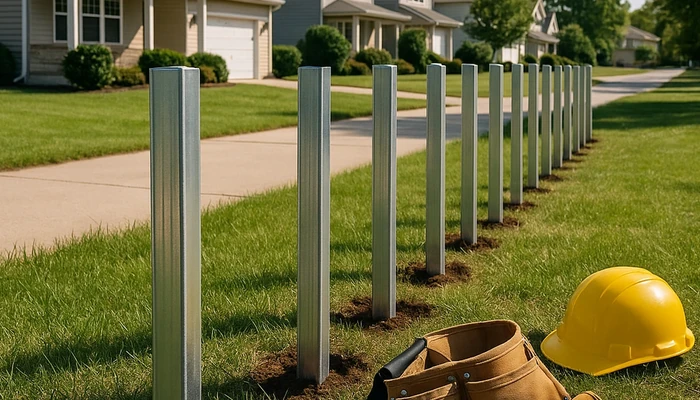
2. Square Steel Tubing Posts
- Popular for decorative and privacy fences.
- Support wood, composite, or vinyl infill panels.
- Offer more surface area for brackets and fasteners.
3. Heavy Duty Structural Steel Posts
- Used for high-security, commercial, or tall fences.
- Sometimes specified by code for schools, government facilities, or industrial perimeters.
4. Specialty Steel Post Systems
- Powder-Coated: Improve appearance and weather resistance.
- Steel Posts with Attached Brackets: For faster assembly of prefab panels.
- Bollard-Style: For vehicle impact resistance and critical security points. For specialized iron bollard installation, see our Iron Bollards Installation in Chicago page.
Comparing Steel Posts to Wood, Aluminum, and Composite
Every property has unique needs, budgets, and design requirements. Below is a head-to-head comparison to clarify steel’s role versus other common post materials:
| Feature | Steel | Wood | Aluminum | Composite |
|---|---|---|---|---|
| Strength | Very High | Moderate | Decent | Good |
| Rust/Rot | Resistant if coated | Prone to rot/insects | Will not rust | Highly resistant |
| Life Span | 20–40+ years | 8–20 years | 15–30 years | 25–35 years |
| Maintenance | Low (paint/check fasteners) | Staining/sealing needed | Low | Low |
| Cost | Moderate–High | Lower | Moderate | High |
| Code-Compliance | Excellent | Good (if treated) | Excellent | Excellent |
| Eco-Friendliness | Recyclable, energy intensive | Renewable, requires treatments | Recyclable | Recycled content possible |
Want more on wood fence durability? Check out Crafting a Durable Lumber Fence.
Benefits of Steel Posts for Chicago, Illinois Properties
Homeowners in Chicago, Illinois and the surrounding area face unique fencing challenges:
- Soil freeze-thaw and shifting ground
- Frequent rain, snow, and road salt exposure
- Strict local building codes (especially for multi-family, pool, and rental properties)
Steel posts shine because they:
- Last 2x–4x longer than wood posts, resisting both rotting and wind-load failure
- Stay true, reducing maintenance and repair needs (saving long-term costs)
- Support modern fencing styles with minimal bulk or visual clutter
Chicagoland Fence Pros always considers climate, property conditions, and local code compliance when designing and installing fences in Chicago, Illinois and beyond.
Cost Considerations: Upfront and Long-Term
There’s a common perception that steel is “too expensive.” Here’s what to weigh before deciding:
Upfront Costs
- Steel posts generally cost more than wood—per post—but may reduce labor and accessory expenses.
- Long post spacing is possible with steel, potentially reducing the total post count.
- Specialty finishes (powder-coating, custom caps) increase price but add longevity and style.
Long-Term Savings
- Fewer replacements over the decades
- Lower maintenance (occasional paint touch-ups, but no rotting or splitting)
- May increase property value thanks to curb appeal and security
For budget-conscious projects, compare with cost factors at Evaluating Fencing Installation Costs.
Installation: What You Need to Know
Installing steel posts is not the same as wood—there are specialized tips and pitfalls:
- Concrete Footings: Steel posts must be set in concrete for strength and to prevent shifting. Depth depends on soil/fence height.
- Post Caps: Cover open ends to keep out water and debris, which helps prevent internal rusting.
- Bracket Systems: Modern brackets speed up the attachment of panels or rails, making for faster installs.
- Permits & Inspection: Always check with your municipality or HOA for fence regulations in the Chicago, Illinois area. Many require specific post depths and materials for code compliance.
For DIYers, strong technical support resources such as Simpson Strong-Tie’s FAQ can provide guidance on anchoring and fastener selection.
Realistic Maintenance and Upkeep
While steel posts are considered low-maintenance, proper care ensures the best return on investment:
- Inspect annually for scratches, rust spots, or loose fasteners.
- Touch up paint as needed to seal exposed metal.
- Ensure vegetation/landscaping does not trap moisture against posts.
- Clear snow and debris from around footings in winter.
- Tighten or replace hardware as part of seasonal checks.
For more on caring for fences of all types, see our hub on Ensuring a Successful and Long-Lasting Installation.
Building Codes, Permits, and Best Practices
Every fence project—especially those using steel posts—should follow local codes for safety and durability.
- Post depth: Typically 1/3 of post length, deeper for taller fences or loose soils.
- Materials: Some codes in Chicago, Illinois specify steel or minimum-gauge requirements for perimeter and pool fences.
- Height restrictions: Vary by suburb and fence type (privacy, picket, security).
- Property lines: Confirm surveyed boundaries and neighbor agreements before installing posts.
- HOA rules: Many neighborhoods require style or material pre-approval.
To understand compliance and preparation, read our guide Navigating Local Fence Regulations: A Step-By-Step Guide for Homeowners.
Combining Steel Posts with Other Fence Styles
The flexibility of steel posts enables many fence designs:
- Traditional Wood: Use steel posts for the support structure, then attach wood rails and pickets for classic style with modern durability.
- Vinyl or Composite Panels: Steel posts often hidden by panel covers for a sleeker look.
- Wire Mesh and Chain Link: Essential for high-security and commercial projects (see Chain Link Fence Chicago for more).
- Custom Decorative: Modern horizontal, vertical, or mixed-materials fences often rely on steel posts for both looks and strength.
Steel’s compatibility promotes both creativity and long-term value.
Frequently Asked Questions About Steel Posts & Modern Fencing
1. Are steel posts worth the extra cost compared to wood?
Yes, especially in climates like Chicago, Illinois. Steel lasts much longer, resists warping or rotting, and lowers long-term costs—even if the initial price is higher.
2. Can steel posts be used with wood or vinyl panels?
Absolutely. In fact, many new fences blend steel posts for hidden strength with decorative panels for appearance. Mounting brackets are available for all major materials.
3. How do you prevent steel posts from rusting?
Use only galvanized or powder-coated posts, keep post caps installed, and occasionally check for scratches or chips in the coating. Prompt touch-ups prevent issues.
4. Do steel posts require bigger holes or more concrete?
Generally, no. The depth and diameter depend on fence height and local code. Steel’s strength may allow for fewer posts or longer spans—but always follow engineering recommendations.
5. Are there specific codes in Chicago, Illinois for steel fences?
Some residential and commercial codes specify approved post types, depths, and fence heights. Always check with the city or township before building. For code info, resources like the American Fence Association are handy.
6. How does steel perform in windy or snowy conditions?
Steel posts are preferred for wind-resistant fences and handle snow loads far better than untreated wood. Proper footing and bracing are essential for maximum performance.
7. Can old wooden posts be swapped for steel posts?
Often yes, if post spacing and fence type are compatible. This upgrade is popular for repairs and maintenance of vintage fences. Consult a professional to check alignment and fit.
8. What ongoing maintenance do steel posts need?
Check annually for rust, recoat as needed, and ensure hardware is tight. Good steel posts can deliver decades of service with minimal effort.
9. Can steel posts be painted a custom color?
Yes, but use a compatible outdoor metal paint. Many manufacturers offer powder coating in custom shades—ask your installer for options.
10. Do steel posts make fences look industrial?
No—with modern design and panel choices, steel posts can be hidden or become a subtle, stylish design element. They suit both residential and commercial properties.
Next Steps: Planning, Professional Help, and Making the Right Choice
Transitioning to steel posts is one of the smartest moves you can make for fence longevity and property value in the Chicago, Illinois area. But each project is unique—style, budget, code requirements, and maintenance comfort level all play a part.
- Review all local regulations and talk with neighbors before investing in any major fence upgrade.
- When in doubt about structure or compliance, talk to our fence specialists for clear recommendations.
- Ready to explore options for your home or business? Request a fence estimate or find more resources in our property value benefits hub.
Chicagoland Fence Pros brings hands-on experience, honest advice, and transparent planning to every project. With steel posts, you future-proof your fence for decades—without sacrificing style or breaking the bank.
About Chicagoland Fence Pros
Chicagoland Fence Pros is a professional fence company with over 15 years installing fences in the Chicago, Illinois area. Serving both homeowners and businesses, we specialize in steel, wood, vinyl, aluminum, and commercial fencing—all with an honest, code-compliant approach and full transparency. Our team prides itself on education, clear quotes, and long-term results that stand up to the Midwest’s toughest elements. Fully insured and local experts, Chicagoland Fence Pros helps enhance security, privacy, and curb appeal with each project.
chicago fence contractor, residential yard fence chicago, home fence, residential backyard fence Glencoe, residential backyard fence Romeoville, pool fence Lake Forest, privacy residential fence Broadview, residential backyard fence Andersonville, pool fence North Center, garden fence Fox Lake