
Security Gate Access for Multi-Tenant Buildings: Codes, Clickers, and Audit Trails
Modern multi-tenant buildings—from apartment complexes and condos to mixed-use commercial spaces—face evolving challenges in securing shared entrances. Property managers and homeowners alike often feel overwhelmed by choices: key fobs, keypads, clickers, audit trail software, and a maze of building codes. Security, privacy, and convenience must be balanced, especially in active metropolitan areas like Chicago, Illinois. This in-depth guide on Security Gate Access for Multi-Tenant Buildings: Codes, Clickers, and Audit Trails demystifies your options and clearly explains the technology, compliance, and maintenance essentials. By the end, you’ll confidently understand access control basics, how various systems work, what codes matter, and where to begin when selecting or upgrading security gates. The experts at Chicagoland Fence Pros bring years of hands-on, code-compliant experience and practical advice to every section below.
Understanding Security Requirements for Multi-Tenant Gates
Securing the entrances and perimeters of multi-tenant buildings is essential for ensuring resident safety, safeguarding property, and managing liability. Multi-tenant access control systems must protect against unauthorized entry, all while allowing for the convenience that residents, guests, and service providers expect.
- Who uses the gates: Residents, employees, maintenance crews, guests, delivery drivers.
- Common risks: Tailgating, lost keys or clickers, duplicate credentials, inability to audit access, and shared gate misuse.
- Core goals: Limit unauthorized entry, document events, ease management, and support emergency access.
For Chicago, Illinois properties, weather factors like snow, ice, and temperature swings also impact gate reliability and design.
Types of Security Gate Access Systems for Multi-Tenant Buildings
Several gate access technologies are suited for multi-tenant environments. The right choice depends on factors like property layout, traffic volume, user preferences, and building code obligations.
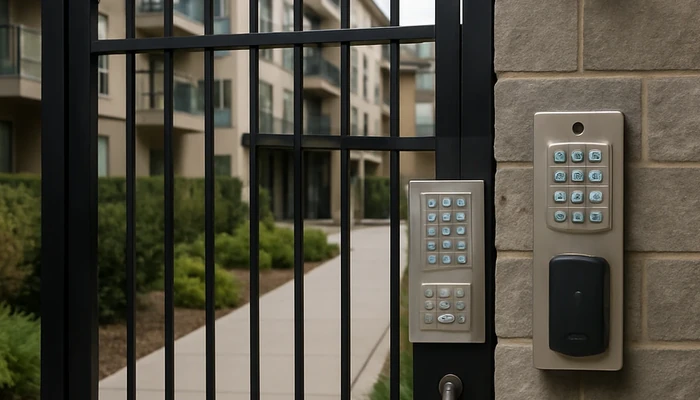
- Keypads and PIN Codes: Users enter personal or shared numeric codes for entry.
- Clickers/Remotes: Handheld devices transmit a unique code to open the gate wirelessly.
- Card or Fob Systems: Proximity cards or electronic fobs grant access when tapped or swiped.
- Mobile App/Bluetooth Access: Residents use smartphones for gate operation.
- Telephone Entry/Intercom: Guests request entry via in-gate call panels, often paired with resident approval apps.
- License Plate Recognition (LPR): Automated cameras grant vehicle access based on registered license plates.
Each system involves unique trade-offs in convenience, cost, maintenance, and security.
Comparing Gate Access Methods: Pros, Cons, and Suitability
| Access Method | Pros | Cons | Best For |
|---|---|---|---|
| Keypads / PIN Codes | Easy use, no devices to carry, quick code changes | Codes can be shared, sometimes copied; audit trail limited unless linked to user accounts | Small-medium sites, backup access |
| Clickers / Remotes | User convenience, quick entry from vehicle, battery powered | Loss/theft risk, replacement costs, duplicates possible | Garage gates, resident-only entrances |
| Cards / Fobs | Can assign to individuals; supports audit trail | Physical device to track; can be copied/cloned if not encrypted | Larger buildings, secure zones |
| Mobile Apps | Trackable, revocable, modern user experience | Relies on user smartphones; some tech learning curve | Tech-forward properties |
| Intercom/Telephone Entry | Verifies guests, integrates with remote approvals | Slower for everyday users; more complex install | Visitor and delivery management |
| LPR Cameras | Seamless for vehicles, less shared device risk | Initial cost, privacy considerations | High-traffic garages / driveways |
Building Codes, Regulations, and Best Practices
In Chicago, Illinois and most U.S. cities, security gate systems must adhere to building codes, fire regulations, emergency access requirements, and accessibility laws. Always confirm:
- Gates allow emergency egress—never block paths needed for evacuation.
- Installations follow established industry practices and federal safety guidelines.
- HOA or condo board rules may set stricter standards for resident entry and data retention.
- All components should be UL-listed and weather-rated for the Chicago climate.
Legal requirements can change—consult with professionals when designing or upgrading your multi-tenant gate access.
How Audit Trails and Access Logs Improve Security
Audit trails provide a digital record of every entry and exit attempt at your gate. Strong, privacy-minded audit trail practices help property managers:
- Pinpoint misuse or unauthorized entry (lost device, code sharing, tailgating)
- Simplify investigations during security incidents
- Reduce liability with a documented chain of access
- Set time-based permissions (e.g., cleaning crews access only during work hours)
Integration with cloud systems enables remote monitoring and access changes, especially helpful for larger Chicago buildings or off-site management.
Maintenance and Troubleshooting Common Gate Access Issues
Regular upkeep extends the life and reliability of your security gate:
- Test keypad codes and clickers monthly, especially before winter storms.
- Replace weak batteries and worn remotes proactively.
- Clear ice/snow from gate pathways to prevent motor strain or jams.
- Review audit trails quarterly for unresolved access attempts or code sharing.
- Schedule annual professional inspections to review hardware, software, and compliance.
If gates jam, access logs stop updating, or code changes don’t work, contact a trusted contractor like Chicagoland Fence Pros for diagnostics and repair. Don’t attempt electrical work yourself—always consult qualified installers.
Realistic Expectations: Balancing Security, Convenience, and Cost
- Perfect security is rare. Even advanced systems require user training and regular monitoring.
- Convenience vs. control: Physical keys, simple clickers, or open periods are easy, but may reduce auditability. Balance risk tolerance and user needs.
- Budgeting: Initial installation costs vary greatly by system complexity and integration needs. Factor in ongoing maintenance, device replacement, and software license fees.
- Resident education: Help users understand why unique codes or registered devices matter in maintaining a secure property.
Combine modern technology, clear resident communication, and code-compliant design for the best results.
Integrating Gate Access with Other Property Security Solutions
For layered security, integrate gate systems with other building technologies:
- Video surveillance and license plate cameras for visual verification.
- Alarm systems tied to forced-entry or tamper events.
- Access control integration with elevators and internal doors.
- Cloud dashboards for centralized control across multiple sites.
Learn more about optimizing property access strategies in this strategic guide or discover how advanced technology is transforming automated gate services.
Case Study: Smart Access in a Modern Chicago Building
A 150-unit apartment building in Chicago upgraded its gate security from manual clickers to a cloud-based audit trail system with unique PIN codes and registered fobs. The change:
- Reduced lost device expenses by 40%
- Enabled quick removal of departed tenant access remotely
- Allowed management to track after-hours deliveries and maintenance entries
- Improved resident confidence and lease renewal rates
This project highlights the improved oversight and flexibility available through modern multi-tenant gate solutions—especially when combined with proper resident education and ongoing system checks.
FAQs: Security Gate Access for Multi-Tenant Buildings
1. How can I balance convenience for residents with strong gate security?
Choose access systems that allow unique credentials per user (PIN, fob, app) and set clear rules about sharing. Use audit trails to monitor unusual patterns and regularly educate residents about secure access habits.
2. What regulations do I need to meet for gate installs?
Follow fire egress codes, accessibility laws, condo/HOA rules, and ensure all equipment is listed and weather-rated for Chicago’s environment. Consult professionals for code compliance and regular reviews.
3. Can mobile app gate access work for all residents?
Apps provide convenience and strong auditability but may not suit all users, especially in mixed-age communities. Offer backup options like PIN codes or key fobs when needed.
4. What are the biggest risks with clickers and remotes?
Loss or theft can result in unauthorized entry if not quickly deactivated. Register each device and promptly remove lost credentials. Consider more advanced, trackable methods for high-traffic sites.
5. How detailed are audit trails?
With modern systems, audit trails capture user/credential, entry time, gate or door used, and often log denied attempts. Retention periods depend on the system and your privacy policy.
6. What maintenance is needed for electronic gate systems?
Test, clean, and update credentials regularly. Schedule annual inspections and promptly repair malfunctions—harsh Chicago weather is hard on outdoor electronics.
7. What should I budget for a new gate access system?
Costs range from a few thousand dollars for basic keypad/clicker setups to tens of thousands for cloud-managed, video-integrated solutions. Include maintenance and software fees in planning.
8. Should visitor entry use codes, clickers, or intercoms?
For guest and delivery management, a telephone entry or video intercom system is safest—residents confirm access remotely, reducing shared code risk.
9. Can I integrate my gate system with other building tech?
Yes. Modern access control integrates with video, alarms, elevators, and cloud management dashboards for comprehensive oversight.
10. Who can help if I need a code-compliant upgrade?
Contact experienced, insured professionals like Chicagoland Fence Pros for assessments, recommendations, and installation tailored to Chicago-area regulations.
Next Steps: Choosing the Right Security Gate Access Solution
Choosing, installing, and maintaining security gate access for multi-tenant buildings requires balancing code compliance, resident needs, and scalable technology. Start by defining your goals, reviewing code requirements, and considering day-to-day management tasks. Consult with professionals who understand Chicago’s environment and local building codes for design and installation. For help with automatic gate options, see automatic security gate solutions or learn how automated gate systems can enhance property security. Ready to discuss a project or maintenance plan? Contact Chicagoland Fence Pros for code-compliant upgrades and honest advice.
About Chicagoland Fence Pros
Chicagoland Fence Pros is a professional fence company with over 15 years installing fences and security systems throughout Chicago, Illinois and nearby areas. Serving homeowners and businesses, we specialize in durable, code-compliant wood, vinyl, aluminum, steel, and composite solutions for both residential and commercial multi-tenant projects. Our experienced team emphasizes honest guidance, code compliance, and tailored perimeter security. Chicagoland Fence Pros is fully insured and knowledgeable about the latest building codes, weather demands, and audit trail technologies in the region.
fencing companies chicago, security gates Chicago, driveway gate, gate opener repair Oswego, automatic gate repair Wheaton, sliding gate Fox Lake, gate opener Lake Bluff, swing gate Palatine, access control gate Evanston, automatic gate Berwyn