
Bollard Installation: Key Factors to Consider Guide
If you’ve started researching fence and perimeter security solutions, you’ve likely encountered the term “bollards.” But what exactly are bollards, and why are their installation details so critical? Choosing and placing these sturdy posts can be the difference between a safe, code-compliant property and one exposed to unnecessary accident, liability, or costly repairs. In the Chicago, Illinois area, where weather, traffic, and neighborhood expectations collide, the process requires a careful approach. This in-depth guide breaks down every key factor to consider in bollard installation—materials, placement, regulations, costs, and more—so by the end, you’ll be equipped to confidently plan your project or talk with experts like Chicagoland Fence Pros about your specific situation.
What Are Bollards and Why Are They Important?
Bollards are short, sturdy vertical posts installed to create a physical or visual barrier for vehicles and sometimes for pedestrian control. Their core purposes include:
- Protecting entrances, walkways, or building perimeters from accidental or intentional vehicle intrusion
- Controlling and directing both vehicular and foot traffic
- Marking boundaries or restricted areas
- Enhancing property security and aesthetics
For property owners and managers, effective bollard installation can mitigate safety risks, prevent property damage, and visibly reinforce boundaries—especially critical for mixed-use or urban neighborhoods in Chicago, Illinois.
Types of Bollards: Options and Applications
There is no “one size fits all” bollard solution. The most common types include:
- Fixed Bollards: Permanently installed for maximum strength and long-term security.
- Removable Bollards: Can be removed or unlocked temporarily for occasional access or maintenance.
- Automatic/Retractable Bollards: Mechanized or hydraulic, these can be raised or lowered as needed (ideal for dynamic traffic control).
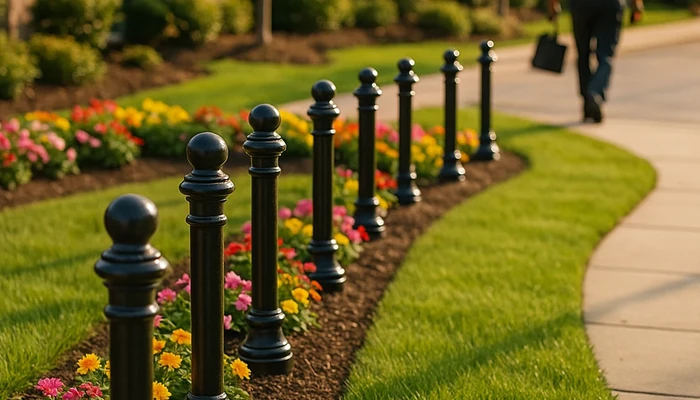
- Decorative Bollards: Designed to blend with architectural styles while still offering protection.
Bollard type selection depends on your specific needs—are you protecting a storefront, guiding traffic in a parking lot, or securing pedestrian areas? Each project calls for its own risk and traffic assessment.
For a detailed look at the types and specifics, refer to our guide Aspects To Consider In The Installation Of Bollards.
Material Choices: Durability, Security, and Style
The right material impacts not only a bollard’s security performance, but also longevity and maintenance demands—especially in Chicago’s challenging climate.
- Iron Bollards: Renowned for strength, classic appearance, and excellent impact resistance. Require rust protection and periodic checks for corrosion. Learn more about durability and maintenance best practices in our article on Strength and Durability in Iron Bollard Installation.
- Steel Bollards: Offer high strength, can be galvanized or powder-coated for weather protection.
- Concrete Bollards: Extremely durable, suitable for high-security applications but heavier and less flexible in design.
- Aluminum: Lighter, resistant to corrosion, often used when appearance is as important as function.
Each material comes with trade-offs in cost, aesthetics, and installation complexity. It’s essential to match the bollard material to your property’s usage level and exposure conditions.
Comparison Table: Common Bollard Materials
| Material | Strength | Weather Resistance | Maintenance | Typical Use |
|---|---|---|---|---|
| Iron | High | Moderate (needs protection) | Medium | Perimeter, decorative, security |
| Steel | High | High (if galvanized/coated) | Low–Medium | High-traffic, security |
| Concrete | Very High | High | Low | Anti-ram, urban control |
| Aluminum | Medium | High | Low | Decorative, pedestrian |
Planning for Bollard Installation: Site and Traffic Assessment
Proper site evaluation is the first step in any bollard installation. Here’s what you need to assess:
- Traffic Patterns: Study vehicle and pedestrian flow. Identify potential risks where vehicles could leave the roadway or parking area.
- Soil and Surface Conditions: Different base materials (concrete, asphalt, earth) require tailored foundations. Chicago’s freeze-thaw cycle poses unique challenges.
- Buried Utilities: Always locate underground lines before excavation to avoid costly and dangerous mistakes.
- Accessibility and Emergency Access: Design must not impede accessibility or required clearances for fire lanes, delivery trucks, or ADA-compliant paths.
A professional team will create a detailed site plan, often with input from local authorities and engineers.
Compliance: Codes, Standards, and Local Regulations
Bollard installation is regulated by a range of building codes and standards, both nationally and at the city level. Homeowners and property managers in Chicago, Illinois must pay close attention to:
- Chicago Building Codes: Regulations cover materials, placement, and visibility to ensure public safety.
- ADA Requirements: Bollards in public spaces must conform to accessibility standards, preventing impediment to those using wheelchairs or mobility aids.
- ASTM Standards: For guidance on impact resistance and material quality, refer to the authoritative standards listed at the ASTM International website.
- HOA or Property Covenants: Rules for appearance, placement, and approval processes, especially in residential settings.
It is essential to review zoning and code requirements or consult professionals like Chicagoland Fence Pros to avoid delays, penalties, or costly rework.
Installation Process: Steps, Tips, and Common Pitfalls
Bollard installation—particularly with iron or steel posts—requires precision. Here’s a summary of a proven process:
- Site Assessment: Mark proposed locations, check for utilities, verify measurements and spacing.
- Excavation: Use appropriate machinery for digging post holes to the correct depth and width. Account for frost lines and required foundations.
- Placement: Position bollards vertically; use braces as needed until concrete sets.
- Anchoring and Filling: Set posts in concrete or with mechanical anchors, ensuring level and plumb alignment.
- Finishing: Apply protective coatings, install caps or decorative sleeves, and verify spacing meets safety codes.
Common mistakes include poor alignment, skipping utility checks, and insufficient anchoring. For a more detailed breakdown, explore our deep dive: Steps For Efficient Iron Bollard Installation.
Cost Considerations and Budget Planning
The overall cost of your bollard project depends on several variables:
- Number and type of bollards
- Material choice (iron, steel, concrete, aluminum, etc.)
- Level of required security (basic barrier vs impact-rated anti-ram types)
- Site complexities (utility relocation, special foundations, landscape restoration)
- Installation labor and any permitting fees
In general, a basic iron or steel bollard installation for pedestrian protection will be less expensive than a large-scale, impact-rated anti-ram project. Always request detailed, transparent quotes—Chicagoland Fence Pros provides clear cost breakdowns for homeowners and property managers.
Maintenance and Longevity: Keeping Bollards Secure and Attractive
Once installed, ongoing care keeps bollards functional and looking their best. Essential maintenance steps include:
- Inspect for rust, corrosion, dents or misalignment—especially after winter or impact events
- Clean surfaces and repaint or treat as necessary (vital for iron and steel posts)
- Check for loosening due to foundation settling or soil changes
- Promptly repair or replace damaged bollards to maintain code compliance and insurance eligibility
For tips on extending bollard life and solving common issues, see Most Common Problems Of Iron Bollards And How To Solve Them and How to Extend the Life of Iron Bollards.
Training and Professional Expertise: When to Bring in the Pros
DIY installation might be possible for simple, decorative bollards. However, for installations requiring compliance with codes, advanced security, or high-traffic zones, professional expertise is essential. Experienced installers, such as members of the American Fence Association, follow industry-best practices for safety and quality. Chicagoland Fence Pros employs proven strategies for tough Chicago sites—ensuring your investment is protected long-term.
Integrating Bollards With Other Security and Fence Features
Bollards often work alongside additional perimeter security solutions, such as fences, gates, and railings. Coordinating these features can:
- Enhance traffic management and visual appeal
- Meet overlapping code requirements more efficiently
- Consolidate maintenance and site planning
Considering a fence upgrade? Explore related options here: Commercial Fence Installation, Iron Railings, and Automatic Security Gates in Chicago, Illinois.
Frequently Asked Questions (FAQ): Bollard Installation Essentials
- What factors should I consider when choosing bollard materials?
Strength, weather resistance, code compliance, and intended use. For Chicago’s climate, opt for rust-resistant iron or galvanized steel, and ensure coating integrity.
- How deep should bollards be set in the ground?
Depth depends on bollard height and impact resistance needs, but usually at least 18–36 inches or down to the local frost line for stability.
- Can I install bollards without a permit?
In most cases, permits are required—especially for public sidewalks, driveways, and right-of-way areas. Always consult with Chicago code officials or a local contractor.
- How often should bollards be inspected?
At least twice yearly, and after any impact or extreme weather. Regular inspections help catch early signs of corrosion, settlement, or loosening.
- What is the typical lifespan of iron or steel bollards?
With proper installation and maintenance, expect 20+ years. Lifespan may be less with poor coatings, frequent impacts, or neglected upkeep.
- Are there eco-friendly or sustainable bollard options?
Yes, check out our discussion of sustainability and material innovations at Sustainability of Iron Bollards in Construction.
- What are common signs a bollard should be replaced?
Extensive rust, severe dents, looseness in its foundation, or obvious leaning. Chronic paint failure may signal underlying structural problems.
- Can bollards be painted to match my property’s design?
Yes. Many iron and aluminum bollards accept custom powder coatings or paint for style and extra weather protection.
- How do I find a qualified bollard installer in Chicago?
Choose established professionals with proven experience installing bollards and fences in the Chicago area—like Chicagoland Fence Pros.
- Should I coordinate bollard and fence installation together?
Yes, for the best long-term results, plan both at the same time to harmonize appearance, compliance, and security.
Conclusion: Key Takeaways and Next Steps
Understanding the key factors behind successful bollard installation—materials, local codes, planning, and ongoing maintenance—empowers property owners to make smart, safe investments. In the Chicago, Illinois area, it pays to work with specialists who understand the interplay of safety, climate, and regulations. If you’re weighing perimeter options or have unique property challenges, talk with seasoned pros for honest advice. Ready to take action or compare your options? Request a bollard installation quote or contact Chicagoland Fence Pros to start the conversation.
For further learning, discover insights on Effective Bollard Installation for Enhanced Security and Iron Bollards: Innovation in Materials and Design.
About Chicagoland Fence Pros
Chicagoland Fence Pros brings over 15 years of experience installing fences and perimeter security solutions in the Chicago, Illinois area. Our team specializes in iron, steel, aluminum, wood, and vinyl fencing for both residential and commercial properties. We are dedicated to honest advice, transparent processes, and code-compliant installations for every client. Serving homeowners and businesses across Chicago, Illinois and nearby communities, our professionals are fully licensed and insured and well-versed in local codes and durable solutions for the Midwest climate.
chicago fence company, parking bollards, replace bollards, parking bollards Wheeling, warehouse bollards Zion, steel bollards Batavia, bollards Vernon Hills, parking bollards Rogers Park, parking bollards Orland Park, warehouse bollards Huntley