
Most Common Problems of Iron Bollards and How to Solve Them: A Comprehensive Guide
Iron bollards are a mainstay of urban and commercial security. They guide traffic, protect pedestrians, define boundaries, and add an unmistakable sense of structure to properties throughout Chicago, Illinois. Yet despite their sturdy appearance and essential role, even the best-installed iron bollards are not immune to wear, weather, and unforeseen challenges. From unsightly rust and corrosion to impact damage and shifting in the ground, property owners often face questions about how to keep their iron bollards safe, attractive, and effective for years to come.
In this comprehensive guide, you’ll learn the most common problems of iron bollards and how to solve them. We’ll cover real-world causes behind these issues, explore proven prevention techniques, and equip you with maintenance routines tailored for Chicago’s demanding climate. By the end, you’ll understand not just how to react when issues develop, but how to think proactively about perimeter safety and longevity. Whether you’re a first-time homeowner, property manager, or responsible for a larger facility, Chicagoland Fence Pros brings you trusted, experience-based answers to secure your investment.
Understanding Iron Bollards: Role, Materials, and Expected Challenges
Iron bollards are solid vertical posts—permanently installed to block traffic, protect buildings, and ensure pedestrian safety. Their iron construction makes them a preferred choice in settings where both strength and visual authority are required.
- Role: Traffic management, building security, access control, and decorative enhancement.
- Common Materials: Cast iron, ductile iron, or mild steel with protective coatings.
- Designs: Fixed, removable, retractable, or decorative bollards, each suited for specific uses.
Chicago’s freeze-thaw cycles, road salt, and heavy pedestrian flow can accelerate wear compared to milder regions. Choosing the right type and finish is the first line of defense against long-term problems. For more on selection, see selecting the ideal contractor for iron bollards.
Problem #1: Rust and Corrosion
Why Rust Happens
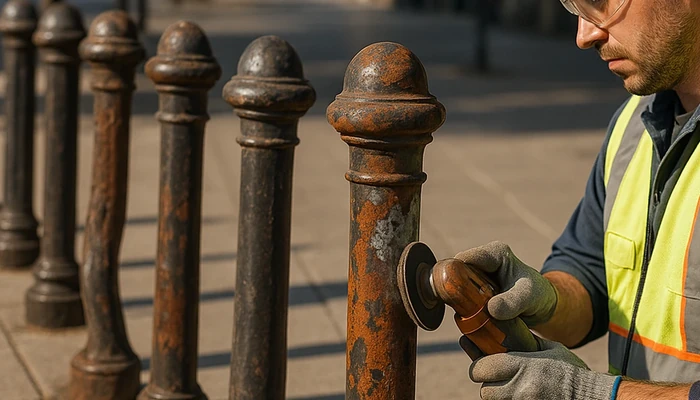
Despite iron’s strength, exposure to moisture and air causes oxidation—commonly known as rust. Chicago’s rain, humidity, and winter road salt intensify this process.
- Bare or chipped paint reveals metal, starting rust spots.
- Standing water around bollard bases accelerates corrosion.
- Salt from de-icing compounds increases chemical attack.
Prevention and Solutions
- Protective Coatings: Use high-quality paint or powder coating, and apply anti-rust primers. Regular touch-ups are crucial after scratches or dings.
- Routine Cleaning: Wash off salt and grime regularly, especially during winter.
- Drainage: Ensure the bollard base is not immersed in lingering puddles or pooled water. Proper site engineering helps.
- Professional Treatments: Seek out specialized products approved by the Association for Materials Protection and Performance (AMPP) for compliance and durability.
For advanced strategies, visit our iron bollard longevity guide.
Problem #2: Physical Damage from Impact
Common Impact Causes
- Vehicle collisions in parking lots or driveways.
- Improper snow plowing or maintenance collisions.
- Vandalism or misuse as makeshift bike racks or posts.
The result can range from surface dents to full structural bending or even snapping at the base.
Mitigation and Repair Options
- Heavy-Duty Designs: Choose bollards rated for the expected traffic and impact risk.
- Regular Inspections: Look for leaning, cracks, or base displacement after incidents.
- Professional Repair: Significant bends require removal and skilled reinstallation—never force bent posts back upright as this weakens the material.
- Insurance Documentation: Photograph and log impact-related damage to facilitate claims if warranted.
In high-traffic areas, consult our installation best practices for security.
Problem #3: Loose or Unstable Bollards
Key Causes
- Poor foundation design or compaction issues.
- Frost heave from freeze-thaw cycles pushing bollards out of alignment.
- Vehicle impacts loosening the setting over time.
Loose bollards compromise both security and appearance—and can become a liability.
How to Remedy and Prevent Loosening
- Inspection: Test stability by careful rocking—any movement signals a problem.
- Foundation Repair: Re-seat affected bollards in appropriately sized concrete footings, as per local code.
- Drainage Planning: Prevent standing water undermining the foundation—grade soil or repair concrete where necessary.
For more, read about installation steps that increase stability.
Problem #4: Faded, Peeling, or Damaged Paint
Why It Matters
Paint is more than just aesthetics—it is a critical line of defense against rust. UV rays, winter salt, and physical abrasions all challenge even the toughest coatings.
- Peeling Paint: Opens the door to rust beneath.
- Color Fading: Reduces visibility and the bollard’s effectiveness as a safety marker.
Restoration Strategies
- Surface Prep: Sand off loose paint and remove all corrosion.
- Quality Primer: Apply rust-inhibiting base coats before painting.
- UV-Stable Paint: Use products rated for sun and salt exposure.
- Regular Inspections: Touch up any scratches or chips promptly.
For details on finishes, review our iron bollard decorative styles overview.
Problem #5: Environmental and Maintenance Neglect
Beyond the big four, less obvious issues can develop from neglect or improper care:
- Lack of Routine Cleaning: Accumulated debris can trap moisture, accelerating rot and corrosion.
- Improper De-Icing: Use non-corrosive agents when possible during winter.
- Vegetation:** Overgrowth near bollards causes shading and traps humidity, hidden rot, or root interference.
Adhering to a seasonal care schedule not only extends bollard lifespan but maintains a tidy, professional site.
How to Inspect Your Iron Bollards: A Step-by-Step Checklist
- Walk the length of your bollard line, noting any visual damage (rust, bends, paint).
- Gently test each bollard for movement at the base.
- Check for pooled water, heaving, or sunken spots around bases.
- Record issues and contact a professional for repairs beyond routine maintenance.
Many issues are first identified during routine property walks. For commercial settings or larger installations, scheduled professional inspections are recommended—learn what professionals look for in urban bollard maintenance.
Iron Bollards Maintenance Schedule Table
| Frequency | Maintenance Task | Notes |
|---|---|---|
| Monthly | Visual inspection for rust, chips, and stability | After storms or winter salt exposure |
| Quarterly | Cleaning and debris removal | Include base and nearby pavement |
| Annually | Repaint or touch up, especially after snow season | High-visibility areas may need more frequent attention |
| As needed | Repair, replace, or professional assessment | Following collisions or major weather events |
Advanced Strategies: Upgrades and Modern Materials
Technological advancements have led to more resilient iron bollard finishes and designs. Consider:
- Galvanized undercoats or zinc-rich primers for superior rust protection.
- Powder-coating for impact and UV resistance.
- Weatherproof base sleeves that shield mounting points from moisture.
For latest innovations, see innovation in iron bollard materials and design.
In Chicago, Illinois, local codes may dictate acceptable materials and finishes—always check before pursuing major repairs or upgrades.
Codes, Compliance, and Safety Considerations
Following local codes isn’t just a legal obligation; it directly impacts public safety and insurance eligibility. Always:
- Consult local building guidelines or a qualified installer familiar with Chicago-area rules.
- Choose bollard types and installation depths approved for your use case (vehicle, pedestrian, or mixed).
- Rely on standards organizations such as AMPP for guidance on rust prevention, coatings, and periodic inspection requirements.
FAQs: Iron Bollards Problems and Solutions
1. How often should iron bollards be inspected in Chicago, Illinois?
At minimum, inspect quarterly and after major weather events or heavy salt application. For high-traffic or commercial areas, monthly checks are recommended.
2. What product types are best for preventing rust on iron bollards?
Rust-inhibiting primers, zinc-based undercoats, and powder coatings work well. Verified solutions by organizations like AMPP meet industry standards.
3. Can a bent bollard be straightened instead of replaced?
Minor bends may be repairable, but significant damage usually requires full replacement. Straightening can weaken the structure, risking future failure.
4. How do I choose the right bollard for mixed-use areas?
Assess potential impacts, local codes, and aesthetics. Decorative or composite finishes offer visual appeal, while reinforced styles protect against vehicles. Explore decorative options.
5. What is the expected lifespan of an iron bollard?
With regular maintenance and protective finishes, iron bollards can last decades. Exposure and lack of care will shorten this considerably.
6. Are iron bollards environmentally sustainable?
Iron is highly recyclable, and with proper care, long-lasting installations minimize material waste. Learn more about iron bollard sustainability.
7. Can I repaint an iron bollard myself?
Yes, with proper surface prep, rust removal, and a compatible paint/primer system. For safety-critical or commercial sites, consider professional repainting services.
8. What should I do if my bollard feels loose?
Stop using it for security or support purposes, rope off the area, and schedule a professional assessment immediately. Shifting often signals more serious foundational issues.
9. Do all iron bollards require the same maintenance routine?
Routine is similar, but decorative or high-traffic installations may need more frequent attention and specialized coatings.
10. Where can I get expert help for iron bollard repair or replacement in Chicago, Illinois?
Contact an experienced provider—our team can advise on your options and provide a transparent estimate.
Conclusion: Proactive Care for Lasting Security
Iron bollards are a vital line of defense for properties in Chicago, but their longevity and performance depend on understanding and addressing common issues as they arise. By following the practical inspection, maintenance, and protection strategies in this guide, you safeguard both security and curb appeal—often at a fraction of replacement cost.
If you discover a problem that’s beyond simple care—like a leaning, rusted-through, or severely damaged bollard—don’t delay professional help. For prompt assessment or a clear, honest quote, talk to our fence and bollards specialists today.
For insight on related fence options, privacy upgrades, or commercial perimeter solutions, see our commercial fence installation services.
Learn more about planning, maintaining, or upgrading your perimeter by exploring our iron bollards care guide.
About Chicagoland Fence Pros
Chicagoland Fence Pros is a trusted fence contractor with over 15 years installing fences and perimeter security solutions in the Chicago, Illinois area. Serving homeowners and businesses across the region, we specialize in iron, wood, vinyl, aluminum, and composite fencing, as well as commercial and residential projects. Our team is fully insured, code-compliant, and committed to honest, practical advice every step of the way.
fencing company chicago, bollards, steel bollards, security bollards Buffalo Grove, storefront bollards Skokie, warehouse bollards Joliet, parking bollards East Ravenswood, bollards Aurora, steel bollards Ranch Triangle, storefront bollards Tinley Park