
Choosing the Right Electric Gate for You: A Complete Guide
With so many options available, choosing the right electric gate for you can feel overwhelming. Should you invest in swing or sliding gates? Which materials and safety features matter most? What about codes in Chicago, Illinois? Whether you’re a homeowner or property manager exploring automatic gates for the first time, making an informed decision is essential for security, privacy, and long-term value. In this comprehensive guide, you’ll discover the key factors to consider when selecting an electric gate—breaking down everything from gate types to access controls, maintenance, ADA compliance, and realistic budgeting. The team at Chicagoland Fence Pros draws on years of local experience to help you avoid costly mistakes and confidently choose the right solution for your property.
Understanding Electric Gates: What Are They and Why Choose One?
Electric gates are motorized barriers that control vehicle or pedestrian access to a property. They bring privacy, convenience, and robust perimeter security. In the Chicago, Illinois area, where weather and city codes play a significant role, well-chosen automatic gates can enhance curb appeal and increase property value.
- Security: Electric gates act as strong deterrents against unauthorized access.
- Convenience: They offer hands-free entry for residents and approved visitors.
- Privacy: Limit visibility and minimize interruptions.
- Customization: Modern gates offer diverse designs, materials, and access systems.
Common Types of Electric Gates: How Do They Work?
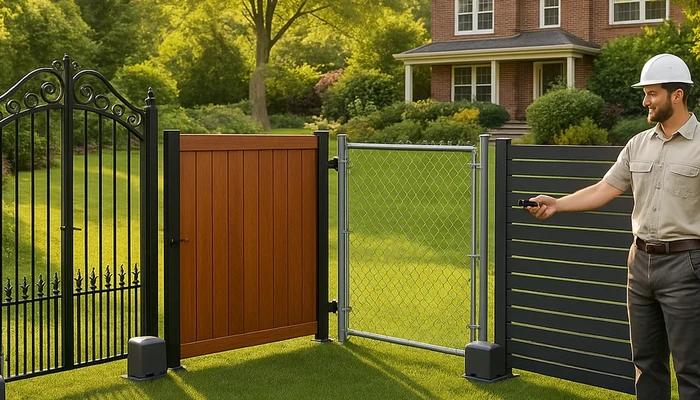
Automatic gates come in several designs, each suited for specific settings, budgets, and lot configurations. Understanding their differences is vital for choosing the right electric gate for you.
1. Swing Gates
Swing gates open inward or outward like a door, using hinges and a powered operator. They’re ideal when there is adequate space behind the gate to accommodate its swing arc. Standard for residential driveways, they offer a classic look and are generally cost-effective to install.
2. Sliding Gates
Sliding gates move horizontally along a track. They are preferred for properties with limited depth or where the driveway rises/descends behind the gate. Sliding systems are versatile for both residential and high-security commercial sites, minimizing space requirements.
3. Vertical Lift or Pivot Gates
Less common for homes, vertical lift gates raise and lower like a barrier arm. Pivot models rotate from the base. They are mainly used in commercial or high-security settings where footprint is limited.
| Gate Type | Best Use Case | Common Materials | Relative Cost |
|---|---|---|---|
| Swing | Homes with flat driveways, classic look | Wood, wrought iron, aluminum | Lower-Moderate |
| Sliding | Limited depth, uneven terrain | Steel, wrought iron, aluminum | Moderate |
| Vertical Lift/Pivot | Commercial/high security, no swing clearance | Steel, aluminum | Higher |
Assessing Your Property’s Needs and Constraints
Before choosing the right electric gate for you, carefully consider the unique features of your property and your specific goals:
- Entry width: Measure space for the gate and operator.
- Driveway slope: Some gates perform better on uneven ground.
- Ground conditions: Freeze/thaw cycles in Chicago, Illinois impact foundation design.
- Usage frequency: Higher-traffic properties may require commercial-grade operators.
- Security level: Car and foot traffic, wildlife, or crime risks.
- HOA/city codes: Local rules or aesthetic requirements.
- Budget: Initial investment and lifetime operating costs.
Materials Matter: Comparing Electric Gate Material Options
The choice of material for your electric gate affects appearance, durability, and maintenance needs.
- Wrought Iron: Highly secure, customizable with ornate or modern designs, can rust without proper finish.
- Steel: Strong and durable, resistant to impact, may require galvanized or powder-coated finishes for Chicago weather (see galvanization best practices).
- Aluminum: Lightweight, rust-proof, low-maintenance, suitable for both swing and sliding gates.
- Wood: Warm, classic look; susceptible to warping and high maintenance, usually paired with steel frames for support.
- Composite: Blends wood look with weather resistance; generally low-maintenance but higher initial cost.
Local experts, like the team at Chicagoland Fence Pros, recommend materials based on real Midwestern climate performance and your goals.
Automation, Access Control, and Safety Features
Choosing the right electric gate for you isn’t just about the physical gate—it’s also about the automation and safety systems:
- Gate Operators: Motor size and type impact reliability, speed, and smoothness.
- Access Controls:
- Keypads and remotes (common and user-friendly)
- Smartphone apps (remote access, logs, integration with smart home systems)
- Card readers and RFID tags (commercial, secure settings)
- Video intercoms and biometric readers (ONVIF Profile S compatibility for video security integration)
- Safety Sensors: Photoelectric beams and ground loops prevent accidental closure.
- Manual Releases: Allow opening the gate during power failure.
- Backup Power: Battery backups keep gates operational in outages.
Code Compliance and Chicago-Specific Considerations
Homeowners in Chicago, Illinois often ask about codes and permits for electric gates. Requirements can include:
- Minimum setbacks from sidewalks and streets
- Height limits depending on neighborhood zoning
- Permits for new electrical runs or excavation
- Compliance with the Americans with Disabilities Act (ADA) for public-facing gates
It’s wise to consult local regulations or talk to a professional installer before planning your project. Experienced companies like Chicagoland Fence Pros ensure your gate is both legal and up to code.
Budgeting: Cost Factors for Electric Gates
Electric gate costs vary widely based on size, material, operator complexity, and decorative features. Main cost components include:
- Gate panel and posts
- Automation equipment (motor, controls, sensors)
- Installation labor (foundation, wiring, setup)
- Permitting and inspection fees (if applicable)
- Ongoing maintenance (see detailed tips here)
From our experience as a fence company in Chicago, Illinois, homeowners typically spend from $3,500 to $12,000+ for residential electric gates. Commercial systems, high-end materials, and specialized access controls add to the investment.
Longevity and Maintenance: What to Expect
The life expectancy of your electric gate depends on quality materials and regular upkeep. In Chicago’s variable climate, it’s important to:
- Keep hinges, rollers, and tracks clear of debris and ice in winter
- Test safety sensors and backup batteries bi-annually
- Inspect finish on metal gates for chips or rust
- Ensure wood/composites are sealed and free from warping
- Arrange professional inspections annually for complex systems
For more on long-term care, check out our maintenance tips for your electric gate.
Smart Security: Integrating Gates with Modern Technology
Gate automation increasingly integrates with smart homes and property surveillance. Features now include:
- App-based remote opening, notifications, and video verification
- Integration with surveillance cameras (ONVIF-conformant devices for video streams)
- Time-locked schedules for deliveries or visitor access codes
Learn more about how smart gates are revolutionizing convenience.
Accessibility and ADA Compliance
Public-facing or shared-access gates must meet ADA requirements—ensuring safe and independent use by people with disabilities. These requirements may affect:
- Gate width and actuator speed
- Sensor placement
- Control height and usability
For more, see our detailed ADA compliance guidance.
Choosing the Right Installer: What to Look For
The performance of your electric gate is only as good as its design and installation. Look for an installer with:
- Experience with both residential and commercial electric gates
- Understanding of Chicago climate, codes, and soil conditions
- Transparency on costs and products
- Clear warranty and service policies
Chicagoland Fence Pros has over 15 years of experience designing and installing custom automatic gates in the Chicago, Illinois area, always focused on security, compliance, and customer satisfaction.
FAQ: Choosing the Right Electric Gate for You
-
What’s the best type of electric gate for homes in Chicago?
Sliding and swing gates are both popular. For sloped or smaller driveways, sliding gates are often preferred. The best choice depends on your property layout and local codes.
-
Is professional installation necessary for electric gates?
Yes. Proper foundation, safe wiring, and code compliance require specialized skills—critical for long-term performance and safety.
-
What access control options are available?
Keypads, remotes, smart apps, video intercoms, and RFID readers are common. Choose based on your desired convenience and security level.
-
How much maintenance do electric gates need?
Minimal if installed correctly, but routine checks for lubrication, debris, rust, and sensor alignment are needed—especially in Chicago’s climate.
-
What’s the average lifespan of an electric gate?
10–20 years depending on materials, climate, use frequency, and upkeep.
-
Can electric gates be integrated with smart home systems?
Yes, many modern gates support app-based and video system integrations, enhancing convenience and monitoring.
-
Do I need a permit to install an electric gate in Chicago?
In many cases, yes. Permits ensure zoning, electrical, and ADA compliance. Always check local regulations or consult a professional.
-
How do I ensure my gate stays operational during a power outage?
Battery backups are available for most systems, allowing gates to operate for limited cycles during outages.
-
Should my electric gate have safety sensors?
Absolutely. Photo beams or ground loops prevent the gate from closing on vehicles or people, meeting safety standards.
-
Who can help me choose and install the best gate for my property?
Get honest recommendations and expert installation by talking to our local specialists at Chicagoland Fence Pros.
Summary and Next Steps: Make the Right Choice for Lasting Security
Choosing the right electric gate for you blends aesthetics, security, convenience, and compliance. Assess your property needs, prioritize safety features, and work with trusted local professionals who understand Chicago’s climate and codes. Ready to explore your options? Request a personalized gate consultation today, or contact Chicagoland Fence Pros for advice on your next fence or gate project.
Looking for more insights? Read our post on the benefits of installing an electric gate or discover how automated gate systems work.
About Chicagoland Fence Pros
Chicagoland Fence Pros is a professional fence contractor with over 15 years of experience serving homeowners and businesses in Chicago, Illinois and nearby communities. Specializing in residential and commercial projects, our team installs wood, vinyl, aluminum, and steel fences and gates with an emphasis on security, privacy, and code compliance. We are fully licensed and insured, providing honest advice and clear communication at every step.
fence company near chicago il, residential fence, dog fence chicago, privacy residential fence Cicero, dog fence Geneva, privacy residential fence Elgin, residential yard fence Winnetka, privacy residential fence Lake Villa, residential fences Huntley, residential fence repair Fox Lake