
Driveway Gate Layout That Works in Real Life: Vehicles, Visibility, and Snow
If you’re thinking about adding or upgrading a driveway gate, you probably have plenty of questions: Will the gate fit my vehicles? How do I keep it clear in snow? What layout is best for both everyday use and security? For homeowners and property managers in Chicago, Illinois, these are critical concerns—where freezing winters, tight city lots, and unique building codes all shape what’s possible.
This guide walks you through driveway gate layout decisions based on real-life challenges: not just design and aesthetics, but day-to-day use, visibility, local codes, and the big issue—Chicago’s snow. You’ll learn the pros and cons of different gate types, measurement tips, key legal points, and how to set realistic expectations for costs and upkeep. Drawing on years of experience from Chicagoland Fence Pros, we’ll help ensure your driveway gate isn’t just stylish, but truly functional all year long.
Why Driveway Gate Layout Matters—Beyond Looks
A thoughtfully planned driveway gate shapes traffic flow, property security, and even curb appeal. In Chicago’s climate, your gate layout impacts:
- Vehicle access: Will cars, trucks, or delivery vehicles fit easily—year round?
- Snow management: Can you open the gate after heavy snowfall? Will plow placement become a blocker?
- Visibility and safety: Will drivers see pedestrians and oncoming traffic exiting or entering?
- Security and privacy: Does the layout support reliable locking, camera sight lines, and code requirements?
- Practical maintenance: Is there space to clear snow, debris, and ice away from moving gate parts?
Too often, people focus on the gate’s look—then run into problems that could have been avoided with better planning. Let’s dig into the fundamentals first.
Main Types of Driveway Gates for Real-world Conditions
There are several common driveway gate designs. Each has trade-offs, especially when winter and year-round traffic is a concern:
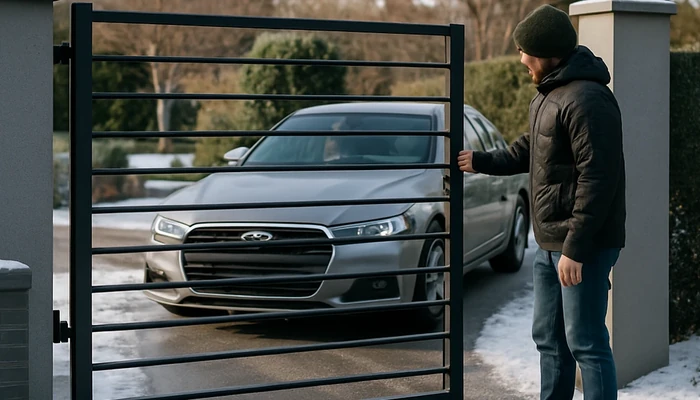
- Swing gates: Open inward or outward like a door. Classic style, but need clear space to move. Heavy snow or blocked drives can make them hard to open.
- Sliding gates: Travel laterally along a fence line. Excellent for tight spaces or where snow is a factor, since the opening isn’t blocked by snow piles as easily.
- Bi-fold or telescoping gates: Fold or collapse to the side, saving space. Less common but useful where full sliding is impractical.
- Vertical lift or pivot gates: Rise above the drive. Mostly used in commercial settings or where snow management is vital—but cost and aesthetics must be considered.
| Gate Type | Space Needed | Handles Snow? | Maintenance |
|---|---|---|---|
| Swing | Needs full arc (in/out) | Can be blocked | Moderate |
| Sliding | Needs lateral run | Better for snow | Tracks must be clear |
| Bi-fold/Telescoping | Compact | Depends on design | More moving parts |
| Vertical Lift | Minimal | Excellent | Complex mechanism |
Wondering what’s typical in Chicago? Sliding gates are often a smart choice for snowy winters—though swing gates can work if placed correctly and maintained.
Vehicle Clearance: Getting the Measurements Right
Vehicle dimensions shape your gate selection. For urban lots, the margin for error is often tight. Here are practical measurement tips:
- Allow at least 12–14 feet of clear opening for two-way drives; 10 feet for single-vehicle access.
- Plan for the largest vehicle that will use the drive—not just your daily car.
- Include room for mirrors, swing doors, and turning radii, especially at angled lots.
- Sliding gates require space along the fence line equal to the entire width of the opening—ensure no obstacles.
Consider future needs. Delivery trucks, service vehicles, or new cars may be wider or taller. An extra foot of clearance can avoid major headaches down the road.
Planning for Chicago’s Snow: Layout Mistakes to Avoid
Midwestern winters can quickly jam up a poorly laid-out gate. Here’s what to watch for:
- Snow pile direction: Place gates away from where snow will pile up—avoid having openings directly opposite roof drop zones or usual plow piles.
- Gate swing direction: For swing gates, consider inward swing (into the property) to avoid pushing snow into the street, but be sure internal space is clear.
- Proximity to drive edges: Allow 1–2 feet buffer for snow storage beside the approach. Avoid layouts where snow melt freezes gate mechanisms.
- Drainage: Slope the driveway so water drains away from the gate, reducing ice build-up at the bottom track or hinges.
If you’re dealing with consistent heavy snows, ask about heated tracks or vertical-lift options—or plan for regular manual clearing.
Visibility, Traffic Flow, and Safety: What Really Works
Great gate layout isn’t just about space—it’s about usable sight lines and practical exits:
- Safe sight lines: Make sure drivers can see pedestrians and cars from both inside and outside. Avoid placing gates at blind curves or with high shrubs obstructing the approach.
- Pedestrian access: Consider a separate walk gate nearby, making foot traffic safer and not reliant on the main drive gate.
- Gate controls: Place openers/keypads where they are reachable from inside a vehicle, even in icy conditions.
- Lighting and cameras: Install adequate lighting for nighttime use and add cameras for monitoring who enters or exits—a best practice for property managers.
Accessibility is vital for families, service providers, and emergency access as well. Don’t overlook ADA or city-specific requirements when planning driveway gates.
Materials for Chicago Conditions: Steel, Aluminum, or Vinyl?
The best driveway gate material depends on your priorities: durability, maintenance, and visual appeal. In Chicago’s freeze-thaw cycles, common materials perform differently:
- Steel: Extremely strong and secure, withstanding impact and snow loads. Needs high-quality rust protection.
- Aluminum: Lighter than steel, doesn’t rust, but must be heavy-duty to handle strong winds and impact.
- Vinyl: Low maintenance and visually versatile but can become brittle in extreme cold and with repeated snow impact.
- Composite: Mixes wood and synthetic, offering classic looks and low maintenance, but typically heavier and pricier.
Whichever material you choose, ask your contractor about anti-corrosion coatings and hardware rated for outdoor winter use. For more details on durable materials, you might explore this technical resource.
Automation, Smart Features, and Chicago Building Codes
Automatic driveway gates provide unrivaled convenience, security, and safety—but require careful layout:
- Automation space: Make sure there’s room for gate motors, control arms, and safety sensors without creating new obstacles.
- Cold weather operation: Select openers rated for subzero temps; battery back-ups and protected wiring are musts.
- Sensors and safety: Add sensors to reverse gates if an object is detected—mandatory in most city codes.
- Local rules: Chicago and nearby municipalities have specific requirements on setbacks, height, visibility, and even gate operator sound levels.
For an in-depth look at how automation adapts to different sites and weather, see this environmental adaptation guide.
Always check codes and secure permits before installation. Mistakes here can be costly and trigger required rework. For more authoritative information on driveway setup, architectural guides like these can provide extra insight.
Maintenance Planning: Keeping Your Gate Moving All Year
Even the best layout and materials require regular care—especially in Chicago winters. Build maintenance into your planning:
- Clear snow promptly from tracks/hinges after storms.
- Apply ice melt carefully to avoid mechanical corrosion.
- Inspect for salt buildup, debris, or sagging after thaws.
- Schedule annual professional checks on motors, safety sensors, and structural bolts.
- Keep gate automation components sheltered or weatherproofed.
Routine upkeep improves safety and stops small issues from becoming big repairs. For more, see these automatic gate maintenance tips.
Real-life Case Examples: Layouts That Succeed and Struggle in Chicago
Example 1: Inner-city Narrow Lot
On a 20-foot-wide city lot, a sliding gate allowed maximum driveway width, no swing arc blocking the alley, and excellent snow clearance. However, the lateral space for the track required adjusting a side fence, so plan for modifications if needed.
Example 2: Suburban Family with Multiple Drivers
Homeowners chose a double-swing gate for a 14-foot-wide drive. It worked until ice storms left snowbanks by the swing path—then both cars and the school bus couldn’t get in. The lesson? If you expect frequent snow, sliding or lift designs often work better long-term.
Example 3: Commercial Property with High Traffic
Using a vertical lift gate for a parking area solved snow and congestion issues, handling frequent deliveries without blocking the sidewalk. Upfront investment was higher, but access stayed reliable, and maintenance costs were lower due to fewer moving parts exposed to weather.
Cost Considerations: Budgeting for Real-World Conditions
Driveway gate installation costs depend on:
- Gate type and material
- Automation features (motors, access controls, cameras)
- Site modifications (grading, added concrete, fence relocation)
- Weather-proofing and durability upgrades
Estimate installed costs from $3,000 (manual swing, steel) to $10,000+ (automated sliding or vertical). Custom layouts, advanced controls, or premium materials can push prices higher. In the Chicago, Illinois area, permitting and code work may add extra fees—always get a detailed, transparent quote before proceeding.
For a personalized driveway gate plan, you can request a gate estimate based on your property’s size and winter needs.
Frequently Asked Questions: Driveway Gate Layouts
What is the minimum width for a driveway gate?
For most homes, a 10-foot clear opening is the minimum for single vehicles, but 12–14 feet is recommended for comfortable, two-way access.
Should I choose a swing or sliding gate in Chicago?
Sliding gates often work better in snowy or urban settings, where drive space is at a premium and snow blockages are common. Swing gates can be used if swing areas are kept clear and winter maintenance is manageable.
Can automatic gates operate in subzero temperatures?
Yes, if motors and electronics are rated for cold temperatures. Choose openers and controls designed for Chicago winters and have routine maintenance scheduled.
What materials resist rust and salt best?
Aluminum and powder-coated steel are both good options in Chicago. Ensure all hardware is corrosion-resistant and that vinyl or composite options are rated for extreme cold.
How do I keep snow from blocking my driveway gate?
Plan your layout so snow plows deposit piles away from the opening path, or choose a gate that swings/slides away from typical snow storage. Immediate clearing and periodic application of deicer help maintain movement.
Do I need a permit to install a driveway gate in Chicago?
Usually, yes. Most municipalities require permits and review for fence/gate installations, including height, position, and automation features. Always check with your city or hire a code-compliant contractor.
Can driveway gates be retrofitted for automation later?
Often, yes—especially if the initial install includes adequate clearances and electrical access. Discuss future-proofing when planning your layout.
How do I make my gate ADA accessible?
Provide adequate width, level approaches, and automatic or easy-to-manage controls. Consult with a professional to ensure compliance for both vehicles and pedestrian gates.
Will a driveway gate add value to my property?
Well-designed gates can enhance curb appeal and perceived security, adding property value. Automated systems—when matched to local style and needs—are especially attractive for modern buyers. For a broader perspective, check out this automatic gate value guide.
How do I maintain my gate through severe winters?
Schedule routine snow removal, check for ice on moving parts, apply lubricant rated for freezing temperatures, and test all automation/safety features monthly. Read more strategies in this maintenance article.
Conclusion: Your Best Next Steps for a Functional Driveway Gate
Choosing a driveway gate layout that truly works in real life—especially in Chicago—means balancing layout, vehicle needs, safety, snow management, and compliance. By focusing on the details early, you avoid problems later and ensure every driver (and guest) can access your property smoothly, no matter the weather.
If you’re ready to design a driveway gate that’s practical and code-compliant, talk to the Chicagoland Fence Pros team for clear advice on materials, maintenance, and the smartest layout options. For specific fence types, explore these dedicated pages for vinyl fences, aluminum fencing, or residential solutions. Make sure your entrance stands up to everything a Chicago winter dishes out!
About Chicagoland Fence Pros
Chicagoland Fence Pros is a professional fence contractor with over 15 years installing durable, code-compliant fences and gates in the Chicago, Illinois area. Serving homeowners and businesses with expertise in wood, vinyl, aluminum, steel, and composite materials, the team delivers honest recommendations and focuses on local building codes, insurance, and customer satisfaction. Chicagoland Fence Pros serves all of Chicago, Illinois and its surrounding communities.
fence contractor chicago, security gates Chicago, automatic gate repair, access control gate Glencoe, swing gate Lake Forest, gate opener Naperville, electric gate Rockford, automatic gate repair Winfield, automatic gate North Chicago, security gates Hampshire