
Metal Bollard Installation Projects: The Complete Guide for Property Safety and Security
Property owners and managers often find themselves asking how to protect entrances, sidewalks, parking lots, or high-traffic areas from unwanted vehicles or accidental damage. With rising concerns about security and urban safety, Metal Bollard Installation Projects have become central topics for those researching perimeter solutions for the first time. Metal bollards—those sturdy vertical posts you see in front of stores, parks, or offices—not only enhance security but also help shape well-organized, pedestrian-friendly environments. Choosing the right type, planning installation, and ensuring durability in Chicago’s variable climate are vital for a successful project.
In this detailed educational guide, you’ll learn about types of metal bollards, materials, legal and technical considerations, realistic budgeting, and key trade-offs. Whether you’re a homeowner wanting to protect your property’s edge or a property manager seeking to improve commercial safety and curb appeal, this article will give you the clarity and confidence to move forward with any metal bollard installation project. The experts at Chicagoland Fence Pros contribute insights based on years of trusted work across Chicago, Illinois.
What Are Metal Bollards and Why Are They Installed?
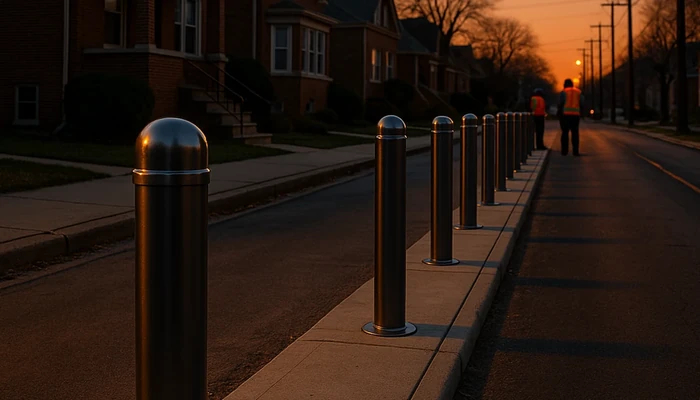
Bollards are vertical, post-like structures most often used to guide or restrict vehicle movement, mark boundaries, and improve security. Metal is the most common material due to its strength, longevity, and versatility in both style and function.
Typical applications include:
- Preventing vehicle ramming attacks
- Protecting storefronts, walkways, and entries
- Directing traffic in parking lots
- Enhancing pedestrian safety and comfort
- Marking boundaries between public/private spaces
For more on their role as urban protectors, see our hub on iron bollards as essential urban protectors.
Types of Metal Bollards: Fixed, Removable, and Retractable
Not all metal bollards are built for the same purpose. Here are primary types you’ll encounter:
- Fixed Bollards: Permanently embedded; provide maximum security for property perimeters and vulnerable areas.
- Removable Bollards: Can be unlocked and removed for temporary vehicle access, balancing access with security.
- Retractable/Rising Bollards: Mechanized or manually lowered/raised as needed for highly flexible environments.
Your site needs and budget will determine which type is appropriate. Weigh aesthetics, maintenance, and traffic patterns. For decorative options or site-specific solutions, visit our decorative styles guide.
Materials Used in Metal Bollard Construction
Three metals dominate bollard manufacturing: iron, steel, and aluminum. Here’s a comparison:
| Material | Strength | Corrosion Resistance | Style/Appearance | Typical Use |
|---|---|---|---|---|
| Iron (cast/wrought) | Very high | Fair (needs coating) | Traditional, ornate or utilitarian | Historic, urban sites |
| Steel | Highest | Good, especially with galvanization | Modern, robust | Commercial/security |
| Aluminum | Moderate | Excellent (natural oxide forms) | Lightweight, modern | Residential, decorative, low-impact |
Galvanization (zinc coating) is a key option for extending service life and protecting against Chicago’s freeze-thaw cycles and road salt. For technical information on the hot-dip galvanizing process, see this guide from the American Galvanizers Association.
Planning a Metal Bollard Installation Project: Site Assessment to Design
Every project should begin with careful planning, including evaluating the site and clarifying its purpose. From our experience as a fence company in Chicago, Illinois, these are key steps:
- Define Objectives: Security? Parking guidance? Pedestrian safety?
- Site Assessment: Analyze traffic, soil type, underground utilities, and water drainage. See our detailed aspects to consider article for a checklist.
- Consult Codes: Check local building codes and property restrictions. Some areas limit heights, materials, or spacing for bollards.
- Choose the Right Type: Weigh visibility, impact resistance, and design goals. Integrate with existing landscaping or fencing where possible.
- Budget Realistically: Installation and material costs can vary. Site preparation (digging, concrete) is often the largest expense.
Ready to move forward? Request a bollard installation estimate from our team.
Installation Methods and Key Steps
Proper installation is crucial for performance and durability. While methods vary by type and material, the following steps are common for most metal bollard projects:
- Mark and Measure: Layout positions with accurate spacing and alignment, accounting for ADA access and vehicle turning radii.
- Excavation: Dig holes to proper depth and diameter, based on soil conditions and required impact resistance.
- Setting the Bollard: For fixed types, bollards are anchored into concrete footings for strength. Removable bollards require sleeves or sockets.
- Finishing: Level, fill, and surface finish to prevent tripping hazards. Apply coatings or paint as needed for appearance and weather resistance.
For an in-depth look, read our step-by-step guide to iron bollard installation.
Legal and Code Considerations
Bollard installations are often subject to local regulations, especially in public, commercial, or multi-unit residential settings. Common requirements in Chicago and many municipalities include:
- Permit required: Especially for sidewalk, curb, or street installations
- Minimum spacing: To maintain accessibility for wheelchairs and strollers
- Material and color rules: For visibility and safety
- Structural strength: For locations vulnerable to vehicle impact
- Utility clearance: To avoid damaging underground power, gas, or telecom lines
Always consult your local building department before beginning work. Professional contractors like Chicagoland Fence Pros can help navigate these requirements.
Cost Factors in Metal Bollard Installation Projects
Typical project costs depend on:
- Bollard type & material: Iron and steel are generally more expensive than aluminum.
- Site conditions: Hard soils, extensive excavation, or complex prep add cost.
- Finishes: Galvanizing, powder coating, or decorative caps may increase price.
- Quantity: Larger projects may benefit from bulk rates.
- Permitting: Some municipalities charge fees for review and inspection.
For site-specific pricing in Chicago, see our Iron Bollards Installation service page.
Maintenance and Longevity: What to Expect
Metal bollards are built for decades of use but require some attention. Maintenance tips include:
- Inspect regularly for corrosion, paint failure, and structural damage
- Touch up paint to seal chips or scratches quickly
- For galvanized steel, minimal maintenance is needed (learn why in the galvanization process guide)
- Address impact damage promptly for continued protection
- Grease locks and moving parts for removable or retractable types
See more on outdoor iron bollard care.
Design and Aesthetic Considerations
Today’s metal bollards need not look utilitarian. Many home and business owners choose options that blend with architecture or serve as decorative landscape features. Options include:
- Traditional ornamental designs
- Modern stainless steel or powder-coated colors
- Custom shapes, logos, or caps
For ideas, explore our article on decorative iron bollards.
Common Installation Mistakes and How to Avoid Them
Based on project reviews across Chicago, Illinois, typical mistakes include:
- Misjudging site level and spacing, resulting in trip hazards or misaligned bollards
- Skipping underground utility checks, leading to costly or dangerous damage
- Using untreated or improperly coated metals, causing rapid rust and early failure
- Overlooking code-required clearances for ADA accessibility
- Poor foundation depth, compromising security and impact resistance
A professional assessment can save future headaches and ensure compliance with local codes.
Case Studies: Metal Bollard Projects in Chicago, Illinois
Case 1: Storefront Protection
An Uptown business experienced repeated curbside parking incidents endangering its entrance. After consulting Chicagoland Fence Pros, fixed steel bollards with concrete anchoring were installed—saving the client insurance claims and giving peace of mind.
Case 2: School Playground Edge
A Chicago elementary school worked with our team to install bright, powder-coated bollards along a playground to keep traffic safely separated, using child-safe caps and durable finishes for longevity.
For more examples and expert insights, see our urban bollard installation guide or bollards in stadium and sports venues.
Metal Bollard Installation Projects FAQ
- What is the main purpose of metal bollards?
-
To enhance property security, control vehicle movement, and protect people and structures from accidents or vehicle-based attacks.
- Which is better: iron, steel, or aluminum for bollards?
-
Steel offers the highest strength, iron combines durability with decorative value, and aluminum is best for decor and low-impact settings. Your use case determines the best material.
- Do I need permits to install metal bollards on my property?
-
For most commercial or sidewalk installations in Chicago, permits and code compliance are required. Always check with your local building department.
- How deep should metal bollards be set for security?
-
Security bollards must be set at least 18–36 inches into concrete footings, depending on soil and risk level.
- How often should metal bollards be maintained?
-
Inspections should be performed annually, with touch-ups as needed. See our maintenance guide for details.
- Can metal bollards be decorated or customized?
-
Yes, many come with caps, logos, or custom colors. See our decorative styles article.
- Will metal bollards rust in Chicago’s weather?
-
With galvanization or regular repainting, quality metal bollards withstand Midwest weather extremely well. For technical details, review what is zinc.
- Who should install metal bollards?
-
Professional contractors with experience in securing footings, code compliance, and utility checks are recommended—like Chicagoland Fence Pros.
- Are there sustainable options for metal bollard projects?
-
Yes, many manufacturers offer recycled content and low-impact installation methods. See our post on sustainability in bollards.
Summary and Next Steps
Metal bollards are a proven solution for protecting people and property, marking boundaries, and improving safety—especially in dynamic urban environments like Chicago, Illinois. Careful planning, the right material choice, and expert installation will ensure your investment stands up to daily use and local weather. For more information or to discuss your project, contact Chicagoland Fence Pros or explore our bollard installation services.
Chicagoland Fence Pros is a professional fence company with over 15 years of experience serving homeowners and businesses in Chicago, Illinois and surrounding communities. Specialists in all major fence types—wood, vinyl, aluminum, iron, and steel—the team focuses on education, clear quoting, and code-compliant installations for enhanced security, privacy, and longevity. Chicagoland Fence Pros is fully insured and committed to delivering the right solution for every project.
fence contractors chicago, security bollards chicago, parking bollards chicago, protective bollards Forest Park, steel bollards Geneva, protective bollards Bensenville, replace bollards Glen Ellyn, iron bollards Libertyville, protective bollards Berwyn, warehouse bollards Highland Park