 Skip to content
Efficient Bollard Installation: Stadiums and Sports Venues – The In-Depth Guide
The challenge of securing stadiums and sports venues is bigger than ever. With thousands of spectators gathering in these spaces, property managers and owners need robust solutions that balance security, flow, compliance, and visual appeal. Efficient bollard installation has emerged as a favored approach to safeguard perimeters, guide crowds, protect infrastructure, and ensure that welcome and safety don’t conflict. If you are new to this subject, or are considering options for your venue in the Chicago, Illinois area, this comprehensive guide is for you. We’ll walk step by step through bollard types, materials, layout best practices, regulatory considerations, deployment costs, and smart maintenance—not just what to install, but why, and how to do it right. Chicagoland Fence Pros has spent years supporting public and private spaces with code-compliant, carefully designed fencing and barriers, and our experience informs every recommendation here. By the end, you’ll know what to expect and where to turn for expert, honest advice.
Understanding Bollards for Stadiums and Sports Venues
Bollards are short, sturdy posts installed to regulate vehicle access, protect pedestrians, and define perimeters. For stadiums and venues, bollards can be permanent or removable, decorative or strictly functional. They are crucial for:
- Preventing unauthorized vehicle access (countering risks of vehicular intrusion)
- Protecting entrances, queues, ticketing areas, or player/staff zones
- Guiding traffic and crowd flow during events
- Defining boundaries between public and restricted areas
- Enhancing the overall safety and organization of large spaces
Why Stadiums Require Specialized Bollard Solutions
Unlike urban sidewalks or commercial lots, stadiums and sports venues face unique risks and regulations. The combination of high footfall, vehicle deliveries, emergency egress requirements, and aesthetic expectations demands a solution that addresses safety, practicality, and local codes. Installing the right bollards—designed and spaced specifically for your venue—is as important as the materials used.
Bollard Types: Comparing Options for Stadiums
Bollard selection isn’t “one size fits all.” For stadiums and sports venues, several types of bollards may be used alone or in combination:
| Type | Best Use | Pros | Cons |
|---|---|---|---|
| Fixed (Embedded) | Permanent perimeter security | Highest impact resistance; Long lifespan | Cannot be removed; More intrusive install |
| Removable | Event-driven or flexible layouts | Versatile for different events; | Requires secure ground sleeves; Less robust than fixed |
| Retractable | Driveways & controlled deliveries | No surface obstruction; Manual or automatic rise/lower | Higher cost; Complex install/maintenance |
| Decorative | Combining aesthetics & light-duty control | Design flexibility; Enhances look | Not rated for serious vehicle impacts |
| Crash-Rated | High-threat entrances/exits | Engineered for vehicle stoppage | Expensive; Special permitting & installation |
Considerations for which type to select include the expected traffic (both foot and vehicle), site layout, event scheduling, and the perimeter’s intended use.
Key Materials for Bollards in Stadium Applications
Material selection affects durability, maintenance, cost, and appearance. The most common bollard options for stadiums include:
- Steel: Leading choice for strength; can be galvanized for corrosion resistance (learn about galvanization processes).
- Iron: Durable and decorative; heavier and can require more protection against rust.
- Aluminum: Lightweight and corrosion-resistant, ideal for removable bollards or decorative styles.
- Concrete: High-impact resistance for vehicle security but often lacks design flexibility.
- Composite & Polyethylene: Used where weight, aesthetics, or electrical isolation are a priority.
Finish options (paint vs. powder-coat, reflective tape, custom colors) can help meet design guidelines while adding safety in low light conditions.
Regulatory and Safety Code Considerations
Local, national, and venue-specific codes impact bollard placement, types, and spacing. Critical to code-compliance are:
- Accessibility (ADA) requirements – ensuring clear paths and markings
- Emergency vehicle access points
- Minimum and maximum spacing between bollards (prevents bypass)
- Surface and underground utility clearances
- Impact-rating certifications for security bollards
Referencing recognized standards, such as those outlined by the Security Industry Association, ensures safer design and helps avoid legal liability. From our experience as a fence company in Chicago, Illinois, coordinating with city planners and fire officials is essential to a smooth project.
Planning Your Bollard Layout: Strategies for Flow and Security
Effective bollard installations start with smart planning. Stadium and sports venue managers should consider:
- Entry/exit points: Each should balance access and security (often mixing fixed and retractable bollards)
- Crowd control zones: Removable or decorative bollards can define lines or block vehicle access at entrances
- Emergency egress routes: Meet code requirements for unobstructed evacuation
- Player, VIP, or staff areas: Isolated or higher-threat zones may require heavy-duty or crash-rated bollards
- Delivery and service vehicle needs: Removable or retractable options at select gates
An experienced installer like Chicagoland Fence Pros will conduct a full site assessment, considering crowd patterns, traffic analysis, and stadium-specific challenges.
Installation Steps: What to Expect
1. Site Assessment and Design
Start with a professional walkthrough and documentation of your property’s layout, traffic areas, and security needs. This approach avoids costly mistakes and ensures each bollard serves a function—not just filling space.
2. Measuring and Marking
Precise measurement and marking are critical, particularly where bollards must align with paving, signage, or other infrastructure.
3. Subsurface Preparation
Different soils and pavement types in Chicago, Illinois may influence how foundations are prepared. This can affect anchoring depth, drainage, and embedment to resist vehicle impact or frost heave.
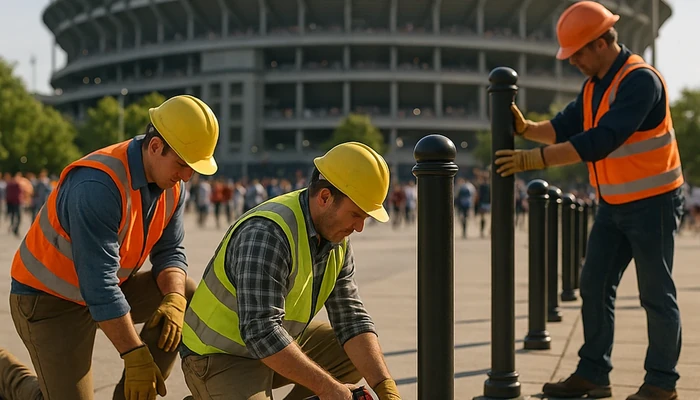
4. Installation and Anchoring
- Core drilling (for concrete or asphalt)
- Setting bollard posts (with concrete or special anchoring compounds)
- Applying protective coatings if required
- Ensuring clean, level, and accessible installations
5. Inspections and Adjustments
Final walk-throughs and any necessary adjustments help ensure the system is safe and functional before event openings. Code-compliance and documentation are best handled by experienced contractors familiar with local rules.
For more detail, see our related guide on efficient iron bollard installation steps.
Cost Factors: What Goes Into the Budget?
Homeowners in Chicago, Illinois often ask about the cost factors for perimeter security. For stadiums and sports venues, key cost drivers include:
- Bollard type (removable, crash-rated, decorative, etc.)
- Material and finish
- Site conditions (soil type, surface, underground utilities)
- Project scale and quantity
- Labor, permitting, and code compliance
As with all fencing and security projects, clear communication with your installer prevents surprises. For detailed project bids, request a commercial perimeter estimate from our specialists.
Maintenance and Longevity
Even the sturdiest bollards benefit from routine care—particularly those made of iron or steel in the Midwest climate. Key maintenance steps include:
- Regular inspections for rust, paint chips, or loose anchors (troubleshooting guide)
- Prompt repairs or touch-ups to coatings
- Cleaning debris and de-icing in winter months
- Ensuring removable or retractable mechanisms stay functional
Most professional installations come with maintenance recommendations, and minor care extends lifespan dramatically. Discover more on extending iron bollard life.
Real-World Application: Case Examples
- Professional Sports Stadium: Used a combination of crash-rated, removable, and decorative bollards to separate public entrances from team/staff areas and allow flexible crowd control on game days.
- Local Chicago Arena: Integrated brightly colored, powder-coated iron bollards at key pedestrian crossings for improved visibility and protection during night events.
- University Sports Complex: Chose retractable steel bollards at delivery/service entrances to secure those areas except during scheduled loading times.
Each of these used a tailored combination, underscoring the importance of a venue-specific plan.
Integrating Bollards with Other Security and Design Features
Modern stadiums often combine bollards with fencing, gates, planters, and signage. Coordination between elements ensures a unified perimeter, where each part complements the others in both form and function.
If you’re researching whether to pair bollards with options like wrought iron fencing or automatic security gates, Chicagoland Fence Pros’ experienced team can demonstrate integrated design examples and help you compare pros and cons for your layout.
When to Contact a Professional
While small property owners may consider basic DIY installs, stadium and sports venue projects demand professional design and code expertise. Always contact licensed, insured contractors who are familiar with:
- Stadium and municipal codes in the Chicago, Illinois area
- High-traffic safety requirements and special-event protocols
- Bollard placement, strength, and ADA access needs
If your plans include other features (fencing, access gates, privacy screens), seek bundled estimates and a coordinated installation. For further research, explore our aspect and planning guide.
FAQ: Efficient Bollard Installation for Stadiums and Sports Venues
- What’s the main reason to install bollards at stadiums?
Bollards help prevent vehicle intrusions, protect pedestrian gathering areas, and guide both crowd and vehicle traffic smartly. Their robust presence acts as a visible and physical boundary for improved safety.
- How far apart should stadium bollards be spaced?
Spacing varies by bollard type but typically ranges from 3.5 to 5 feet (center to center) to block vehicle access while ensuring crowd flow and accessibility. Always consult local building codes and standards such as those by the Security Industry Association.
- What material is best for heavy-duty security?
Steel (especially galvanized or stainless) and iron are top choices for impact resistance; crash-rated versions are available for vulnerable zones.
- Can bollards be decorative and still provide security?
Yes—many iron and aluminum bollards mix robust construction with architectural detail. However, pure decorative versions may not meet impact or security standards, so select accordingly.
- How are removable or retractable bollards used at sports venues?
They are installed where access needs change, such as event vehicle routes or variable crowd areas. They offer flexibility while helping meet code requirements for emergency access.
- What’s the maintenance schedule for iron or steel bollards?
Regular cleaning and inspection bi-annually, with touch-up paint or protective coatings as needed, will greatly extend lifespan—especially in harsh Chicago climates.
- Who is responsible for code compliance in bollard projects?
Ultimately, the property owner/manager is responsible, but reputable contractors handle permitting, layout, and code review as part of their process. Always request documentation.
- Are bollards alone enough for stadium security?
No. They are best as part of a multi-layered system that may include fencing, gates, surveillance, and professional staff.
- How long does installation take?
Small projects may finish in a few days; large stadium jobs can stretch across weeks depending on site conditions, weather, permit timing, and event schedules.
- How can I get a reliable installation quote?
Document your site and needs, then contact a trusted installer for a written, detailed estimate—Chicagoland Fence Pros is always available to answer questions and provide guidance in the Chicago area.
Conclusion: Balancing Security, Design, and Efficiency
Efficient bollard installation for stadiums and sports venues is a thoughtful process blending security, aesthetics, and regulatory compliance. By understanding the types, materials, planning considerations, and maintenance needs, decision-makers can invest wisely and proactively protect their visitors and assets. If you’re in the Chicago, Illinois area and want to explore perimeter security upgrades, talk to our iron bollard installation specialists for expert, realistic advice.
For ideas beyond bollards, see all residential fence options for Chicago properties or browse our decorative iron bollard styles guide.
About Chicagoland Fence Pros
Chicagoland Fence Pros is a leading fence and perimeter security company with over 15 years of experience serving homeowners and businesses in Chicago, Illinois and nearby communities. Specializing in wood, vinyl, aluminum, steel, and iron fencing for both residential and commercial projects, our team delivers code-compliant, transparent, and honest solutions. We are fully licensed, insured, and committed to helping every client choose the best fit for their safety, privacy, and budget needs.
fence company in chicago, protective bollards, parking bollards chicago, bollards Wood Dale, security bollards Hanover Park, warehouse bollards Bensenville, warehouse bollards Burr Ridge, parking bollards Union Ridge, replace bollards Oak Park, warehouse bollards Evanston
