
Road Salt and Metal Fences: Fasteners, Coatings, and the Corrosion You Don’t See Yet
For many homeowners and property managers, the first winter after installing a metal fence in the Chicago, Illinois area comes with a surprise: powdery white stains, rusty flecks, or sticky latches that refuse to budge. Road salt, so vital for safety on icy streets and sidewalks, is a hidden enemy for your metal fence—acting invisibly but relentlessly on everything from steel pickets to nuts, bolts, and anchors. Understanding the full scope of “Road Salt and Metal Fences: Fasteners, Coatings, and the Corrosion You Don’t See Yet” isn’t just about appearances; it’s about the investments you make in privacy, security, and curb appeal. In this deep-dive guide, you’ll learn exactly how salt-triggered corrosion begins, why some fasteners fail long before panels, what finishes and coatings matter most, and what it really takes to get years of reliable performance from your fence in the harsh Midwest climate. With practical examples, honest trade-offs, and advice directly from Chicagoland Fence Pros, you’ll be ready to make fence decisions with your eyes open—and keep your investment looking great for years to come.
Why Road Salt Is a Challenge for Metal Fences
Chicago winters bring both freezing temperatures and heavy use of road salt. While essential for pedestrian and vehicle safety, salt creates an aggressive environment for any exposed metal—including fences, gates, fasteners, and hardware. Unlike general rainwater or humidity, chloride ions from salt soak into tiny cracks, seams, and unfinished metal, speeding up electrochemical reactions that cause corrosion.
Homeowners in Chicago, Illinois often notice how quickly new fences can go from glossy and proud to streaked, pitted, or even structurally weakened. The true risk: corrosion often starts in places you don’t see—beneath coatings, inside screws, or between joints.
Understanding the Corrosion Process: What You Don’t See
Corrosion is a chemical reaction—most basically, metal returning to its natural mineral state as “rust.” Salt (sodium chloride) accelerates this by breaking down protective oxide layers on iron and steel, and even attacking galvanized or coated surfaces when cracks or chips develop.
- Surface corrosion: Flaking paint or visible rust.
- Galvanic corrosion: Occurs where dissimilar metals touch (ex: steel bolts in aluminum rails).
- Crevice corrosion: Hidden in joints, seams, and fastener holes—where salty moisture gets trapped and eats away at the metal.
These forms can occur independently, but together, they result in hidden damage long before you see obvious failures.
Fasteners: The Weakest Link in Fence Longevity
Even the thickest, well-coated fence panel can be undermined if the fasteners holding it together corrode. Fasteners include screws, bolts, brackets, anchors, post bases—anything that secures your fence’s structure. They’re often made from different metals than the main fence, which can set up a corrosion chain reaction called galvanic corrosion.
Common Fastener Materials and Their Risks
- Zinc-plated (electroplated): Inexpensive but thin—prone to fast rusting when scratched.
- Hot-dip galvanized: Thicker, better salt resistance, but not infallible if the coating wears through.
- Stainless steel: Best for resisting corrosion, but costlier and may still stain if exposed to salt for long periods.
- Aluminum: Won’t rust but can decay when paired with steel elements.
From our experience as a fence company in Chicago, Illinois, failures of fasteners are often the first sign of a fence’s decline—not failing panels, but hidden connectors quietly turning to dust.
Coatings and Finishes: Your First Defense Against Salt Damage
The right coating can mean the difference between a fence that weathers the seasons and one that’s replaced after a few years. Here’s what to know:
- Powder coating: Applied electrostatically and cured for hardness; offers good protection but can chip, especially where panels are joined or cut.
- Hot-dip galvanizing: Steel is dipped in molten zinc, fully enveloping it; excellent for salt-prone areas but still vulnerable at weld points or if surfaces are scratched.
- Painted finishes: Least protective; can hide early rusting from view.
- Duplex systems: Combine two methods (e.g., galvanizing + powder coating) for better durability—often seen in premium fencing lines.
Specialty coatings are available and may be recommended for high-salt zones or if your property is right next to major salted roads.
Salt Exposure: Where and When Does the Risk Spike?
Not all fence locations see equal risk. Salt is airborne near plow routes and often concentrated along sidewalks, driveways, and parking lot edges. The lowest 24 inches of fencing is usually the worst hit—especially fasteners within a few inches of the ground.
| Fence Element | Salt Splash Risk | Hidden/Visible | Common Failure Mode |
|---|---|---|---|
| Lower rails | High | Visible | Peeling, pitting |
| Fasteners (bottom 2 ft) | Severe | Hidden | Rusted heads, loose posts |
| Posts (footing area) | Severe | Hidden | Underground corrosion |
| Gate hinges/latches | Medium | Visible | Sticking, rust jamming |
Comparing Fence Types: Salt Resistance at a Glance
Some fences are built to resist salt exposure better than others. Here’s a comparison:
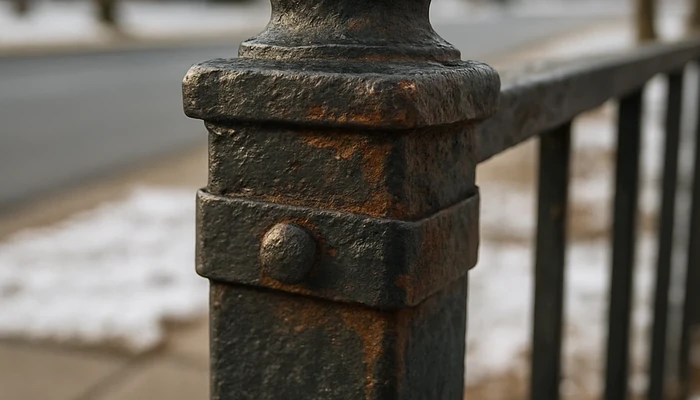
- Wrought Iron: Tough, traditional, but deeply vulnerable to salt if not meticulously maintained and repainted; seams and welds are weak points.
- Aluminum: Will not rust—only dulls or pits if coatings are worn. Less prone to structural failure from salt.
- Chain Link (galvanized): Offers good value, but watch for chipping and weak fasteners; vinyl coatings improve longevity.
- Steel Ornamental: Hot-dip galvanized version performs well—if properly coated.
- Composite/Vinyl: Immune to rust, but may use hidden metal fasteners prone to interior corrosion.
Learn more by reading about how to choose the best fence materials based on climate.
Best Practices: Design, Installation, and Maintenance
Honest expectations start with solid planning. Here’s what fence professionals recommend:
- Request duplex coatings (galvanize plus powder coat) on all steel fence elements facing road salt.
- Specify stainless steel or quality hot-dip galvanized fasteners for all low-zone connections.
- Ensure concrete footings are above grade or include water drainage—salt water collects at fence bases.
- Design for minimal crevices and welds, using mechanical fasteners with washers and covers.
- During installation, avoid on-site cutting or welding that can break factory coatings.
- Plan for routine post-winter rinsing: garden hose only, no pressure washing needed.
For added durability in extreme Midwest climates, see tips on aluminum fences in extreme climates.
Long-Term Maintenance: Spotting Trouble Before It’s Too Late
Corrosion often develops out of sight. Check your fence each spring for:
- Rust around fastener heads or at the base of posts.
- Bubbling or cracked coatings, especially low to the ground.
- Sticky latches or hinges—clean and lubricate as needed.
- Loose panels or movement when posts are rocked.
Address small chips with touch-up paint or specialized coatings before rust spreads. If you’re unsure about what you see, request a professional inspection. See more in-depth analysis at this corrosion repair guide from AMPP.
Fencing Codes, Warranties, and Real-World Durability
Building codes in Chicago, Illinois, require fences to be stable and resistant to decay for safety. However, manufacturers’ warranties often exclude salt-related corrosion—especially for fasteners or field-modified surfaces. Always read the fine print and ask whether the fence system is rated for high-salt environments or requires special warranty riders.
Helpful resources include the AMPP standards portal for corrosion and metal protection best practices.
When to Call a Professional
If you see advanced rust, hear metal snapping, or have posts leaning after a winter season, don’t wait—a structural issue could compromise your fence’s safety and your perimeter’s security. Only qualified fence contractors (like Chicagoland Fence Pros) have the tools to safely inspect and repair hidden damage or recommend the best solutions for your budget.
For those ready to replace or upgrade their fence, you can request a wrought iron fence estimate or compare chain link and other metal options for salt-prone areas.
FAQs About Road Salt and Metal Fence Corrosion
- Does every metal fence in Chicago need a salt-resistant coating?
No, but fences within 10–20 feet of salted roadways or driveways absolutely benefit from enhanced coatings and quality fasteners. It’s a wise investment for long-term durability.
- Can I prevent salt stains and rust entirely?
Not entirely, but you can significantly reduce the risk by hosing off your fence after major salting events and choosing duplex-coated systems with stainless or galvanized hardware.
- What’s the most common sign of hidden corrosion?
Loose or spinning fastener heads at the base of the fence, or panel wobbling, often signal that corrosion is active where you can’t see it.
- Should I use non-metal fasteners?
Plastic or composite fasteners are available, but they are rarely strong enough for security or privacy-grade fences. Stainless or premium galvanized fasteners remain best for high-stress areas.
- Does city code require any special fence or fastener type?
Chicago building codes require structural integrity, but do not mandate a specific material. Always check for any neighborhood or HOA bylaws on fence types and finishes.
- Is aluminum really rust-proof?
Aluminum does not “rust” in the iron sense, but it can corrode or pit over many seasons of heavy salt exposure. Overall, it outperforms steel for rust resistance.
- How do I touch up a damaged coating?
Clean away any loose rust, apply a zinc-rich primer, then cover with paint designed for outdoor metal. For large areas, call a pro to re-coat and inspect for structural issues.
- Will regular maintenance void my warranty?
Nearly all fence warranties require the owner to maintain coatings and address chips promptly. Document your efforts, and ask for guidance from your installer or manufacturer.
Summary: Realistic Expectations and Next Steps
Metal fences can deliver secure, beautiful boundaries even in Chicago’s salt-heavy winters—but only if you understand the hidden risks. By choosing the right fasteners, demanding superior coatings, and maintaining vigilance with post-winter inspections, you protect both your investment and your peace of mind. If you’re evaluating new materials or want honest, experienced advice, talk to industry professionals before you commit.
Ready to take the next step? Discuss commercial fence upgrades or explore iron railings for your property to further balance security and style. For questions or personalized guidance, contact Chicagoland Fence Pros directly—your partner in long-term fence performance.
About Chicagoland Fence Pros
Chicagoland Fence Pros is a professional fence company with over 15 years installing fences in the Chicago, Illinois area. Serving homeowners, property managers, and businesses, our team specializes in residential and commercial metal, wood, vinyl, and aluminum fencing, always focusing on code compliance, clear education, and durable results in challenging Midwest conditions. Fully licensed and insured, Chicagoland Fence Pros is committed to honest advice, long-term value, and the right fence for every property.
fence installation chicago, wrought iron fence Fence Chicago il, wrought iron fence Fence Chicago, wrought iron fences Evanston, wrought iron fencing Libertyville, ornamental iron fence Hanover Park, wrought iron fence Wheaton, iron fence Winnetka, iron security fence Ranch Triangle, iron fence in the city of Edison Park