
Effortless Security: Stress-Free Vinyl Fence Installation Guide
Choosing a fence for your home or property is often a balancing act between appearance, security, privacy, and practical considerations. Many first-time homeowners and property managers are drawn to vinyl fences because of their promise of low maintenance and clean aesthetics. But questions linger: Is vinyl as durable as people say? How hard is installation, and what should you realistically expect along the way? In the Chicago, Illinois area, with its tough climate and unique neighborhood requirements, these questions matter even more.
This in-depth guide explores everything you need to know for an effortless security upgrade through stress-free vinyl fence installation. We’ll break down the process step by step, highlight important considerations, clarify trade-offs, and draw on the experience of Chicagoland Fence Pros. By the end, you’ll know exactly what’s involved, what mistakes to avoid, and how to enjoy the best of security and style with your new vinyl fence.
Why Choose Vinyl Fencing for Security and Peace of Mind?
Vinyl fencing has steadily gained popularity thanks to its blend of durability, privacy, and attractive appearance. But unlike traditional materials, modern vinyl offers unique advantages for security-conscious property owners:
- Durable in Tough Climates: Vinyl resists moisture, insects, and rot—essential for Chicago’s wet springs and freezing winters.
- Privacy Panel Options: Many vinyl styles create a solid visual barrier, deterring intruders and protecting your backyard retreat.
- No Rust or Painting: Maintenance is as simple as an annual wash, with no worries about splinters, peeling paint, or warping boards.
Homeowners in Chicago, Illinois often ask if vinyl is strong enough for true security. The answer depends on the quality of materials, post depth, and professional installation—themes we’ll cover in detail below.
Understanding Vinyl Fence Types, Materials, and Styles
Before installation can begin, it’s important to select the right type of vinyl fence, as each style offers different levels of privacy, appearance, and security. Here’s a breakdown:
- Privacy Fences: Solid panels, no gaps, most secure for yards and pool areas.
- Semi-Privacy Fences: Small gaps between boards, allow air flow while maintaining some visual barrier.
- Picket Fences: Decorative, lower, more open—great for front yards but less secure.
- Ranch Rail / Post-and-Rail: Open look, ideal for boundaries but not for high security.
Material Quality and Longevity
High-quality vinyl (often polyvinyl chloride, or PVC) is engineered to withstand UV rays and heavy use. Be wary of lower-cost options, which may fade, crack, or become brittle more quickly. Learn more in our guide to choosing vinyl fencing with long-term durability.
Available Colors and Finishes
Modern vinyl fences come in a variety of colors and finishes, including wood grain textures. Explore more in our Vinyl Fence Colors and Finishes hub.
Preparing for Effortless Vinyl Fence Installation
A stress-free installation starts with careful planning. Here’s how homeowners and property managers can set themselves up for success:
- Check Local Codes and HOA Rules: Always review Chicago’s building codes or neighborhood association regulations. Most areas require permits and have rules about fence height, setback, or style.
- Survey Your Property: Understand your exact property lines—mistakes here can lead to expensive disputes or legal trouble.
- Call Utility Locators: Never dig without marking underground utilities. Contact 811 in Illinois before any fence post digging begins.
- Choose Qualified Installers: Whether DIY or professional, ensure installers can handle uneven ground, tough soils, and meet code.
- If this feels overwhelming, consider requesting a fence estimate from Chicagoland Fence Pros. Our team reviews all requirements so you don’t have to worry about unexpected delays.
Step-By-Step Installation: What Really Happens on Site
- Site Preparation
- Remove plants, debris, rocks, and level the ground as much as possible.
- Determine exact fence line using string and markers.
- Review any slope adjustments needed—vinyl can handle modest slopes with stepped or racked panels.
- Marking Fence Layout
- Mark post spots, typically 6–8 feet apart depending on panel length.
- Double-check against survey/map and local zoning setbacks.
- Setting Posts
- Dig holes at correct depth (usually 30–36″ below grade in Chicago’s climate for frost protection).
- Add gravel for drainage at the bottom.
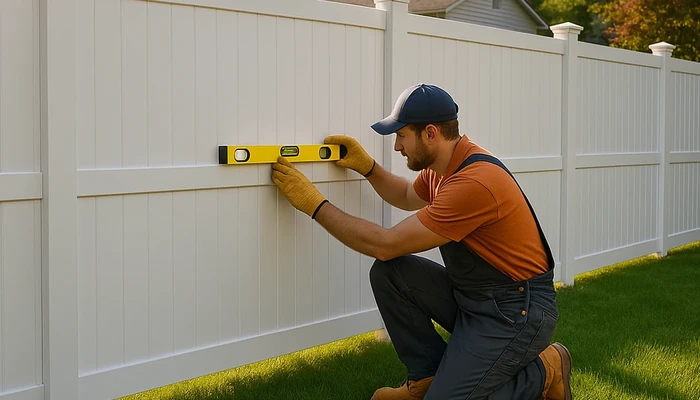
- Set posts in concrete, ensuring each is perfectly plumb and aligned.
- Allow curing time—this prevents future sagging or shifting.
- Securing Panels and Gates
- Slide panels into routed posts or attach via brackets, depending on design.
- Install gates with reinforced frame and level hardware.
- Check all panels for secure fit and consistent height.
- Final Inspection and Cleanup
- Inspect for any crooked panels, loose fasteners, or post movement.
- Touch up landscaping, sweep debris, and review warranty information.
Common Mistakes to Avoid for a Stress-Free Experience
- Skipping Permits or Inspections: Can result in costly rework or code violations (see code guidance).
- Shallow Post Holes: Frost heave is a real concern—always go deep enough for Chicago’s winters.
- Poor Quality Materials: Cheap vinyl can discolor or crack, especially in harsh weather.
- Ignoring Manufacturer Instructions: Each system may require unique fasteners or brackets.
- Uneven Panel Heights: Leads to an amateur appearance—measure and level diligently.
Vinyl Fence Security: What Makes a Fence Truly Secure?
Vinyl is strong, but smart installation and design upgrades can make it even more secure:
- Panel and Post Reinforcement: Some systems allow metal or composite reinforcement inside the rails or posts. This adds strength against impact or climbing.
- Privacy Styles: Tall panels with no gaps deter prying eyes and make climbing difficult.
- Secure Gates: Use high-quality latches and hardware. Consider keyed or magnetic locks for extra security. For more, see our guide to vinyl fence gates.
- Underground Security: Bury the bottom of the panels or use concrete “curbs” to prevent digging under the fence.
For details on the latest technologies, consult our deep dive on vinyl fence security technology.
Comparing Vinyl Fences to Other Materials
| Feature | Vinyl | Wood | Chain Link | Aluminum |
|---|---|---|---|---|
| Durability | Excellent (no rot/rust) | Moderate (rot/insects) | High (rust possible) | High |
| Maintenance | Very Low | High (staining, repair) | Low/Moderate | Low |
| Privacy | Full/Semi | Full/Semi | Poor (see-through) | Poor |
| Cost | Mid-High | Variable | Low | High |
| Style Options | Diverse, modern | Very customizable | Few | Many |
For an in-depth comparison, visit our article Vinyl vs Wooden Fences.
Installation Costs, Budgeting, and What to Expect
Cost is a big concern for most property owners. Vinyl is typically more expensive up front compared to wood or chain link, but much lower in long-term maintenance. Factors that influence price include:
- Fence length and style
- Gate quantity and size
- Site access (removal of old fence, steep grades, landscaping obstacles)
- Quality of vinyl used—cheap panels cost less but may fail sooner.
Explore our Affordable Vinyl Fence Cost Guide to estimate your project’s budget.
- Ready to start planning? See our full vinyl fence installation service details.
Vinyl Fence Maintenance: Keeping Security Effortless Long-Term
One reason vinyl is popular is its low-maintenance nature. Here are the essentials:
- Annual Cleaning: Use water, mild soap, and a soft brush. Avoid abrasive tools.
- Inspect for Damage: Check gates, posts, and panels after winter or storms—look for cracks and adjust hardware as needed.
- Prevent Mold or Mildew: Wash shaded or damp sections more frequently to maintain bright color.
- Manufacturer Warranties: Quality brands stand behind their fences. Keep paperwork for reference.
Check out our resources on vinyl fence maintenance and easy cleaning tips for step-by-step how-tos.
If you ever have questions or spot an issue, consult a trusted contractor like Chicagoland Fence Pros.
Integrating Security Technology with Vinyl Fencing
Advanced security isn’t just for metal or chain link fences. Options now include:
- Reinforced panels and posts
- Smart gate locks and alarms
- Surveillance camera mounts
Learn more about the intersection of smart home tech and fencing in our guide Vinyl Fence Security Technology.
FAQ: Effortless Vinyl Fence Installation & Security
Q: How long do vinyl fences really last?
A: With quality materials and professional installation, vinyl fences can last 20–30 years or more, especially in the Chicago climate. Lower-cost panels may have shorter life spans.
Q: Are permits required for vinyl fence installation in Chicago, Illinois?
A: Yes. Most neighborhoods require permits and have rules regarding height, placement, and design. Always verify with local authorities before starting your project.
Q: Can I install a vinyl fence myself, or should I hire a professional?
A: DIY is possible for handy homeowners, especially with simple layouts. Complex sites or code compliance challenges may require professional help—for peace of mind, many choose expert installation.
Q: How do I maintain a vinyl fence in winter?
A: Inspect after each season for shifting posts or ice damage. Clean with mild soap when temperatures allow, and remove any heavy snow around gates and posts.
Q: Are vinyl fences secure?
A: Properly installed privacy or reinforced vinyl fences provide strong security, especially with deep posts and quality gates. Naturally, no fence is completely intruder-proof, but vinyl can be among the most effective for residential uses.
Q: How can I compare vinyl to other fencing options?
A: Our Vinyl vs. Wood Comparison Guide breaks down pros, cons, and best use cases.
Q: What can void a vinyl fence warranty?
A: Improper installation, unauthorized repairs, or failure to follow maintenance recommendations often void warranties. Always keep documentation and read the fine print.
Q: What if my ground is sloped or uneven?
A: Vinyl fences can be stepped or racked to follow ground contours. Professional installers from Chicagoland Fence Pros can explain the best approach for your specific yard.
Q: Can vinyl fences be recycled?
A: Many modern vinyl fences are fully recyclable. Consult with your installer or manufacturer for options in the Chicago area.
Conclusion: Effortless Security, Clear Choices
Installing a vinyl fence is one of the best ways to secure your property while maintaining curb appeal and reducing maintenance demands. With the right planning, materials, and expert support, the process truly can be stress-free. Homeowners and property managers new to fencing should start by understanding their needs, researching codes, and comparing their style options—never rushing the groundwork.
If you’d like help reviewing your site, finding the best vinyl fence for your needs, or ensuring code compliance in the Chicago, Illinois area, talk to our vinyl fence specialists for tailored advice.
About Chicagoland Fence Pros
Chicagoland Fence Pros has over 15 years of experience helping homeowners and businesses in Chicago, Illinois and surrounding communities improve security, privacy, and curb appeal through thoughtfully designed fences. Our professional team specializes in vinyl, wood, aluminum, and steel fencing—delivering licensed, fully insured, and code-compliant installations for both residential and commercial projects. Choose Chicagoland Fence Pros for honest advice, realistic expectations, and local expertise on every job.
fence companies chicago, Commercial Vinyl Fence Installation Chicago, the best commercial vinyl fence installation in Chicago, vinyl perimeter fence Rockford IL, Algonquin vinyl fence, white vinyl fence Westmont, vinyl fence replacement St Charles, vinyl fence styles Winfield, vinyl fence in the city of Joliet, white vinyl fence Barrington