
Design Ideas For Automated Door Systems: A Practical Guide
Thinking about upgrading your property’s entrance or perimeter? Modern automated door systems offer a blend of security, convenience, and visual appeal, but knowing where to begin can be overwhelming, especially for homeowners and property managers researching options for the first time. Whether you want enhanced curb appeal, better access control, or simply a more efficient way to manage entry, there are countless styles and technologies to choose from. Design Ideas For Automated Door Systems aren’t just about looks—considerations include long-term durability, code compliance, and realistic maintenance.
This in-depth guide walks you through the essentials: material choices, operating styles, technology integrations, best practices for privacy, and the real pros and cons of popular features. You’ll also find clear checklists for evaluating automated gate systems, guidance for navigating local Chicago codes, and practical tips drawn from years of installing both residential and commercial solutions. By the end, you’ll feel confident in your ability to identify an automated door system that blends function, style, and safety for your unique needs. As always, Chicagoland Fence Pros is here with honest input and proven expertise.
Understanding Automated Door Systems
Automated door systems, sometimes referred to as automatic gates or smart entryways, use motorized mechanisms to control access with convenience and security. In Chicago, Illinois and elsewhere, homeowners and businesses implement these systems for property value, privacy, and safety. But the right solution depends on property layout, traffic volume, regulatory codes, and personal style preferences.
- Sliding gates: Efficient for wide, flat driveways, requiring less sweep space.
- Swing gates: Classic appearance, suitable for both modern and traditional homes.
- Telescopic gates: Maximize security in limited spaces, as panels retract behind each other.
- Bifold doors: Rapid opening for commercial or high-traffic sites.
Many systems now integrate smart access (remote controls, keypads, mobile apps), vehicle detection, and safety sensors—key for families or multi-tenant buildings.
Key Considerations Before Choosing Your System
- Security and Access Control: What level of monitoring and remote access do you need?
- Aesthetic Goals: Do you prefer a seamless, modern look or a statement piece enhancing curb appeal?
- Maintenance: How much time, budget, and comfort do you have for upkeep?
- Climate Resistance: Will materials stand up to Chicago’s seasonal extremes?
- Compliance: Are there HOA restrictions or city codes?
- Traffic Volume: Is this for a single-family home, a busy apartment complex, or a business facility?
Every automated door system works best when tailored to your needs—and some decisions are easier with real-world examples. For specific code or legal questions, reference industry standards and ask your installer for guidance.
Material Choices for Automated Gates and Doors
Materials are critical not just for appearance, but for security, longevity, and climate performance. Here are the most common:
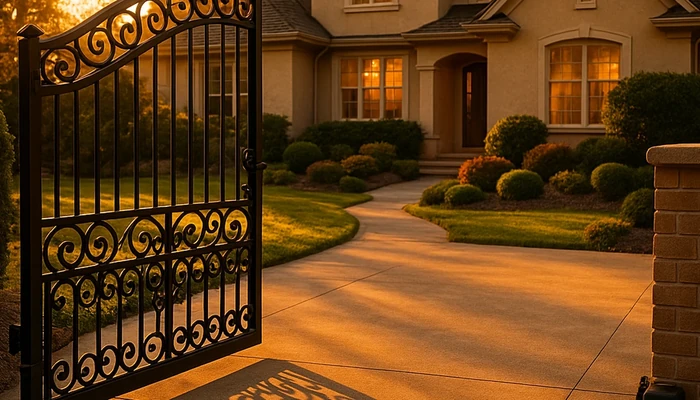
- Wrought Iron: Highly durable and secure, can be ornate or minimalist. Regular repainting is needed for Chicago winters.
- Steel: Modern, strong, and often powder-coated to resist corrosion.
- Aluminum: Lightweight, rust-proof, and suitable for custom shapes or sleek looks.
- Wood: Warm, natural finish; best for privacy. Needs regular maintenance and careful sealing against Midwest conditions.
- Vinyl & Composite: Low-maintenance, many colors; best for privacy and contemporary home designs.
- Glass panels (framed): Common in commercial or ultra-modern settings; needs safety glass and regular cleaning.
Mixing materials is increasingly popular. Pair wrought iron frames with wood infill, or combine aluminum and glass for standout appeal. Always balance style choices with durability and privacy, especially in urban Chicago neighborhoods.
| Material | Security | Maintenance | Design Options | Climate Resistance |
|---|---|---|---|---|
| Wrought Iron | High | Moderate | Custom, classic | Good (with care) |
| Steel | High | Moderate | Modern, bold | Excellent (powder-coated) |
| Aluminum | Moderate | Low | Sleek, custom | Excellent |
| Wood | Moderate | High | Warm, private | Variable |
| Vinyl/Composite | Moderate | Low | Contemporary | Excellent |
Popular Automated Door System Designs
No two properties—and no two gate solutions—are identical. Explore these approaches to spark your planning:
Sliding Gates
Ideal for urban driveways or commercial lots with limited space. The gate moves along a track parallel to the fence, minimizing swing area. Designers now offer invisible track systems for minimalist looks.
Swing Gates
Tried and true, swing gates open inward (or outward) on hinges, perfect for grand entrances or when you have enough clearance. Double-leaf swing gates can mimic traditional estate styles.
Bifold Gates and Telescopic Systems
Best for tight spaces with little room to either side of the entrance. Bifold panels fold onto themselves; telescopic gates tuck behind each other as they open.
Specialty Doors: Folding, Pivoting, and More
Folding and pivoting door systems appear more in commercial or high-end settings. They allow wide, unobstructed openings and modern architectural statements.
Smart Technology and Automation Features
Today’s automated door systems go far beyond simple remotes. Leading options incorporate smart sensors, automation, and even integration with smart homes or mobile apps. Industry standards continue to evolve, emphasizing both convenience and safety.
- Access Control Options: Keypads, RFID cards, mobile apps, or biometric readers for customized entry.
- Safety Sensors: Prevent gates from closing on vehicles, people, or pets.
- Auto-Lock and Obstacle Detection: Enhances both security and property value.
- Remote Monitoring: View gate status and receive alerts via mobile integration.
- Back-Up Power: Essential for Chicago power outages—consider solar or battery solutions.
Integrate only what you will use. Unused tech can mean higher costs and more maintenance headaches.
Privacy and Security: Balancing Needs
Many homeowners in Chicago, Illinois want both privacy and a welcoming facade. Choices to consider:
- Solid infill (wood, composite, vinyl): Highest privacy, best for urban lots or side yards.
- Decorative iron screens: Security-focused but can be personalized with cut-out designs.
- Frosted or tinted glass: Used in modern designs for both security and a unique look.
For some, layered solutions (e.g., a solid fence paired with an ornamental drive gate) offer the best of both worlds. Always review local privacy ordinances.
Cost, Installation, and Planning Expectations
Automated door systems are an investment. Costs vary by material, gate type, technology features, and site prep requirements. From our experience as a fence contractor in Chicago, Illinois:
- Basic swing or sliding gates (manual): Lower material and install cost, but no automation.
- Full automation with access control: Increases costs—plan for motors, controls, electrical work.
- Complex settings (slopes, retrofits): May require custom engineering or concrete work.
It’s wise to obtain clear, written quotes and compare both initial and recurring costs (maintenance, repairs, parts). For guidance in budgeting and getting accurate figures, see our automatic security gate services.
Meeting Codes and Ensuring Safety
Every automated door installation should abide by local ordinances, safety standards, and industry best practices. In Chicago, some neighborhoods require specific setback distances, restricted heights, or even material limitations. The National Fire Protection Association (NFPA) publishes guidelines for fire-barrier gates and emergency access systems.
Safety features like obstacle sensors, emergency release mechanisms, and clear signage are recommended. Professional installation ensures compliance and is especially important in multi-family or commercial settings.
Discover more about these topics from our informational resource on safety standards for the installation of automatic gates.
Maintenance and Longevity: Realistic Expectations
No system is entirely maintenance-free. Automated gates and doors need periodic checks for moving parts, electronics, and environmental wear. Here’s what to expect:
- Quarterly checks: Lube moving parts, inspect for debris, test safety features.
- Annual professional inspection: Motor, control panels, backup batteries, wiring.
- Seasonal upkeep: Address snow, ice, and salt exposure in Chicago winters.
- Surface cleaning and care: Prevent buildup and corrosion; maintain paint or coatings as needed.
Choosing systems designed for harsh climates and prioritizing accessible service panels will reduce headaches long-term. For tips, read our advice on preventive maintenance for automatic gates.
Creative Inspiration: Recent Trends and Ideas
Innovative homeowners and architects in the Chicago area are customizing automated entrances in creative ways:
- Mixed-material designs: Combining rustic wood with sleek, painted aluminum for a modern-industrial aesthetic.
- Smart integration: Gates that “learn” routines, adjusting access based on time of day or tenant needs.
- Minimalist frameless entry systems: All-glass panels with concealed hardware, suited for upscale properties.
- Green/eco-friendly enhancements: Solar-powered motors, sustainably sourced materials.
- Integrated lighting: LED accents within the gate structure for night visibility and visual impact.
For a deeper dive into current styles and technologies, check out modern trends in automatic gates and smart features of automatic gates.
Comparison Table: Gate Types and Best Uses
| Gate Type | Best For | Space Required | Design Appeal | Approx. Cost (Range) |
|---|---|---|---|---|
| Sliding | Narrow lots, urban homes, commercial | Side clearance | Contemporary, practical | $$ – $$$ |
| Swing | Traditional or grand entrances | Swing radius | Classic, flexible | $$ – $$$ |
| Bifold | Tight urban spaces | Minimal (folds inward) | Modern, space-saving | $$$ |
| Telescopic | Commercial, high-security | Very little | Industrial, secure | $$$$ |
*Costs vary significantly by material, size, and technology; consult Chicagoland Fence Pros for an accurate estimate for your property.
Frequently Asked Questions
- What is the difference between automated gates and automated doors?
Automated gates often refer to larger entry systems for driveways or perimeters, while automated doors usually cover pedestrian or interior entries. Systems share similar operating tech but differ in scale and safety features.
- How do I choose the right material for my automated door system?
Balance security needs, aesthetic preference, and maintenance comfort. For Chicago’s climate, durable materials like powder-coated steel, aluminum, or well-treated wood are good choices.
- Are automated gates safe for families with children and pets?
With modern safety sensors and auto-reverse features, automated gates are generally safe. Regular testing and professional installation improve safety. See our resource on automatic gates and child safety.
- Can smart gates be integrated with home automation systems?
Yes, many modern gates are compatible with home automation and mobile apps, allowing for remote entry management and security alerts.
- What maintenance is required for automated door systems?
Routine maintenance includes checking and lubricating moving parts, cleaning sensors, and inspecting tech components. Schedule annual inspections for motors and safety devices. Learn more from our maintenance guide.
- What safety standards apply to automated doors in Chicago, Illinois?
Always follow manufacturer and local building code requirements; check with city regulators and see security industry standards.
- Can existing manual gates be upgraded to automation?
Sometimes—simple swing or sliding gates can often be retrofitted, but structural integrity and compatibility with motors must be verified by a professional installer.
- What happens during a power failure?
Many systems include manual release mechanisms or battery/solar backup. Ask your installer about options suited for Chicago weather.
- How do I get a code-compliant automated door system?
Work with licensed, experienced contractors—like Chicagoland Fence Pros—familiar with local codes. Always review HOA and neighborhood restrictions before purchasing.
Next Steps: Planning Your Automated Door Project
Automated door systems can enhance both the aesthetics and security of any property when thoughtfully chosen. As you evaluate your options, reflect on what matters most—comfort, privacy, safety, or visual impression—and keep in mind the realities of maintenance and long-term costs.
If you still have questions or want tailored advice for your Chicago, Illinois property, request a consultation from our automatic security gate specialists. Chicagoland Fence Pros is ready to help you compare options and choose responsibly.
About Chicagoland Fence Pros
Chicagoland Fence Pros is a professional fence company with over 15 years of experience helping homeowners and businesses in Chicago, Illinois and nearby communities improve security, privacy, and curb appeal. Our team specializes in residential and commercial fencing, including wood, vinyl, aluminum, and steel, with a commitment to honest advice, code-compliant installations, and clear, transparent processes. We are fully licensed, insured, and dedicated to educating clients about the best solutions for their needs.
fence company in chicago, security gates chicago, security gate, automatic gates Glenview, swing gate Westchester, automatic gate repair Lakeview, security gate Niles, automatic gates Schaumburg, driveway gate Fox Lake, automatic gate West Chicago