
Demystifying Chain Link Fence Componentry: Everything Homeowners and Property Managers Need to Know
Chain link fences are one of the most popular choices for securing both residential and commercial properties, but many first-time fence buyers are surprised by the range of parts, components, and options available. Understanding the basics of chain link fence componentry is crucial—not only for making the right choices about security, privacy, and design, but also for ensuring long-term durability and compliance with local codes. In this comprehensive guide, we’ll demystify the key fence elements, discuss material and style trade-offs, and provide expert knowledge sourced from over 15 years of experience at Chicagoland Fence Pros. By the end, you’ll be equipped with knowledge to plan, select, and maintain the right chain link fence for your property.
What Is a Chain Link Fence?
A chain link fence is a woven fence made from steel wire, forming a diamond-shaped mesh. It’s known for its affordability, durability, and versatility. These fences enclose everything from private yards to sports fields, playgrounds, dog parks, and industrial properties—all with varying goals of security, privacy, and aesthetics.
Main Components of a Chain Link Fence
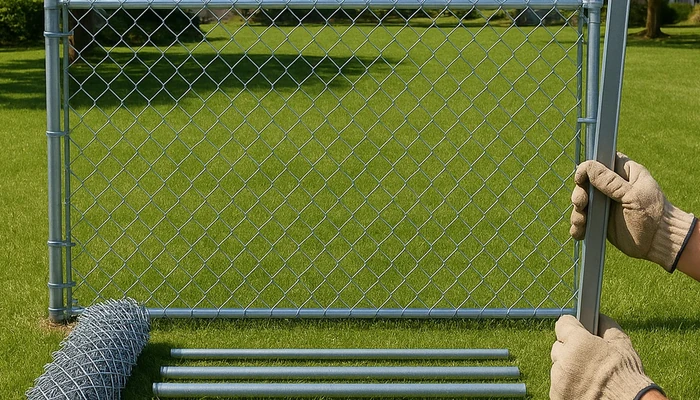
To demystify chain link fence componentry, let’s break down the essential parts:
- Fabric/Wire Mesh: The characteristic interwoven steel wire grid—galvanized for corrosion resistance.
- Posts: Vertical supports, usually set in concrete. Types include line posts (mid-fence), terminal/end posts (corners or ends), and gate posts.
- Top Rail: A horizontal pipe running along the top, keeping the mesh taut and aligned.
- Tension Wire: Runs along the bottom (and sometimes the top), enhancing rigidity and minimizing gaps.
- Tension Bars & Bands: Secure the fabric to end posts and help distribute stress evenly.
- Caps & Fittings: Protective or decorative coverings and connector pieces for posts, rails, and chain link attachments.
- Gates & Hardware: Include single/double swing gates, latches, hinges, and sometimes automation features for secure access.
Material Options: Wire, Framework, and Coatings
Each component plays a role in a fence’s lifespan and performance—especially important in Chicago’s harsh winters. The choices include:
- Galvanized Steel: The industry standard for both wire and framework; highly rust-resistant.
- Aluminized Steel: Offers extra corrosion resistance—ideal for moisture-prone sites.
- Vinyl-Coated Wire: Adds color (black, green, brown) and enhances protection, helping the fence blend with landscaping. Explore color options for chain link fences.
Choosing Diameter (Gauge) and Mesh Size
The thickness of the wire (gauge) and the size of the mesh openings are major factors. Thicker gauges (lower numbers) are stronger, while small mesh openings enhance security. Check out our hub on gauge and mesh size explained for detailed comparisons.
| Component | Standard Option | Upgrade Option |
|---|---|---|
| Wire | 11.5-gauge galvanized | 9-gauge, vinyl-coated |
| Posts | 1-5/8″ (residential) | 2-3/8″ (commercial) |
| Top Rail | 1-3/8″ diameter | Heavier pipe, powder-coat finish |
| Gates | Manual latch | Automated, security hardware |
Design and Privacy Add-Ons
While chain link fences are known for open visibility, various modifications can enhance privacy, security, or appearance:
- Privacy Slats: Inserted into mesh for partial to full privacy.
- Windscreens: Fabrics or screens for wind block and privacy (popular for sports fields and construction sites).
- Barbed Wire/Razor Ribbon: Additional top security for commercial or restricted areas.
- Plantings: Shrubs or vines grown alongside for a greener look—see chain link fence design inspiration.
Considerations for Chicago, Illinois Properties
In Chicago, local climate and city codes require extra care when choosing materials and planning fence installations:
- Frost Line: Posts should be set below the frost line to prevent shifting during freeze-thaw cycles.
- Zoning & Permits: Confirm required permits and height/location rules; see local ordinances or request guidance from Chicagoland Fence Pros or the Simpson Strong-Tie Building Authority.
- HOA Rules: If applicable, check association guidelines before starting work.
A skilled local contractor will always ensure your fence complies with city requirements and is anchored properly for the local weather.
Installation Process Explained
Basic Steps for Most Chain Link Fences
- Planning and marking lines, confirming property boundaries.
- Digging post holes and setting posts below frost depth.
- Attaching hardware, top rails, and tension wire.
- Unrolling and securing the chain link fabric.
- Installing gates, caps, slats, or any custom features.
- Final inspection to ensure code compliance and proper function.
Professional installation is strongly advised, especially on sloped ground or for high-security applications. In the Chicago, Illinois area, weather and soil conditions add another layer of complexity for DIYers.
Longevity and Maintenance
Chain link fences are low-maintenance but do benefit from periodic checks. You can extend their life by:
- Cleaning debris from the base and mesh regularly.
- Checking and tightening fittings annually.
- Spotting rust early and applying touch-up coatings as needed.
- Replacing damaged sections promptly to avoid larger failures.
For more care tips, refer to maintaining chain link fences.
Comparison: Chain Link vs. Other Fence Types
| Feature | Chain Link | Wood | Vinyl | Aluminum |
|---|---|---|---|---|
| Cost | Most affordable | Moderate | Higher | Moderate |
| Maintenance | Low | Medium/High | Low | Low |
| Security | High (upgradable) | Medium | Medium | High |
| Privacy | Requires add-ons | Excellent | Excellent | Fair |
| Durability | Very high | Medium | High | High |
Explore wood, vinyl, composite, and aluminum fencing at wood fences, aluminum fences, or composite options.
Safety, Security, and Perimeter Solutions
Best Practices for Secure Installations
- For playgrounds or pet enclosures, ensure bottom tension and no sharp projections—see chain link fencing for pet owners.
- For commercial or high-risk sites, add security gates, access control, or barbed wire. Discover more at maximizing chain link security.
- Keep landscaping trimmed near the fence to reduce climbing risks.
Homeowners in Chicago, Illinois often ask about combining chain link with access automation or privacy features—both are possible with modern hardware and creative upgrades.
Frequently Asked Questions (FAQ)
- 1. What is the strongest part of a chain link fence?
The posts and their foundation are the backbone of any chain link fence. Proper depth, diameter, and concrete anchoring are vital—especially in freeze-prone regions like Chicago. Upgrading post size or gauge can further enhance security.
- 2. Can chain link fences be customized for color or privacy?
Yes—vinyl-coated wire is available in several colors, and privacy slats or windscreens can add both privacy and aesthetic appeal. Explore more options at color choices for chain link fences.
- 3. Do I need a permit for a chain link fence in Chicago?
Most residential fences require a city permit and must comply with height and setback regulations. Always confirm with local authorities, or rely on experienced contractors like Chicagoland Fence Pros to handle permitting and code compliance.
- 4. How long does a chain link fence last?
With quality installation and materials, chain link fences commonly last 20–30 years. Regular inspection and prompt repairs extend their useful life.
- 5. Is DIY installation recommended?
While possible, DIY chain link fence installation requires specialized tools and careful measuring. For long runs, slopes, or high-security needs, professional installation is strongly recommended.
- 6. How can I maximize my fence’s durability in Chicago?
Choose heavy-gauge, galvanized or vinyl-coated wire and ensure posts are set well below the frost line. Schedule annual checks before and after winter freezes.
- 7. What is the difference between commercial and residential chain link?
Commercial fences use heavier posts, thicker wire, and often feature security upgrades like barbed wire. Residential options prioritize affordability and aesthetics but can be upgraded for security as needed.
- 8. Can chain link fencing be used for pet and child containment?
Absolutely. With proper installation (including buried bottom wire and tight posts), chain link fences keep children and pets secure. Specialized options are available for both—see pet fencing solutions.
Conclusion: Confident Fence Decisions Start with Clarity
Demystifying chain link fence componentry is the first step toward a safe, secure, and attractive perimeter for your property. By understanding key materials, parts, and best practices, you can make confident choices that match your needs and budget. If you’re still unsure about the right options, or need help interpreting Chicago codes, contact Chicagoland Fence Pros for no-obligation answers—or request a professional chain link fence estimate today.
For more insights and creative inspiration, explore our articles on chain link vs. other fence materials and designing your chain link fence.
Chicagoland Fence Pros is a professional fence company with over 15 years of experience installing and repairing fences in Chicago, Illinois and neighboring communities. Our expert team specializes in residential and commercial fencing, offering wood, vinyl, aluminum, composite, and steel solutions. We are fully licensed and insured, with a focus on safety, code-compliance, and honest advice—helping each client achieve security, privacy, and long-term value for their property.
fence chicago, chain link fence replacement chicago, chain link security fence chicago, chain link perimeter fence Palatine, chain link fence replacement North Chicago, chain link fence Melrose Park, chain link fence options Berwyn, chain link fence in the city of River Forest, chain link security fence St Charles, chain link fence in the city of Des Plaines