 Skip to content
Combining Vinyl Fences With Other Materials: An Educational Guide for Homeowners and Property Managers
Choosing the right fencing solution is rarely a simple decision. Many homeowners and property managers in Chicago, Illinois, find themselves weighing options beyond just “wood or vinyl” — you may want the durability of vinyl but crave the natural warmth of wood, or need the security of metal without sacrificing design. Combining vinyl fences with other materials is a creative, practical approach that tailors strength, design, and privacy to your specific needs. In this comprehensive guide, you’ll learn how mixing materials affects durability, maintenance, and aesthetics, as well as important factors to consider before installation. With insights from the experts at Chicagoland Fence Pros, you’ll leave equipped to make the best fencing choices for your property.
Understanding the Basics: Why Combine Fence Materials?
The appeal of combining fence materials comes from the diverse strengths each material offers. Vinyl is renowned for its low maintenance and modern look, while wood adds character and warmth. Metals like aluminum and steel offer superior security, and stone or masonry bring lasting durability. By blending these, you gain a customized fence—one that’s not a compromise, but a thoughtful solution that balances:
- Durability – Vinyl resists rot, insects, and harsh weather (vital for Chicago’s climate), while metals and masonry boost strength against impacts or tampering.
- Aesthetics – Combinations enhance curb appeal, letting you match architecture or landscape features.
- Functionality – Mix and match for visibility, privacy, wind protection, or a friendly neighbor-approved style.
- Cost-Control – Use high-end materials in visible spots, and cost-effective ones elsewhere.
Common Combinations: Popular Material Pairings With Vinyl
Let’s explore the most effective ways homeowners and property managers combine vinyl with other fence materials:
1. Vinyl and Wood
- Post-and-Panel Design: Vinyl posts with natural wood infill provide the softness and color of wood, with the stable framework of vinyl.
- Accent Trim: Wood rails or caps on a vinyl privacy fence add rustic charm.
- Benefits: Achieve classic style and easier maintenance than all-wood fences; consider regular upkeep to prevent wood weathering.
2. Vinyl and Metal (Aluminum, Wrought Iron, Steel)
- Framed Panels: Vinyl panels framed with black aluminum or steel offer strength for security-conscious areas without visual heaviness.
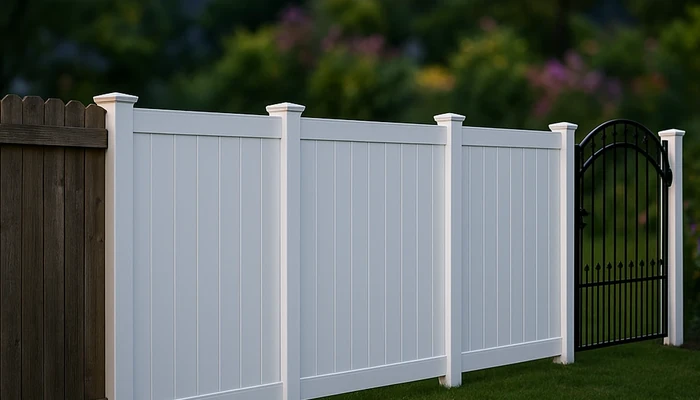
- Decorative Touches: Combine vinyl pickets with ornamental iron tops or gates for a sophisticated look.
- Benefits: Less corrosion and less painting required; metals boost longevity and style, especially in front yard and commercial settings.
3. Vinyl and Stone or Brick
- Pillars and Columns: Stone or brick columns anchor vinyl sections for a stately appearance, popular for main property lines or entrances.
- Retaining Walls: Mount a vinyl fence atop a masonry wall; great for sloped yards or adding extra privacy above grade.
- Benefits: Combines solid, tamper-resistant bases with low-maintenance vinyl; higher up-front cost but excellent durability.
4. Vinyl and Composite Materials
- Faux Wood Look: Use composite planks (wood-plastic) with vinyl frames for maximum weather resistance and warmth.
- Eco-Friendly Options: Choose recycled-content composite paired with classic white vinyl posts.
- Benefits: Minimal upkeep and sustainable profiles combine nicely for green-minded projects.
Design Considerations: Customization and Style
The beauty of mixed-material fences is their versatility. Here are key style and design ideas for inspiring results:
- Height Variation: Mix tall privacy vinyl panels with lower wood or metal picket sections at the front for architectural interest.
- Contrast and Color: Use white vinyl with dark iron for a crisp, elegant contrast—or blend earth-tone vinyl with natural stone for harmony.
- Transitional Elements: Mix see-through metal sections (for front yard visibility) with full vinyl panels between neighbors for privacy.
- Gates and Accents: Elevate entrances with a wrought iron or aluminum gate flanked by vinyl posts and stone columns.
- Decorative Patterns: Integrate lattice tops, horizontal boards or modern geometric lines using both vinyl and wood components.
Durability and Maintenance: What to Expect
One of the biggest advantages of including vinyl in your fence project is reduced long-term maintenance. Here’s what to expect from popular material pairings:
| Combination | Expected Lifespan | Maintenance Needs |
|---|---|---|
| Vinyl + Wood | 15–25 years† | Wash vinyl 1–2x/year; seal or stain wood every 2–3 years |
| Vinyl + Metal (Aluminum/Iron) | 20–30 years† | Clean as needed; inspect for rust (on metal); no painting for powder-coated aluminum |
| Vinyl + Stone/Brick | 30+ years† | Wash vinyl; check masonry joints every few years |
| Vinyl + Composite | 20–30 years† | Minimal upkeep—routine cleaning keeps it looking new |
† Subject to climate, installation quality, and product selection. Always check manufacturer warranties for details.
Cost Considerations: Balancing Budget and Value
Combining materials can affect your total fencing budget, but also increases value and longevity. Here’s how costs typically break down:
- Upfront Costs: Premium materials (stone, composite) and complex designs are more expensive up front but often pay off with fewer repairs.
- Material vs. Labor: Posts and columns (vinyl, stone, iron) are more labor-intensive to install, especially if mixing bases/walls with panels.
- Segmenting for Savings: Use more costly mixed material designs only along visible or high-impact areas (entrances, front yards) and standard vinyl elsewhere.
For a more detailed look at specific vinyl fencing costs, visit our Vinyl Fence Cost Guide.
Local Codes, Permits, and Best Practices
Before planning your mixed-material fence, always:
- Consult local building codes and zoning rules in Chicago, Illinois, to confirm allowed heights, materials, and setbacks.
- Contact your HOA (if relevant), as some communities limit certain materials or color schemes.
- Ask about permit requirements—especially for stone or masonry elements and taller privacy panels.
Staying informed avoids costly changes and ensures your fence is safe, compliant, and neighbor-friendly. A reputable contractor like Chicagoland Fence Pros will walk you through every step of this process. For general fence safety and security standards, organizations like DASMA and Structure Magazine offer reputable industry resources.
Installation Challenges and How Pros Solve Them
Combining materials is not always a simple “snap-together” project. You’ll face considerations like:
- Material Compatibility: Proper flashing, fasteners, and adhesives are necessary where vinyl meets wood or metal—avoid mixing incompatible metals (like iron and aluminum).
- Foundation Stability: Stone or brick columns require solid concrete footings—in Chicago’s freeze-thaw climate, this is especially vital.
- Grade/Slope Adjustments: Blending fence types over uneven terrain or hills may need step-down or racked sections.
- Color Matching: If color harmony is essential, confirm your vinyl and other materials complement each other (swatches help!), and choose UV-resistant finishes.
- Long-Term Repair Access: Ensure panels or infill sections can be replaced or serviced without dismantling the whole run.
Professional installers like Chicagoland Fence Pros have experience crafting seamless, lasting results across various combinations, particularly in demanding Midwest climates.
Case Studies: Real-World Applications of Mixed Material Fencing
Let’s look at a few property scenarios that illustrate the value of combining vinyl with other materials:
- Modern Townhome Entry: Vinyl privacy panels bordered by dark metal frames provide a clean, contemporary look, with iron accent gates for secure access.
- Sloped Backyard: A homeowner used stepped stone walls to overcome a rising landscape, then topped them with vinyl panels for extra privacy and zero-rot durability.
- Shared Boundary Solution: To appease both sides, one property manager installed wood pickets facing the neighbor and vinyl panels toward the street, framed in matching vinyl posts for a unified appearance.
- Commercial Curb Appeal: Restaurants and retail properties use brick pillars with vinyl pickets in between to balance visibility and style.
Every project can be tailored—discuss your goals and environment with a trusted fence contractor before finalizing plans.
Maintenance Tips for Mixed Material Fences
- Clean vinyl sections with mild soap and water at least once per season.
- Inspect wood for fading or splinters; reseal as needed. Replace damaged pickets promptly to avoid further issues.
- Check metal for rust spots or chipped paint, especially joints; spot-treat if necessary.
- Stone or masonry elements should be checked for cracking and re-pointed as needed.
- Tighten hardware annually to maintain structural stability.
For more maintenance and care advice, see our Easy Tips for Cleaning and Caring for Vinyl Fences and Preventive Maintenance for Vinyl Fences guides.
Vinyl Fencing + Other Materials: Benefits & Trade-Offs
| Feature | All Vinyl | Vinyl + Wood | Vinyl + Metal | Vinyl + Stone |
|---|---|---|---|---|
| Maintenance | Minimal | Periodic for wood | Minimal/Inspect for rust | Minimal/Check joints |
| Durability | High | High (wood is weak point) | Very High | Very High |
| Aesthetic Flexibility | Moderate | High | High | Very High |
| Upfront Cost | $$ | $$ | $$$ | $$$$ |
| Installation Complexity | Low | Medium | Medium | High |
Frequently Asked Questions About Combining Vinyl Fences With Other Materials
- Does combining vinyl with other materials affect the overall durability?
Mixed fences often outperform single-material ones by leveraging each material’s strengths (e.g., vinyl’s resistance to rot and metal’s rigidity). Weaknesses may arise if less durable materials (like untreated wood) aren’t maintained. Using quality parts and proper installation is critical.
- Are mixed-material fences more expensive than standard fences?
They usually cost more upfront due to specialized materials and installation complexity, but may offer better long-term value by reducing repairs and boosting curb appeal.
- Will combining materials help with privacy or security?
Absolutely. For example, tall vinyl panels create privacy, while iron sections allow visibility (great for side yards or entrances). Masonry or stone elements physically deter intruders.
- How do I choose the best material combinations for my property?
Start by identifying your priorities (privacy, style, security, budget), then consult with a local expert. They’ll suggest combinations that complement your home, handle Chicago weather, and meet codes.
- Are there code restrictions on mixing fence materials in Chicago, Illinois?
Yes, some neighborhoods and HOAs limit certain styles or require uniformity. Always check local rules before proceeding and obtain permits as needed.
- Can I install a mixed-material fence myself?
Handy homeowners may tackle simple projects (like replacing pickets), but combining stone, metal, and vinyl often requires advanced skills, especially for foundations or precise leveling. Hiring professionals (like Chicagoland Fence Pros) saves time and ensures compliance.
- How does Midwest weather affect vinyl and mixed-material fences?
Chicago’s freeze-thaw cycles, wind, and storms test all fence types. Vinyl resists moisture and insects, while proper footings and hardware prevent shifting. Always ask for climate-appropriate materials.
- How do I maintain the integrity of color and finish in mixed fences?
Choose UV-resistant vinyl and powder-coated metals, and reseal or stain wood regularly. Cleaning with non-abrasive products prolongs appearance, especially in sun-exposed or busy areas.
- Where can I see examples of mixed-material fences?
Browse local neighborhoods, home improvement magazines, and ask Chicagoland Fence Pros for a portfolio of past projects. Manufacturers’ catalogs often show inspiring styles.
- Who should I contact for advice or a quote?
Start with a trusted, local fence contractor. For a tailored design and estimate, request a consultation with Chicagoland Fence Pros.
Conclusion: Is a Mixed-Material Vinyl Fence Right for You?
Combining vinyl fences with other materials is a smart way to blend durability, privacy, and visual style, especially for properties facing the tough weather and diverse needs of Chicago, Illinois. By tailoring your fence design, you can strike a balance between function and curb appeal that lasts for decades. Ready to explore your options or need an expert’s eye for your property?
- Visit our Residential Fences page to learn more about installation choices.
- Considering a style with iron or aluminum accents? See Aluminum Fences in Chicago for inspiration.
- For tailored solutions and a clear quote, contact Chicagoland Fence Pros.
Chicagoland Fence Pros is a professional fence company with over 15 years of experience installing a wide range of residential and commercial fences in Chicago, Illinois and nearby communities. The team specializes in vinyl, wood, aluminum, and steel fencing, always delivering code-compliant, durable solutions tailored to local needs. Chicagoland Fence Pros is fully insured, licensed, and focused on clear advice, transparent processes, and lasting value for every property owner.
Fence Chicago, Chicago Vinyl Fence Installation, fence company near chicago il, white vinyl fence, vinyl fencing chicago, vinyl perimeter fence Mount Prospect, vinyl fence in Woodstock, vinyl fence in Tinley Park, Marengo vinyl fence, vinyl perimeter fence Lake Forest
