
Automated Gates: Luxury or Necessity? The Essential Homeowner’s Guide
If you’re exploring fencing options for your home or property, odds are you’ve seen the rise in automated gates—sleek, secure, and packed with technology. But are automated gates a luxury reserved for upscale estates, or quickly becoming a practical necessity for everyday homeowners and managers? This is a question many new property owners in the Chicago, Illinois area grapple with, especially when weighing security, privacy, and long-term value. In this comprehensive guide, we’ll walk you through everything you need to know about automated gates. We’ll cover the types, features, costs, safety aspects, code considerations, and provide practical examples so you can make a confident, well-informed decision. With expertise rooted in years of Chicago fencing solutions, Chicagoland Fence Pros is here to provide honest, unbiased advice for real-world property owners just like you.
Understanding Automated Gates: What Are They and How Do They Work?
Automated gates, also referred to as automatic or electric gates, are barriers at property entrances operated by mechanical systems rather than by hand. These systems use motors, remote controls, access keypads, or even smartphone integration to open and close gates with ease. The technology ranges from basic swing gate motors to advanced systems integrated with security cameras and intercoms.
- Convenience: Enter or exit your property without leaving your vehicle.
- Security: Control who enters your premises, adding an extra layer between you and the street.
- Customization: Blend the fencing and gate design with your home’s style, whether modern, classic, or utilitarian.
Automated Gates in Modern Living: Evolving from Luxury to Everyday Solution
Not long ago, automated gates were seen as status symbols—features reserved for high-end properties. Today, the technology is increasingly affordable and accessible for residential neighborhoods as well as commercial facilities. In cities like Chicago, property managers and homeowners recognize the growing demand for both practicality and curb appeal.
- Widespread adoption is driven by increased security concerns.
- Neighborhood associations and HOAs are revising guidelines to permit or encourage automated options.
- Smart home integration is making operation and monitoring easier for busy families and businesses.
Security and Privacy: Automated Gates as a First Line of Defense
One of the most compelling reasons for installing automated gates is enhanced security and privacy. Automated gates create a controlled access point, protecting children, pets, assets, and even providing peace of mind.
- Access control: Only allow approved individuals onto your property, which deters opportunistic trespassers and package theft.
- Physical barrier: Makes unauthorized vehicle or pedestrian entry far more difficult than traditional manual gates.
- Privacy boost: Choose solid or semi-solid gate designs to shield your property from view—an option that is particularly valued by urban homeowners in Chicago, Illinois.
For a deeper look at security strategies, see our hub on revolutionizing security with automatic gate systems.
Main Types of Automated Gates (with Pros and Cons)
When selecting an automated gate, the main types to consider are:
- Sliding Gates
- Swing Gates
- Telescope and Bi-fold Gates
- Vertical Lift and Swing Gates
Each gate type has unique suitability for specific lot sizes, ground slopes, and usage needs. Here’s a table to help you compare:
| Type | Best for | Space Required | Pros | Cons |
|---|---|---|---|---|
| Sliding | Wide driveways, limited depth | Parallel space along fence | Smooth operation, great for snow | Needs wide, flat side area |
| Swing | Classic look, residential | Inward or outward arc | Aesthetically pleasing, simple | Needs flat ground, arc space |
| Telescopic/Bi-fold | Limited frontage, modern homes | Compact, folds on itself | Efficient in tight spots | Higher mechanism complexity |
| Vertical Lift | Urban sites, commercial | Minimal, upward space | Quick, minimal horizontal room | Industrial look, cost |
For more on styles matching privacy needs, visit our post on automatic gate styles for privacy.
Key Features and Add-Ons for Today’s Automated Gates
Modern automated gates are much more than moving fences. You can choose from a range of technologies and smart upgrades:
- Remote transmitters and keypads for easy access
- Integrated video intercoms
- Smartphone app compatibility
- Solar-powered operation (energy-saving options)
- Back-up batteries for power outages
To better understand energy-efficient upgrades, check out our article on energy-efficient options for automatic gates.
Are Automated Gates Worth the Investment? Real-Life Use Cases
The perception of automated gates as ‘luxury only’ is fading quickly—particularly when stacked against the real risks of home intrusion, vandalism, and privacy loss. Consider these scenarios:
- Urban homeowner: Mitigates package theft, deters unwanted visitors, and adds property value in Chicago neighborhoods.
- Families with children or pets: Automatic gates help prevent wandering onto busy streets.
- Property managers: Secures multi-unit parking with remote control, streamlining tenant access and monitoring.
- Frequent travelers: Remote smart controls give peace of mind when away from home.
For a clear breakdown on property value, visit our internal resource: How Automatic Gates Add Value to Your Property.
The Cost of Automated Gates: What Impacts Your Budget?
The initial cost of automated gates is higher than manual equivalents, but can vary widely depending on size, material, location, and optional add-ons. Consider both upfront and long-term maintenance costs. Chicagoland Fence Pros typically finds:
- Gate Type: Sliding and telescopic gates may have higher mechanical costs than basic swing gates.
- Material: Steel, wrought iron, and aluminum are common choices – each with different price points and maintenance needs.
- Technology: Extras like intercoms, battery backups, or solar integration add to the budget up front, but may reduce long-term hassles.
Always request a clear, itemized quote to avoid budget surprises. To compare different material options, browse our wood, aluminum, and wrought iron fence service pages.
Important Local Codes and Safety Standards
From our experience as a fence company in Chicago, Illinois, it’s important to stress that local permit requirements, zoning codes, and HOA rules can all affect your automated gate project. Here’s what to keep in mind:
- Contact your local building department before starting any installation.
- Automated gates must meet safety standards to prevent accidents, especially for children and pets.
- Accessibility guidelines may apply for multi-family or commercial properties.
- Consult resources like the American Fence Association for guidance on standards and training.
Dive deeper into the legal and safety side in our guides to legal aspects and automatic gate safety standards.
Routine Maintenance and Long-Term Reliability
Automated gates are built for reliability, but they require basic upkeep just like any powered appliance. Maintenance points include:
- Regularly lubricate moving parts to prevent wear and noise
- Test safety sensors monthly for proper function
- Schedule annual professional inspections
- Promptly address any mechanical or electrical issues to prevent outages
Get maintenance tips in our post on preventive maintenance for automatic gates.
Comparing Automated and Manual Gates: A Practical Perspective
| Aspect | Automated Gates | Manual Gates |
|---|---|---|
| Entry/Exit Convenience | Remote, keypad, app control | Must exit vehicle or home to operate |
| Security Level | Higher (controlled access) | Lower (can be left open/unlocked) |
| Cost | Higher initial, moderate upkeep | Lower initial, less technology to maintain |
| Suitable For | Families, managers, higher-traffic | Low-traffic, simple needs |
| Curb Appeal | Modern, high-value impression | Classic/traditional, understated |
For a detailed breakdown, see automatic vs traditional gates.
Smart Integration and the Future of Automated Gates
The future of automated gate systems lies in integration: linking gates with alarm systems, mobile apps, and even broader smart home technology. Consider systems that are ONVIF-compliant—learn more about access control and interoperability on the ONVIF mission page.
- Voice control and AI-powered monitoring are on the rise.
- Cloud-based logs assist managers with audits and incident reviews.
- Automated gates can add resale value as homebuyers focus on security features.
For trends, see our guide to modern trends in automatic gates.
Frequently Asked Questions About Automated Gates
- Are automated gates safe for families with young children or pets?
Yes, modern automated gates include multiple safety features such as obstruction sensors and manual overrides. However, professional installation and regular maintenance are essential. Explore child safety considerations here.
- Will an automated gate work in Chicago’s winter?
Yes—most automated gate motors are designed for cold climates. Regular maintenance and choosing cold-weather-rated systems and lubricants is advised for Chicago, Illinois homes.
- What permits or approvals are needed for an automated gate?
Building permits and possibly HOA approval may be required. Always check with your city before installation to avoid headaches later.
- How much does it cost to run an automated gate?
Energy costs are minimal, especially with modern low-voltage or solar-powered systems. Most costs involve maintenance or rare part replacement.
- Can I open an automated gate manually during power outages?
Most systems have manual release mechanisms for such events. Back-up batteries are also a common solution.
- How long do automated gates last?
With proper maintenance, quality gates last 15–20 years or more. Environmental factors and maintenance schedules can impact lifespan.
- Is it possible to retrofit my existing fence with automation?
In many cases, yes! The suitability depends on current gate and fence condition as well as available space for motors and electronics.
- Do automated gates improve property value?
Yes, they boost appeal and perceived security, which can help with resale and renting. Read about how they add value.
- Are automated gates only for homes?
No, commercial and multi-family properties also benefit greatly, especially for controlled parking and deliveries.
- What materials work best for Chicago weather?
Steel, aluminum, and high-quality composites handle Midwest weather best. Discuss your needs with a local pro like Chicagoland Fence Pros for guidance.
Conclusion: Should You Choose an Automated Gate?
For many, automated gates are no longer just a luxury—they’re a necessity for safety, privacy, and day-to-day convenience. The right system adds value, simplifies access, and provides a strong first impression. However, careful planning is critical: local codes, material choice, and quality installation all affect your long-term satisfaction.
If you’re considering modernizing your entryway, or want advice tailored to your property, talk to our fence specialists about automatic security gates, or contact Chicagoland Fence Pros for honest answers, transparent quotes, and durable code-compliant installations.
About Chicagoland Fence Pros
Chicagoland Fence Pros has over 15 years of experience helping homeowners, property managers, and businesses in Chicago, Illinois and nearby communities protect and enhance their properties. Specializing in wood, vinyl, aluminum, and steel fencing, as well as residential and commercial security solutions, the company is dedicated to code-compliant, long-lasting installations with a focus on education, transparency, and customer support. All work is performed by licensed and insured professionals with deep local knowledge.
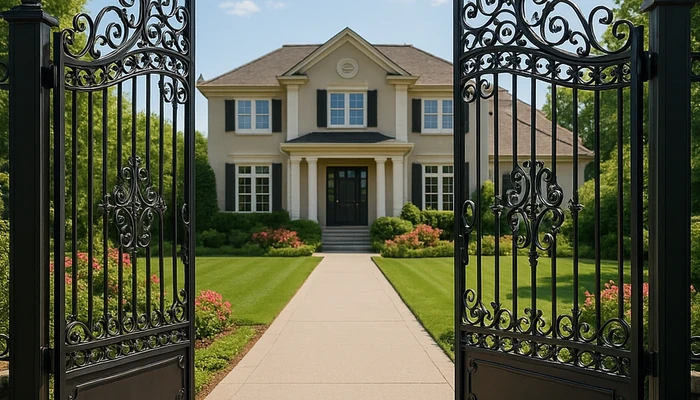
fence contractor in chicago, Chicago Access Control System, automatic gates Chicag, gate opener Zion, electric gate Lake Zurich, security gates Melrose Park, swing gate Woodstock, automatic gates Joliet, automatic gate repair Palatine, sliding gate Forest Park