
The Importance of Pool Safety Compliance: A Complete Guide for Homeowners and Property Managers
Swimming pools are a wonderful addition to many homes and communities, offering a place to relax, exercise, and spend time with family. However, pools also pose significant safety risks, especially for children and pets. This is why understanding the importance of pool safety compliance is crucial for any homeowner or property manager. Beyond the immediate safety concerns, choosing the right pool fence involves navigating building codes, weighing material choices, and understanding maintenance needs. In the Chicago, Illinois area, local regulations and climate factors add even more to consider. This comprehensive guide will clarify the requirements, explore fence options, discuss trade-offs, and set realistic expectations—empowering you to make confident, safe decisions for your property. As leaders in local fencing solutions, Chicagoland Fence Pros brings practical expertise to every step of this process.
Why Pool Safety Compliance Matters
Pool safety compliance goes beyond avoiding fines—it’s about protecting lives. According to national and local safety data, accidental drownings and injuries occur far too frequently, most involving unsupervised access to pools. Properly installed, compliant fencing creates an effective barrier to prevent accidents.
- Child and pet safety: Barriers slow or prevent unsupervised entry.
- Legal requirements: Nearly all municipalities, including Chicago, require specific pool safety measures.
- Liability protection: Homeowners and managers can face hefty legal consequences for non-compliance.
- Insurance coverage: Many policies require proof of pool safety compliance.
For more information on reporting potential violations or understanding local regulations, refer to Section 3 of the International Building Code.
Understanding Pool Code Regulations in Chicago, Illinois
Compliance requirements may differ by city and county, but most share key principles:
- Fence Height: Fences must typically be at least 48 inches (4 ft) tall.
- Gate Requirements: Gates must be self-closing and self-latching, opening outward and keeping latches out of young children’s reach.
- Barrier Spacing: Spaces between vertical pickets and under fence panels must be limited to prevent climbing or squeezing through.
- Materials and Construction: The fence should be durable, weather-resistant, and built to withstand the Chicago climate.
- Alarm Requirements: Doors or windows providing direct pool access from a home may require alarms in addition to fencing.
It’s vital to confirm your own city or HOA rules in addition to the broader codes. Requirements can also change when resurfacing, relocating, or renovating a pool.
Choosing the Right Pool Fence: Options and Trade-Offs
When selecting a pool fence, consider not only safety and compliance, but also appearance, durability, and upkeep. Here are the most common pool fence types:
| Fence Type | Pros | Cons | Best For |
|---|---|---|---|
| Vinyl | Low maintenance, resistant to moisture, customizable colors/styles | More expensive upfront, can be brittle in harsh cold | Those seeking privacy, clean look, easy care |
| Aluminum | Doesn’t rust, elegant appearance, light yet strong | Less privacy, costlier than wood/chain link | Decorative, minimal maintenance needs |
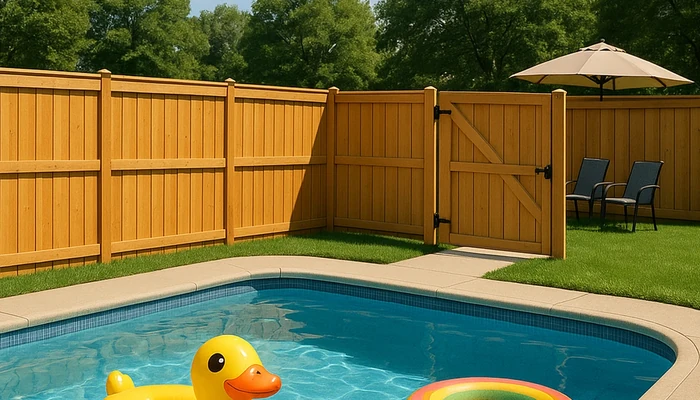
| Wood | Classic look, offers privacy, affordable options available | Requires regular sealing, can warp or rot over time | Traditional yards, customizable finishes |
| Chain Link (with privacy slats) | Budget-friendly, durable, quick installation | Less attractive, may not meet privacy needs | Large properties, budget projects |
| Composite | Highly durable, eco-friendly, low maintenance | Higher cost, fewer suppliers | Modern homes, long-term investments |
Material Choice by Climate: Chicago Considerations
Midwest winters put unique stress on fencing materials. Vinyl and aluminum tend to resist moisture and temperature swings, while wood may need extra treatment or professional installation to endure freeze-thaw cycles. For more detail on fence materials suited for our region, see Choosing the Best Fence Materials Based on Climate.
Safety Features: What to Look For
- Self-closing, self-latching gates: Required by most codes—prevents accidental entry.
- No footholds or crossbars: Vertical pickets or panels discourage climbing.
- Non-removable panels: Makes fences more secure.
- Tight construction: No gaps large enough for a sphere over 4 inches to pass through (per IBC guidelines).
- Visible latch hardware: Ensures ease of inspection and operation.
Pool Fence Installation: DIY vs. Professional Help
Some homeowners may consider installing their own fence, but many opt for professional installation to ensure compliance and lasting quality. Mistakes in placement, gate hardware, or measurements can result in code violations and unsafe barriers. Professional installers like Chicagoland Fence Pros are familiar with Chicago’s codes and challenges, helping homeowners avoid unexpected surprises.
- DIY Installation: May be cost-effective for certain types, but risks code violations.
- Professional Installation: Guarantees code compliance, optimal safety, and workmanship warranties.
If you are considering a custom project, you can request a fence estimate from Chicagoland Fence Pros to discuss options and next steps.
Maintaining Your Pool Fence for Continued Compliance
Compliance isn’t just about installation; it requires ongoing attention. Key tips include:
- Regularly test self-closing gates and locks for proper operation.
- Inspect for missing pickets, loose hardware, or ground movement after harsh weather.
- Clear snow and debris from fences to avoid rot, rust, or warping—especially relevant in Chicago winters.
- Keep vegetation trimmed to maintain visibility and accessibility.
Visit this guide on installation and maintenance for more best practices.
Legal and Insurance Implications
Failure to comply with pool safety laws can lead to more than fines—it can impact your insurance coverage and expose you to lawsuits in the event of an incident. Many insurers require proof of compliant fencing. Additionally, local authorities can order immediate closure or repairs for unsafe pools. To report suspected pool safety violations, see the EPA’s environmental violations reporting system for guidance.
Realistic Expectations: What to Budget For
Costs for compliant pool fencing vary depending on material, style, site, and labor:
- Vinyl: $26–$40 per linear foot installed
- Aluminum: $28–$58 per linear foot installed
- Wood: $18–$32 per linear foot installed (plus maintenance)
- Chain Link: $14–$23 per linear foot installed
- Composite: $38–$60 per linear foot installed
Additional costs to factor in may include permits, custom gates, landscaping, or surface prep. Prices are estimates and vary by project—get several quotes and clarify what each includes. For more on installation costs, check this detailed cost breakdown.
Integrating Pool Fencing with Your Property’s Design
Beyond safety, the right pool fence can enhance your property’s beauty and value. Many modern fences combine security features with elegant designs, matching your home’s style. Chicagoland offers options like powder-coated aluminum for a sleek look or vinyl for classic privacy. Collaborate with your installer to select a design that fits your vision and HOA guidelines.
FAQs: Pool Safety Compliance
How tall does my pool fence need to be in Chicago, Illinois?
Most local codes require a minimum fence height of 48 inches (4 feet). However, some neighborhoods or HOAs may require taller fences. Always confirm with your local building department before installation.
Can I use my existing backyard fence as a pool barrier?
Possibly, if it meets current code requirements for height, spacing, gates, and latches. Any gaps, climbable elements, or insufficient height likely mean you’ll need upgrades or a separate pool barrier. Consult a qualified contractor for an evaluation.
What’s the best material for pool safety fences in the Midwest climate?
Vinyl and aluminum both perform well in Chicago’s freeze-thaw and moisture cycles. Wood is beautiful but may require extra maintenance and weather protection. Composite offers great longevity for modern designs.
Are pool cover alarms a substitute for fencing?
No. Alarms add another layer of safety, but cannot replace code-compliant physical barriers. Most codes require both a secure barrier and, in some cases, additional alarms on doors/windows with direct pool access.
How often do pool fences need maintenance?
All fences should be checked monthly for latch and gate function, with a more thorough inspection at the start and end of each pool season. Vinyl, aluminum, and composite fences tend to be lower maintenance than wood, which may need sealing or painting every 2–3 years.
Do I need a permit to install a pool fence in Chicago?
Yes. Most municipalities, including Chicago, require a building permit for any new pool or safety fencing. Contact your local building department for exact steps and inspection requirements.
How can I ensure my pool remains compliant as codes change?
Stay informed by visiting your local building department’s website, checking with your HOA, and scheduling regular inspections. Working with reputable installers like Chicagoland Fence Pros ensures your fence meets current codes and can be renovated as needed.
Can tenants be held responsible for pool safety compliance?
While property owners typically bear primary responsibility, tenants who make alterations or disregard posted safety practices can also be liable in the event of an injury. Always clarify responsibilities in rental agreements.
What are the penalties for non-compliance?
Penalties can include fines, cease-and-desist orders, insurance policy cancellation, and legal liability if an accident occurs. Immediate corrections are usually ordered. Consult your city’s code enforcement for specifics.
Where can I report unsafe or non-compliant pool areas?
Unsafe pool conditions should be reported to your city or county building department. For broader safety or environmental concerns, see the EPA’s official reporting system.
Conclusion: Secure, Comply, and Enjoy Your Pool with Confidence
Making your pool area safe goes hand-in-hand with enhancing your property and offering peace of mind. By understanding the importance of pool safety compliance, reviewing code requirements, and weighing your fence options, you can design an environment that protects loved ones and meets all legal standards. From our experience as a fence company in Chicago, Illinois, code-compliant fences don’t just prevent accidents—they add value and curb appeal to your property. For a customized assessment or to discuss specific fence solutions for your pool, talk to our fence specialists today.
For additional resources on improving property value and security through fencing, see this guide.
About Chicagoland Fence Pros
Chicagoland Fence Pros is a professional fence company with over 15 years of experience helping homeowners and businesses in Chicago, Illinois and nearby communities improve safety, privacy, and curb appeal. Our team specializes in wood, vinyl, aluminum, and steel fences for residential and commercial projects, prioritizing transparent quotes, code-compliant installations, and realistic, experience-based advice. Fully licensed and insured, Chicagoland Fence Pros is committed to education and lasting quality with every project.
fence contractor in chicago, residential yard fence, residential yard fence chicago, residential fence replacement Edison Park, residential fence replacement Forest Park, residential fence repair Geneva, home fence Lake In The Hills, garden fence Addison, privacy residential fence Burbank, residential fence replacement Rockford