 Skip to content
Chain Link Privacy Slats: When “More Privacy” Creates a Wind Problem
Choosing a fence for privacy and security often feels like solving a puzzle—especially for homeowners and property managers new to fencing. Chain link fences are popular in Chicago, Illinois and beyond for their durability and value. For extra privacy, many choose to add privacy slats. However, these slats not only block views but also block wind, introducing new concerns about fence stability during storms and windy seasons. Understanding the trade-offs between privacy and wind load is essential before making an investment. In this in-depth guide, you’ll learn how privacy slats impact chain link fences, what risks to consider in windy climates like Chicago, how to minimize problems, and which alternatives might suit your needs best. With over 15 years of local experience, Chicagoland Fence Pros offers insights so you can confidently select the right fence solution for your property.
Understanding Chain Link Privacy Slats
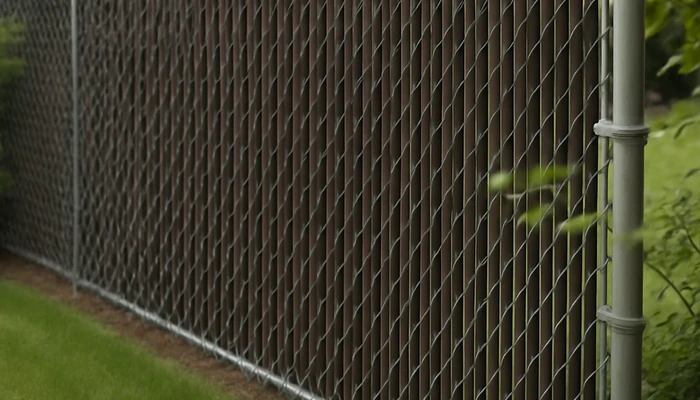
Chain link privacy slats are vertical inserts placed into standard chain link mesh to limit visibility through the fence. These slats come in various materials, such as plastic, vinyl, and aluminum, and are available in a range of colors and finishes to match your property’s style. Their main appeal is privacy—they’re a quick, affordable upgrade for areas where visual screening is desired.
- Purpose: Enhance privacy and sometimes aesthetics by blocking sightlines.
- Materials: Commonly colored or neutral-tone plastic or aluminum.
- Installation: Typically woven vertically, locking into the chain link fabric.
- Coverage: Full-privacy (approx. 80–98% coverage) vs. partial-privacy (approx. 65–80%) types available.
For more details on design customization, see Chain Link Fence Design Inspiration.
Why Privacy Slats Increase Wind Load
Adding privacy slats to chain link fencing reduces the amount of air passing through, fundamentally changing how the fence interacts with wind. While open chain link fences allow air to flow freely, slatted fences trap wind, increasing pressure on posts, rails, and the entire structure. This increased wind load can lead to problems like leaning posts, deformed mesh, or — in severe cases — total fence failure during storms.
- Open chain link: Minimal wind resistance.
- Slatted chain link: Acts like a solid panel, resisting wind and creating pressure points.
- Risk factors: Wide-open exposure, tall fence height, weak posts, and degraded concrete footings.
According to guidance from the Whole Building Design Guide, understanding wind load is an essential consideration for any barrier or screen exposed to outdoor conditions. Professional fence installers factor in local wind data and building codes when designing privacy-enhanced chain link fences.
Common Wind-Related Problems with Privacy Slats
While privacy slats achieve their purpose, they introduce several potential challenges, especially in places like Chicago where wind can be strong and unpredictable.
- Leaning or toppled fences: Wind exerts pressure on the slatted surface, potentially leading to posts bending or uprooting.
- Deformed chain link mesh: The fence fabric may become stretched, bulging, or warped as it absorbs wind energy.
- Loosened or displaced slats: Particularly with lower-quality slats or improper installation, slats may fall out or become misaligned.
- Foundation and footing failure: Increased wind pressure can work concrete out of the ground or crack post footings.
- Noise: Rattling slats or fence sections can create unwanted sounds on gusty days.
If you’re considering privacy upgrade options, check out Chain Link Fences and Design Options for more insights.
Local Wind Considerations: Chicago’s Climate
Nicknamed the “Windy City,” Chicago regularly experiences gusts that test the resilience of all outdoor structures. Fences with privacy slats are more susceptible to wind load, especially in open yards, corner lots, rooftops, or near lakefronts. Certain times of year—particularly autumn and spring—bring higher winds, increasing the risk of storm damage.
- Assess your site: Are there natural windbreaks like trees or buildings, or is the area exposed?
- Prevailing wind direction: Slats facing dominant winds will experience the most stress.
- Building codes: Chicago has regulations for fence height, placement, and sometimes even design specifics to address safety. Always check city or HOA rules before installing privacy slats.
To further understand building standards, fence professionals may consult resources such as the Whole Building Design Guide.
How Fence Structure Affects Wind Resistance
Not all chain link fences are built to handle the added stress of privacy slats. Key aspects influencing wind resistance include:
- Post size and wall thickness: Thicker, wider posts are more wind-resistant.
- Footing depth: Posts should be set deep enough—and in concrete footings—to resist uprooting.
- Rail and bracing design: Additional horizontal rails, wind braces, or tension wires can reinforce long runs.
- Mesh gauge: A higher wire gauge (thicker wire) holds up better against stress.
Experienced fence installers, like Chicagoland Fence Pros, account for these factors during planning. For specific tips, see Functional Designs For Chain Link Fences.
Comparing Privacy Slats to Other Privacy Fence Options
Privacy slats are one of several ways to improve seclusion. Here’s how they compare to other popular solutions, particularly regarding wind resistance:
| Option | Privacy | Wind Resistance | Typical Cost | Maintenance |
|---|---|---|---|---|
| Chain link with slats | Medium–High | Low–Medium | $$ | Low |
| Solid wood fence | High | Low | $$$ | Medium–High |
| Vinyl privacy fence | High | Low | $$$ | Low |
| Composite privacy fence | High | Low | $$$$ | Low |
| Chain link with windscreen/fabric | Medium | Medium | $–$$ | Low–Medium |
| Chain link (open) | Low | High | $ | Low |
For a broader comparison, see Advantages Of Chain Link Fences Over Other Materials and vinyl fence options in Chicago.
Best Practices for Installing Privacy Slats in Windy Areas
- Choose reinforced posts and footings: Use heavier gauge steel and ensure concrete extends below frost line.
- Limit fence height (if possible): Taller fences catch more wind and require extra bracing.
- Consider partial-privacy slats: Allowing 15–35% airflow reduces wind load while still offering screening.
- Cross-bracing: Cables or additional rails at the top and middle sections help resist wind-induced flex.
- Check and maintain regularly: Tighten hardware, inspect posts and mesh, and reinstall any loose slats.
- Consult local codes: Ensure the project meets Chicago’s requirements for fences with privacy enhancements.
For a consultation from local experts, you can request a fence estimate.
Alternatives to Full-Privacy Slats
For those concerned about wind but still wanting more privacy, consider alternatives:
- Windscreen or mesh fabric: Designed to offer moderate privacy while allowing wind to pass through. Available in different sight-blocking percentages, some offer 80–90% screening with less rigidity than slats.
- Privacy inserts with “wind holes”: Slats or panels with built-in perforations reduce wind resistance without sacrificing much privacy.
- Strategic landscaping: Shrubs, hedges, or ornamental grasses planted along the fence line provide privacy and act as windbreaks.
- Mixed fence runs: Use privacy slats or solid panels only in sections where screening is most needed, leaving other stretches open.
Personalizing Your Chain Link Fences explores more creative solutions.
Installation and Maintenance Tips
- Hire professionals experienced with Chicago wind conditions—improper installation is the number one cause of wind failure.
- Inspect for signs of wear after major storms; repair promptly to prevent minor issues from escalating.
- Use only slats and materials rated for outdoor/UV conditions to prevent premature aging and brittleness.
- If the fence is older, assess whether posts and mesh are strong enough to handle added wind load before installing privacy slats.
If repairs are needed, consult fence repair specialists for an assessment.
Code Compliance and Safety
Always check local city and HOA requirements before adding privacy slats. Some neighborhoods or property uses—especially commercial areas—require specific materials, heights, or wind-resistance features. Building codes also govern how deep posts must be set, reinforced, and spaced. For code-compliant results, work with fence companies experienced in the Chicago, Illinois market, like Chicagoland Fence Pros.
For standards and industry guidelines for gate and fence systems, you may review resources at DASMA Industry Links.
Real-Life Scenarios: Privacy vs. Wind Trade-Offs
Here are some typical scenarios and what homeowners or property managers in Chicago can expect:
- Scenario 1: An open backyard exposed to prevailing winds. Full-privacy slats result in fence leaning after the first strong thunderstorm. Recommendation: Consider partial-privacy slats or windscreen with 15–20% airflow.
- Scenario 2: Commercial lot surrounded by solid buildings. Fewer wind concerns, making full-privacy slats viable as long as posts are properly set and reinforced.
- Scenario 3: Older, rusting chain link fence. Adding slats increases risk of failure. Recommendation: Reinforce or replace posts and mesh prior to any privacy upgrades.
- Scenario 4: Side yard along a busy road. Privacy is strong priority, but wind is only moderate. Full-privacy slats with supplemental bracing may be suitable.
For more real-world advice, see Unveiling the Versatile Chain Link Fence.
Frequently Asked Questions (FAQ) About Chain Link Privacy Slats and Wind
1. Will installing privacy slats on my chain link fence always cause wind problems?
Not always, but the risk of wind load increases with privacy enhancements. The impact depends on local exposure, fence construction, and material quality. With good design and bracing, many fences handle added slats well.
2. Can my existing chain link fence handle privacy slats?
It depends on your fence’s age, post size, footing depth, and how well it’s anchored. Have a professional inspect your fence before upgrading to ensure it’s structurally sound for the added wind load.
3. What are the best materials for privacy slats in windy areas?
Look for UV-stabilized, flexible slats made for high-wind conditions. Some brands offer reinforced or “windvent” models with holes for airflow. Metal slats can be more durable but may increase wind noise.
4. Are there city codes in Chicago for fence wind resistance?
Yes, Chicago codes specify fence heights, setbacks, and sometimes materials, especially in commercial or multifamily areas. Always check local rules and, when in doubt, consult a professional installer.
5. How can I tell if my fence is at risk of wind damage?
Look for leaning posts, cracked concrete, rust, or loose mesh. After storms, inspect for new movement or damage. Don’t ignore early warning signs—addressing issues promptly prevents larger problems.
6. How do windscreen mesh and privacy slats compare?
Windscreens usually allow more airflow, reducing wind load but offering slightly less privacy than solid slats. For many, they represent a good compromise between privacy and wind resistance.
7. Can I mix and match privacy options along my fence?
Absolutely. Many property owners install privacy slats or windscreens only where needed, using open chain link in less sensitive areas to mitigate wind risk and cost.
8. What maintenance do privacy slats require?
Routine inspection after storms, occasional cleaning, and replacing any damaged or missing slats will keep your fence in good shape. Higher-quality slats require less maintenance overall.
9. Should I install privacy slats myself or hire a professional?
DIY installation is possible, but in windy areas or with old fences, hiring a professional ensures correct bracing, alignment, and compliance. Experienced installers also spot potential issues before they become costly repairs.
10. Where can I get more advice or a quote for my project?
Contact Chicagoland Fence Pros for honest advice, local experience, and a transparent quote tailored to your privacy and wind concerns.
Conclusion: Balancing Privacy and Wind for the Best Fence Investment
Adding privacy slats to your chain link fence can be an excellent way to increase privacy and curb appeal, but it comes with real wind-related trade-offs. By understanding the interplay between airflow and fence design, considering alternatives where appropriate, and choosing quality materials and correct installation, you set your investment up for long-term success. Homeowners and property managers in the Chicago, Illinois area should always review local codes and consult fence professionals for wind-prone locations. Ready to discuss your best fence options? Talk to our fence specialists or browse our benefits of chain link fencing guide for more insights.
About Chicagoland Fence Pros
Chicagoland Fence Pros is a professional fence company with over 15 years of experience helping homeowners and businesses in Chicago, Illinois and nearby communities improve security, privacy, and curb appeal. The team specializes in wood, vinyl, aluminum, steel, and composite fences for residential and commercial projects. Committed to code-compliance, honest advice, and quality craftsmanship, Chicagoland Fence Pros guides clients through every stage, from planning to final inspection.
fence installation chicago, best chain link fences in Fence Chicago, chain link fence in Fence Chicago, chain link fences in Union Ridge, chain link fence options Lombard, chain link fence Buffalo Grove, chain link fence replacement Gurnee, vinyl coated chain link fence Mchenry, chain link fence in the city of Elgin, chain link fence Mokena
