
Versatility of Wooden Fence Designs: A Comprehensive Guide for Homeowners and Property Managers
Choosing the right fence for your property is a crucial decision—influencing security, privacy, visual appeal, and even resale value. For homeowners and property managers exploring options for the first time, the sheer variety of wooden fence designs can be overwhelming. Between classic pickets, modern horizontal planks, and custom finishes, wood offers unmatched flexibility in both form and function. But with many types, materials, finishes, and installation methods available, understanding the full versatility of wooden fence designs is vital to making an informed choice.
By the end of this guide, you’ll learn how wood fences adapt to diverse property needs, the advantages of different design approaches, how material selection impacts longevity, and what to realistically expect for life cycle maintenance. You’ll also gain perspective on budget, code requirements in Chicago, and expert tips from Chicagoland Fence Pros, a trusted team with years of experience serving local homeowners and businesses. Let’s uncover what makes wooden fences truly versatile and how to choose the right style for your unique needs.
Why Wood Fencing Remains a Top Choice
Wooden fences have been a staple of American landscapes for generations. Their enduring presence is rooted in their adaptability, natural beauty, and the almost endless ways they can be customized. Here’s why wood remains a go-to for so many property owners:
- Aesthetic Flexibility: Wood can match modern, rustic, traditional, or custom architectural styles.
- Functional Versatility: Whether you need privacy, safety, sound reduction or simple boundary marking, there’s a wood fence design to suit the purpose.
- Cost-Effectiveness: Compared to some materials, wood offers a balance of upfront cost and long-term value.
- Modifiable: Wood can be stained, painted, cut, or accessorized—unlike most metal or vinyl options.
- Environmental Friendliness: Sourced responsibly, wood remains a renewable construction resource.
In the Chicago, Illinois area, wooden fences have proven to withstand diverse weather patterns when constructed and maintained properly.
Popular Wooden Fence Styles and Their Applications
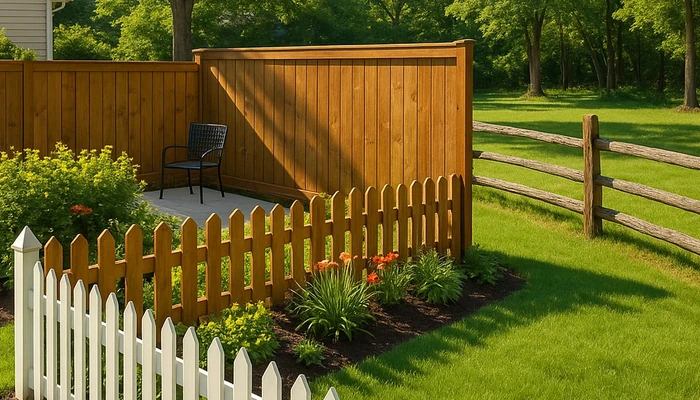
The design of your fence impacts more than just curb appeal. It shapes the privacy and security of your property, defines outdoor spaces, and even influences neighborhood dynamics. Here are some of the most popular wooden fence designs and where they fit best:
Picket Fences
Classic and inviting, picket fences work well for front yards, gardens, and decorative boundaries. Their open slats offer charm without sacrificing visibility, making them ideal for neighborhoods with a sense of community.
Privacy Fences
Typically 6 feet or taller, privacy fences use closely set vertical or horizontal boards to shield backyards and sensitive areas from neighbors or street view. They’re a favorite for families with children or pets, as well as anyone seeking a private outdoor oasis. Explore if wood fences are good for dogs.
Shadowbox (Good Neighbor) Fences
Alternating boards on either side create a semi-private fence that looks attractive from both sides. This style encourages good neighborly relationships, as the finished appearance is equal for both property owners.
Board-on-Board and Lattice-Top Fences
Add a designer touch to traditional privacy fences. Board-on-board uses overlapping vertical planks for increased privacy and durability, while lattice-tops provide visual interest and airflow near the top without reducing seclusion lower down.
Horizontal Slat Fences
Increasingly popular in modern designs, horizontal fences offer a contemporary look and can visually expand small spaces. They pair well with Chicago’s urban and suburban homes alike.
Post and Rail / Split Rail
Typically used for property boundaries on larger lots or in semi-rural settings, these fences deliver a rustic look and are often combined with wire for added security. Learn about wooden fences in rural settings.
Custom and Decorative Wood Fences
From geometric patterns and inlays to unique toppers and built-in planters, custom wood fences showcase artistry and cater to niche needs. If your vision extends beyond the ordinary, experienced contractors can bring it to life.
Comparing Materials: Types of Wood for Fence Construction
Not all wood is created equal. Choosing the right species impacts fence performance, cost, and maintenance. Key factors to weigh:
- Cedar: Highly resistant to rot and insects, moderate cost, naturally attractive, and long-lasting with proper care.
- Pressure-Treated Pine: Economical, widely available, treated for decay resistance, may shrink or warp more than cedar.
- Redwood: Premium look and longevity, but higher cost and less available in the Midwest.
- Spruce, Fir, or Douglas Fir: Often used in sections or prefabricated panels—affordable but may require more maintenance.
Local climate should inform your wood choice. Cedar and pressure-treated pine are especially well-suited for the Chicago area’s weather fluctuations. For a deeper dive into wood types, see ideal wood types for fencing.
Key Elements That Make Wood Fence Designs Versatile
What truly sets wood apart from alternatives are the many ways it can be individually adapted. Let’s break down the characteristics that afford this flexibility:
- Customizable Heights and Widths: Meet privacy, safety, and code requirements in different zones of your property.
- Paints, Stains, and Finishes: Change the color, match your home or landscape, provide extra weather protection, and emphasize wood grain.
- Accessory Options: Add steel or copper post caps, lattice extensions, planter boxes, or integrated lighting. See useful wooden fence accessories for ideas.
- Gate Styles: Arched, flat, or custom-shaped tops enhance entryways and can make a striking visual impact. More about fence gates.
These options allow property owners to achieve a signature look and increase functionality—few materials can match this level of design freedom.
Comparing Wood Fence Designs: Appearance, Privacy, and Maintenance Table
| Design | Appearance | Privacy | Maintenance | Best Use |
|---|---|---|---|---|
| Picket | Classic, inviting | Low | Low/Moderate | Front yards, decorative borders |
| Board-on-Board | Solid, substantial | High | Moderate | Backyards, privacy areas |
| Shadowbox | Attractive both sides | Medium | Moderate | Neighbor-shared boundaries |
| Horizontal Slat | Modern, sleek | Medium/High | Moderate | Contemporary homes |
| Lattice Top | Decorative | Medium/High | Moderate | Garden, patio screening |
| Post & Rail | Rustic | Low | Low | Large lots, farms |
Understanding Chicago-Area Building Codes and Restrictions
Before installing or altering a wood fence in Chicago or nearby suburbs, always check local codes and HOA guidelines. Regulations often specify maximum heights (commonly 6 feet in rear yards, 4 feet in front), permitted materials, fence placement relative to property lines, and maintenance obligations. Violating code can mean costly modifications or fines later. For the latest wall bracing recommendations and wood construction standards, consult authoritative sources such as the APA – The Engineered Wood Association. When in doubt, consult experienced professionals like Chicagoland Fence Pros.
Factors to Consider When Selecting a Wooden Fence Design
No single solution is right for every property. Here are critical factors Chicago property owners should weigh:
- Purpose: Are you seeking privacy, pet containment, decorative appeal, or security?
- Budget: Upfront costs vary by design and wood type, so weigh short- and long-term expenses.
- Maintenance Commitment: How much time are you willing to spend sealing, staining or repairing your fence?
- Aesthetic Preferences: Do you prefer a traditional white picket, a rustic split rail, or a bold modern look?
- Longevity Expectations: Premium materials and finishes mean more years of service for your investment.
- Code Compliance: Ensure the planned design, height and location meet local requirements.
For help aligning your goals with the right choices, talk to our wood fence experts in Chicago.
Maintenance and Longevity: What to Expect
Wood’s natural charm comes with the responsibility of periodic upkeep. Key maintenance steps include:
- Annual or seasonal inspection for damage, loose boards, or decay (see autumn care tips).
- Cleaning to prevent mold, mildew and weathering (learn more about cleaning and sealing).
- Reapplying stain or sealant every 2–4 years (frequency varies by fence type and exposure).
- Repairing broken boards or posts promptly to maintain structural integrity.
Modern finishes, like water-repellent stains, significantly extend fence life. For optimal results, consult with professionals who understand the climate-specific challenges in Chicago, Illinois. For long-term maintenance advice, explore tips on prolonging your wood fence.
Enhancing Function and Beauty with Fence Accessories
From solar lights to post caps, the right accessories elevate both utility and visual appeal. For property owners in Chicago, options like weather-resistant caps, smart locks, or custom planters can help address daily challenges and improve design harmony. Discover useful accessories for your wooden fence.
When to Call a Professional: Benefits of Expert Installation
While some wood fences are DIY-friendly, many installations in Chicago require precise measurement, post setting in clay-heavy soils, and careful attention to local displacement rules. Professionals like Chicagoland Fence Pros ensure not just structural soundness but also code compliance, property line respect, and a finish that adds lasting value. Plus, you’ll receive honest advice on materials, costs, and long-term maintenance needs.
Considering a different material? Compare options with our guide on wood fences versus other materials. For fully custom solutions, reach out and request a residential fencing estimate or commercial fencing quote—our team can help you select the best fit for your property.
FAQs: Versatility of Wooden Fence Designs
What makes wood fences more versatile than other fence types?
Wood allows for extensive customization in design, color, height, and accessories—more than most metal, vinyl, or composite options. Nearly any look can be achieved, from classic to ultra-modern.
How long does a well-maintained wood fence last in Chicago?
With the right materials (like cedar or pressure-treated pine), plus sealing and routine maintenance, wood fences in the Chicago climate can last 15–25 years or longer.
Are wood fences suitable for pets and children?
Absolutely. Privacy or board-on-board styles offer security and containment. For specialty advice, see our guide: Are wood fences good for dogs?
How difficult is maintenance?
Wood does require some maintenance: periodic cleaning, sealing, and minor repairs. However, advances in stains and treatments mean less frequent upkeep than in years past.
What local rules should I know before building a wood fence?
Chicago-area codes regulate fence height, setback, and sometimes appearance. Always consult codes, HOA rules, or a contractor with local experience like Chicagoland Fence Pros before building.
Is it possible to change the style or height of an existing wood fence?
Often, yes. Depending on current condition and local rules, you may be able to add toppers, lattice, or replace panels for a new look.
Which finish is best for Chicago weather?
High-quality stains rated for Midwest climates protect against moisture, temperature swings, and UV. For recommendations, see APA – The Engineered Wood Association or talk to local experts.
Can wood be combined with other materials?
Yes, pairing wood panels with metal posts or accents offers modern aesthetics and boosts structural integrity.
Are there eco-friendly options?
Cedar is naturally rot-resistant and doesn’t require heavy chemical treatments. Look for wood from sustainably managed forests for an eco-friendly approach.
Conclusion: Choosing the Ideal Wooden Fence Design for Your Property
Wooden fences offer a rare blend of timeless charm, functional adaptability, and creative freedom. Understanding the full versatility of wooden fence designs empowers homeowners and property managers in Chicago, Illinois to invest wisely, balancing initial aesthetic goals with practical long-term performance. Remember, each property is unique—what matters most is finding the design, material, and features that fit your priorities, budget, and maintenance expectations.
For further guidance, inspiration, or a custom fence design consultation, reach out to Chicagoland Fence Pros—our team is ready to help you realize your vision responsibly and professionally.
About Chicagoland Fence Pros
Chicagoland Fence Pros is a professional fence company with over 15 years of experience installing fences in the Chicago, Illinois area. The team specializes in wood, vinyl, aluminum, and steel fencing for both residential and commercial projects. Serving homeowners and businesses throughout Chicago and nearby communities, Chicagoland Fence Pros emphasizes code-compliance, durability, and honest advice every step of the way. Licensed and insured, their experts help clients select and maintain fences tailored to their security, privacy, and aesthetic preferences.
fence contractor in chicago, Chicago Commercial Wood Fence, industrial Wood Fence Chicago, wood fencing Mokena, wood fence styles Rogers Park, wood fence Lake Forest, cedar wood fence Buffalo Grove, wood fence Plainfield, wooden fences Winnetka, cedar wood fence Waukegan