
Bollards or Fencing for Impact Protection: Choosing the Right Barrier for Parking Areas
Parking areas require more than just lines and signs to keep vehicles, people, and property safe. When you’re a homeowner or property manager in Chicago, Illinois evaluating options for impact protection, the decision between bollards or fencing often isn’t straightforward. There are subtle differences—and sometimes major trade-offs—as you seek a solution that fits your needs for security, durability, appearance, and even local code compliance. The consequences of the wrong choice can include unnecessary repairs, vulnerable property, or added future expenses. This guide explores the real-world distinctions between fencing and bollards for impact protection in parking areas. By the end, you’ll know the strengths, limitations, and typical scenarios for each, along with practical steps for reviewing, selecting, and maintaining the right barrier. As a local fence company with years of experience, Chicagoland Fence Pros aims to bring clarity—demystifying your options with honest advice suited to our Midwest environment.
Understanding Impact Protection: What Are Bollards and Fencing?
To choose between bollards and fencing, it helps to start with the basics. Both serve as perimeter barriers, but their primary purposes, forms, and capabilities differ:
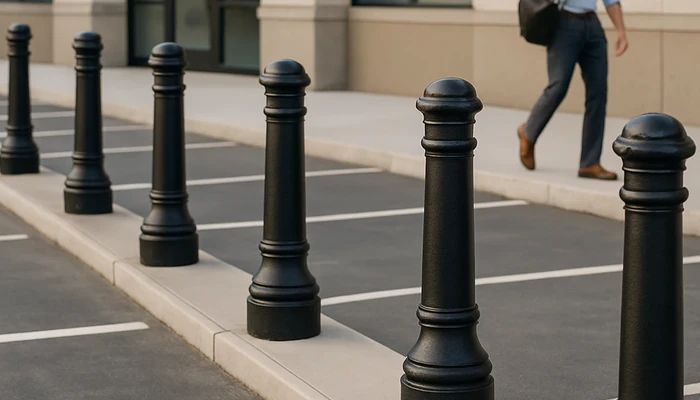
- Bollards are sturdy vertical posts, usually made of metal or reinforced concrete. Their main function is to resist vehicle collisions, preventing unauthorized or accidental vehicle access to specific areas. They range from decorative to industrial, but their key feature is localized, high-impact stopping power.
- Fencing is available in many forms—chain link, wood, vinyl, metal, and composite. While fencing does provide a visual and physical boundary, most traditional fences are designed more for privacy and pedestrian control. However, some specialized security fences include reinforced rails, steel panels, or anti-ram ratings for impact resistance.
Choosing the best option means evaluating your site’s risks, the types of threats you want to manage (vehicle, pedestrian, or both), and the visibility and design requirements for your property.
Key Reasons for Installing Barriers in Parking Areas
Impact protection isn’t just for high-traffic commercial lots. Parking areas of all types can face hazards:
- Preventing vehicles from encroaching onto walkways, storefronts, or playgrounds
- Protecting building entrances and windows from crashes (intentional or accidental)
- Controlling access to service lanes, storage yards, or restricted parking
- Improving pedestrian safety and clear traffic flows
- Meeting municipal codes or insurance requirements (which often require barriers at specific locations)
For example, a retail store in Chicago may need heavy-duty bollards to protect entrances, while a residential building’s parking area might favor fencing combined with selective bollards for both appearance and impact control.
How Do Bollards and Fencing Differ for Impact Protection?
| Feature | Bollards | Fencing |
|---|---|---|
| Primary Protection | Vehicle impact resistance | Boundary and modest impact (unless reinforced) |
| Appearance | Low-profile, customizable styles | Traditional or modern, visually dominant |
| Installation | Spaced posts at targeted zones | Continuous lines or segments around perimeter |
| Security Level | Deters heavy vehicles effectively | Varies by material and design |
| Maintenance | Minimal for steel/concrete; check for damage and rust | Depends on material (wood, vinyl, steel); may need repainting or repairs |
| Code Compliance | Specific standards for crash ratings | Height, spacing, and setback requirements |
While both options can provide some level of security, the main difference lies in their ability to stop a moving vehicle. Standard fencing offers visual boundaries but can be breached by impact unless designed for crash resistance, whereas bollards are engineered specifically for that purpose.
Main Types of Bollards: Materials and Use Cases
Bollards come in a range of types for parking areas. Choosing the right one requires balancing security, aesthetics, and local conditions. Common types include:
- Steel Bollards: Durable, good for moderate to high-risk zones. Steel is often galvanized or powder-coated for corrosion resistance, which is important in Chicago’s climate.
- Concrete-Filled Steel: Combines a steel shell with concrete for superior impact resistance in critical areas.
- Removable or Retractable: Provide protection only as needed—suitable for service or emergency vehicle access.
- Decorative Bollards: Integrate architectural details, often cast or wrought iron, suitable for visually sensitive areas. For more on decorative iron bollards, see Iron Bollards Decorative Styles: The Ultimate Guide.
- Flexible or Plastic Bollards: Primarily for visibility, not impact—usually not recommended where real protection is required.
If style is as crucial as security, many homeowners in Chicago find that custom iron bollards can blend both. For a deeper look at iron bollard durability and installation, Steps For Efficient Iron Bollard Installation is a helpful resource.
Bollard Performance: Impact Ratings and Local Codes
True impact protection depends on more than just material type. Look for:
- Crash Ratings: Industry standards such as ASTM, PAS, and K-rating systems indicate how much energy (vehicle size and speed) a bollard can stop. For most property owners, a moderate rating suffices, but high-security areas may require K4-K12 or equivalent.
- Spacing and Placement: Correct layout is vital; typical recommendations call for bollards set less than 5 feet apart to block vehicle passage, balanced with pedestrian accessibility.
- Code Compliance: Consult with your local municipality or zoning office. Some Chicago-area developments may have specific barrier, height, and material requirements for parking lots.
For in-depth code and standards insights, industry authorities like galvanizeit.org provide detailed reference guides.
Main Types of Fencing for Impact Protection in Parking Areas
While fencing is often associated with privacy and style, certain types can offer effective impact control, especially when combined with reinforced materials or strategic posts:
- Steel Security Fences: Heavy gauge, welded steel panels with reinforced posts. Suitable for commercial lots or urban sites facing vehicle threats.
- Chain Link with Reinforced Rails: Standard wire fencing can be upgraded with thicker rails, posts, or concrete footings for improved resistance.
- Crash-Rated Barriers: Specialty products tested to resist vehicle entry; more common in government, utility, or vulnerable public areas.
- Decorative Metal Fences: For aesthetics, aluminum or iron fences may be adapted with reinforced base plates, but typically are not designed for direct vehicle impact unless specified.
Wood, vinyl, or composite fencing generally offer little real impact resistance, but can be combined with hidden steel posts or bollards for dual benefit—privacy plus protection. For fence type ideas, see our residential fences in Chicago guide.
Material Longevity and Maintenance
Chicago’s mix of winters, salt, and summer storms can quickly degrade unprotected metals or wood. For bollards:
- Galvanized or duplex-coated steel (paint + zinc) hold up best. Learn more about specifying duplex systems for corrosion resistance at galvanizeit.org.
- Iron bollards are strong but need periodic rust inspection; see care of outdoor iron bollards for tips.
- Concrete is robust but can crack from freeze-thaw cycles; keep joints sealed and inspect annually.
Fences require material-specific attention:
- Wrought iron and steel need rust prevention and touch-ups.
- Aluminum resists corrosion but may require cleaning after road salt exposure.
- Vinyl is low maintenance but won’t stop a vehicle.
- Wood should be stained/sealed, but is rarely suitable for impact zones.
Routine checks catch minor damage before it threatens the structural integrity of your barrier.
Cost Comparison: Initial Investment and Long-Term Value
| Barrier Type | Average Installed Cost (per ft/post)* | Key Considerations |
|---|---|---|
| Standard Steel Bollards | $350–$800/post | Varies by crash rating, finish, design |
| Concrete-Filled Bollards | $500–$1,100/post | Maximum impact protection |
| Simple Chain Link Fence | $20–$35/ft | Basic boundary, minimal impact resistance |
| Reinforced Security Fence | $45–$120/ft | Good for vehicle deterrence, visually prominent |
| Decorative Iron or Aluminum Fence | $60–$150/ft | Style-focused, adaptation needed for impact |
*Estimate only; pricing fluctuates with material quality, installation complexity, and site preparation. Always request a project-specific quote from a qualified professional.
When to Combine Bollards and Fencing for Optimal Security
The most secure parking areas often rely on both fencing and bollards. Examples include:
- Steel bollards placed at entry points and vulnerable corners, with fencing along the rest of the perimeter
- Decorative fences paired with hidden reinforced posts or spaced bollards behind landscaping
- Chain link fences retrofitted with steel rails and ground anchors at high-risk zones
This approach allows for layered security—protecting against both high and low-speed impacts, while ensuring aesthetic flexibility.
Planning Your Project: From Site Assessment to Final Inspection
Smart planning ensures your investment meets local code, functions as intended, and stands the test of time. Steps include:
- Define Your Priorities: Impact protection, privacy, appearance, or a blend?
- Site Analysis: Identify crash risks, traffic flow, pedestrian needs, and visibility requirements.
- Consult Local Codes: Review municipal building codes or HOA restrictions before construction begins. For compliance tips, see Effective Bollard Installation for Enhanced Security.
- Select the Right Materials: Match alloy, finish, and gauge to Chicago’s climate and project budget.
- Develop a Maintenance Plan: Schedule regular inspections, especially after winter seasons or accidental impacts.
- Partner with Professionals: Consult experts like Chicagoland Fence Pros, who deliver honest advice and transparent quotes for both new installations and repairs.
For an in-depth exploration of bollard installation steps, visit Steps For Efficient Iron Bollard Installation.
Common Mistakes to Avoid with Parking Area Barriers
- Underestimating vehicle threat—choosing a standard fence when bollards are needed for real impact zones
- Ignoring local code or setback requirements, which can result in costly rework
- Selecting materials not suited for Chicago weather—corrosion is a major risk for unprotected steel or cast iron
- Poor placement, allowing cars to squeeze through gaps between bollards or fences
- Neglecting maintenance; even heavy-duty barriers can fail if rust, rot, or cracks go unchecked
Avoiding these pitfalls ensures your system works as intended—and protects visitors and property without surprise costs.
FAQs: Bollards and Fencing for Impact Protection
- What is the best type of barrier for stopping cars in parking areas?
Bollards constructed of steel (often concrete-filled) are the most effective for stopping vehicles. Some security fences can deter vehicles, but direct vehicle impact protection usually requires crash-rated bollards placed at vulnerable spots.
- Can traditional fences provide real impact protection?
Standard fences primarily offer a visual and physical barrier for people or animals. While chain link or metal fencing can add some deterrence, they are rarely effective against moving vehicles unless reinforced.
- How do I determine the spacing for bollards in a parking lot?
The typical recommendation is spacing bollards no more than 5 feet apart, close enough to prevent vehicles from passing between, yet wide enough for pedestrian access. Site-specific needs may vary.
- What factors affect the durability of fencing and bollards?
Material type, finishing process, exposure to weather or salt, and regular maintenance determine how long barriers last in Chicago’s changing seasons. Galvanizing and duplex coatings can extend life considerably. Get guidance at galvanizeit.org.
- Will barriers affect water runoff or landscaping around my parking area?
Barriers may redirect runoff or interfere with landscaping. Consult with an installer about grading and drainage solutions, especially in icy or high-rainfall areas.
- Are there attractive options for impact protection that fit residential aesthetics?
Yes. Decorative steel or iron bollards can be custom-designed for visual appeal and impact resistance. Learn more about style options at Iron Bollards Decorative Styles.
- What if a barrier gets damaged by a vehicle?
Act fast—replace or repair compromised bollards or fence sections to restore protection. Professionals can assess structural integrity. For repair needs, request a commercial fence assessment.
- Will insurance require specific types of barriers in my parking lot?
Some policies and local ordinances in Chicago, Illinois may specify bollard locations or minimum fence standards for commercial sites. Always check with your insurer and city agency.
- How can I get an accurate quote for barrier installation?
Set up a site visit with an experienced installer such as Chicagoland Fence Pros. Expect a detailed assessment of access, terrain, and code requirements, followed by a clear written estimate.
- Can I install both fencing and bollards for layered protection?
Absolutely. Many properties benefit from a combination: fencing for perimeter control, with reinforced or decorative bollards at entry points. This strategy balances functionality and appearance.
Conclusion: Making the Right Choice for Your Parking Area
Whether you’re managing a residential, commercial, or mixed-use property, the question of bollards or fencing for impact protection hinges on realistic site needs, local codes, and long-term maintenance. Design, installation, and upkeep all play a role in extending the service life of your barrier system—saving money and reducing risks over time. If you’re ready for professional guidance and an honest assessment of your options, contact Chicagoland Fence Pros to discuss your parking area’s specific requirements in the Chicago, Illinois area. For more information on security upgrades or fence repairs, explore commercial fence services or talk with our specialists about your property’s best-fit barrier system.
About Chicagoland Fence Pros
Chicagoland Fence Pros is a professional fence company with over 15 years installing fences in the Chicago, Illinois area. Serving homeowners and businesses in Chicago, Illinois and nearby communities, the company specializes in residential and commercial fencing projects—including wood, vinyl, aluminum, steel, and code-compliant security solutions. All work is licensed, insured, and focused on providing clear education and long-lasting results for every customer.
chicago fence contractor, warehouse bollards Installation Chicago, bollards Installation Chicago, protective bollards Bolingbrook, bollard repair Berwyn, security bollards Schaumburg, warehouse bollards Bensenville, iron bollards Marengo, storefront bollards Skokie, parking bollards Highland Park