 Skip to content
Utility Locates, Sprinkler Lines, and Lighting Cables: Preventing the Expensive Surprise
For homeowners and property managers, installing a fence can feel like checking off a big box for privacy and security. But beneath the surface—literally—lies a world of hidden hazards. Cutting into a sprinkler pipe, hitting a buried lighting cable, or damaging underground utilities can instantly turn a routine project into a costly crisis. The phrase “Utility Locates, Sprinkler Lines, and Lighting Cables: Preventing the Expensive Surprise” isn’t just a warning—it’s essential reading for anyone planning a fence, especially in urban environments like Chicago, Illinois, where below-ground networks are dense and complex.
This in-depth guide walks you step-by-step through avoiding unexpected setbacks. You’ll learn how utility markings work, what to expect from the locate process, and why extra caution is needed with sprinkler and low-voltage lines that often go unmarked. By the end, you’ll have clear, actionable knowledge to keep your next fencing project stress-free—and a lot less expensive.
Chicagoland Fence Pros has seen firsthand how a little due diligence can make the difference between a routine install and a nightmare repair bill. Let’s explore what you need to know before the first post hits the ground.
Understanding What Lies Beneath: The Risks to Hidden Utilities
Installing a new fence is more than measuring and digging. Properties often conceal a web of critical infrastructure—gas, electric, water, telecommunication lines, private sprinkler systems, and more—each carrying its own risks. Striking an underground utility or damaging irrigation can result in:
- Service outages for your home (or neighbors)
- Expensive emergency repairs
- Personal injury or safety hazards (shocks, gas leaks, flooding)
- Code violations and liability issues
In the Chicago, Illinois area, aging infrastructure and layered upgrades increase the chances that a “routine” dig uncovers an expensive surprise. Knowing what lies below is the first responsibility of any fence project.
What Are Utility Locates, and Why Are They Required?
Utility locates are official markings showing where public underground utilities (like gas, electric, or water lines) run across your property. Before you dig for fence posts, state regulations require a professional locate request. In Illinois, this means submitting a locate ticket via 811 (the national service).
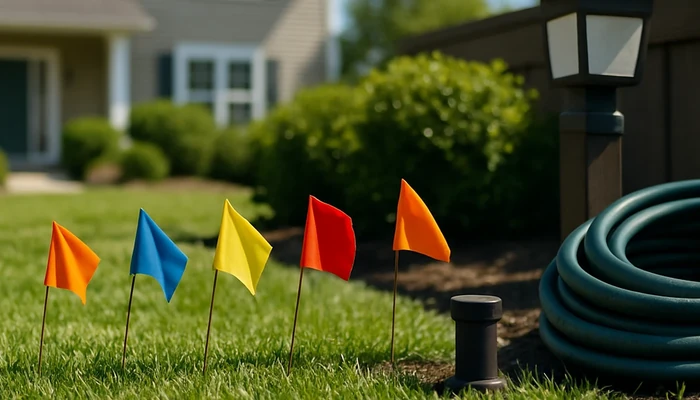
Within a few business days, utility companies or their agents visit your site to mark line locations with colored paint and/or flags. Each color indicates a different type of utility—yellow for gas, red for electric, blue for water, etc.—following industry standards.
Key reasons why utility locates matter:
- Legal requirement—Digging without a locate can lead to steep fines.
- Personal and public safety—Avoiding electrocution, gas leaks, or water main breaks.
- Preventing expensive mistakes—Utility repairs are rarely covered by insurance if you failed to call for a locate.
Even skilled professionals like those at Chicagoland Fence Pros depend on verified utility locates before breaking ground.
How to Request a Utility Locate in Chicago, Illinois
Requesting a utility locate is straightforward—a critical first step for any project digging below the surface. The steps include:
- Call 811 or visit your local 811 website (e.g., ICC Safe for code information).
- Submit a locate ticket, describing the work area and timeline (be specific).
- Wait for confirmation—utility companies have 2–3 business days to respond.
- Walk your property: locate and respect all markings (flags, paint, stakes).
- If in doubt, contact a professional fence contractor for help interpreting markings.
Pro tip: Take photos of the markings for your records. Weather, foot traffic, and time may fade or move paint or flags, and photos make for a helpful reference.
Sprinkler Lines: Why They’re So Often Overlooked
Unlike public utilities, sprinkler lines are usually installed after the home is built and rarely shown on property records or located by 811 services. This means:
- Homeowners must identify sprinkler and irrigation zones themselves.
- Sprinkler pipes often run only 8–12 inches deep—right where most fence posts go.
- Damage means costly repairs, water leaks, or losing control zones on your irrigation system.
If you have an irrigation system, locate all valve boxes, control heads, and lines connecting yard areas. Chicagoland Fence Pros recommends working with your sprinkler contractor or using low-pressure manual flushing to map unseen pipes.
Checklist: Protecting Your Sprinkler System During Fence Work
- Locate and flag all sprinkler heads, valve boxes, and visible lines
- Review the original irrigation plan or installer’s map (if available)
- If in doubt, turn on the system and observe all active zones—mark with flags or stakes
- Share this info with your fence contractor before digging
- After work is complete, test every zone for leaks or missed coverage
Lighting Cables: The Hidden Low-Voltage Threat
Low-voltage landscape lighting adds security and beauty, but these lines often snake just below the grass, at shallow depths. They’re easy to forget—and to slice through with post hole diggers or augers.
Unlike high-voltage wires or pipes, landscape lighting won’t usually trigger a life-threatening danger. But repairs can be frustrating, requiring splicing, replacement, or re-burying entire runs. And if you sever cables powering security lights, you risk leaving dark gaps after sundown—exactly what fences aim to prevent.
Tips for Lighting Cable Safety:
- Trace all visible fixtures back to the power supply
- Look for cable “humps” in grass or mulched beds—gently probe with a hand tool to confirm depth
- Mark all paths with colored flags or paint before work begins
- If cables are too shallow, this may be a good time to re-bury them to code-compliant depth (often ≥ 6 inch for low voltage)
Private vs. Public Utilities: Why Some Hazards Go Unmarked
The 811 service covers only certain utilities—primarily those owned and maintained by public companies. Private systems like:
- Irrigation lines (sprinkler/plumbing)
- Low-voltage lighting
- Pool plumbing and wiring
- Garage electrical subpanels or detached structures
…are not identified by utility locators unless you separately hire a private locating company. Homeowners are responsible for finding and marking these before installation begins.
Before digging, walk the perimeter and note any structures, detached garages, landscape features, or visible conduit/cabling. When in doubt, consult your original blueprints or bring in a pro.
Interpreting Utility Markings: What the Colors Mean
Each locate mark uses universal color codes, so you—or your contractor—know what to expect as you plan your layout:
| Color | Type of Utility |
|---|---|
| Red | Electric power lines, cables, conduit, and lighting cables |
| Yellow | Gas, oil, steam, petroleum, or gaseous materials |
| Blue | Potable water |
| Green | Sewer and drainage lines |
| Orange | Communication, alarm or signal lines, cable, or conduit |
| Purple | Reclaimed water, irrigation, and slurry lines |
| White | Proposed excavation sites |
| Pink | Survey markings |
Practical Steps: A Complete Pre-Installation Utility Checklist
A thorough checklist helps ensure your fence project starts and ends safely. Before breaking ground:
- Request a locate with 811; wait until all utilities are marked
- Mark private lines (sprinklers, lighting, garages, etc.) on your own
- Review all markings with your contractor
- Take photos as proof
- Plan your fence line to avoid obvious conflicts—move post locations by a few inches if necessary
- Keep in mind setbacks: some codes require certain distances from utility easements
- Test all systems (water, lights, sprinklers) after the fence work is complete
- Document any changes for future reference (and the next project)
Table: Common Underground Hazards and Prevention Tips
| Hazard | Prevention |
|---|---|
| BURIED GAS/ELECTRIC LINES | Always call 811 for an official locate |
| SPRINKLER LINES | Manually locate/flag with a system test; get installer’s plans if possible |
| LIGHTING CABLES | Trace from fixtures; probe and flag route before work |
| COMMUNICATION LINES | Follow orange marks and avoid digging near them |
| UNDOCUMENTED PRIVATE LINES | Hire a private locate company if needed; walk the yard thoroughly |
Consequences of Skipping Utility Precautions
Why do some homeowners skip these steps? Impatience, inexperience, or simply not knowing the risks. But the costs can be dramatic:
- Financial penalties: Fines or repair costs for utility damage
- Project delays: Unexpected repairs can halt progress for weeks
- Personal risk: Electric shock or hazardous gas exposure
- Neighborhood impact: Loss of services to neighbors, shared utilities
Being proactive isn’t just a good idea—it’s often the law. For more on code compliance and permitting procedures, refer to resources from industry organizations like ICC Safe and safety advisories archived in the NFPA Journal.
Realistic Expectations: Common Surprises Even After a Locate
No locate process is perfect. Sometimes, lines are unmapped (older properties), marked inaccurately, or shift over time due to settling. Sprinkler lines, lighting cables, and private utilities can be especially problematic.
What to expect:
- Occasional need to “pothole”—dig small, hand-dug holes to physically check for lines before using power tools
- Unmarked drains, abandoned pipes, or even old fence posts may surface
- Adjustments to fence layout to avoid clustered lines or congested utility corridors
Experienced fence installers, like the crew at Chicagoland Fence Pros, use careful probing and non-metallic post tools for sensitive areas. But no system is foolproof—any reputable contractor will talk transparently about possible complications upfront.
Working with Your Fence Contractor: What to Share and What to Expect
The best results come when homeowners and contractors are on the same page about utility risks. Before work starts:
- Share all utility locate documentation, photos, and private line details
- Discuss any uncertainties or odd features on your property
- Walk the planned fence route together, making hands-on adjustments as needed
- Review your city’s building codes (see informational hub step-by-step guide)
If a utility or unknown line is encountered during digging, a responsible contractor will stop and investigate rather than “just keep going.” Any needed rerouting is better to plan before materials are set in concrete!
Cost Considerations: How Utility Conflicts Can Affect Your Project Budget
How much more does it cost to plan carefully and deal with utility issues up front? Often, just a few hours of extra time, negligible compared to the cost of repairs after a mistake.
- Calling 811 is free
- Private locates typically cost $100–$400 depending on property size
- Repairing a severed irrigation line can run $200–$800 or more
- Utility strikes involving public infrastructure may cost thousands, plus city fines
Budgeting a few hundred dollars for safety is an easy win—compare that against expensive repairs or legal hassles! For a realistic look at how fence costs break down, see evaluating fencing installation costs.
Frequently Asked Questions: Utility Locates, Sprinkler Lines, and Lighting Cables
- What is a utility locate and why is it required?
- A utility locate is an official service that marks public underground utility lines—gas, electric, water—on your property so you can dig safely. In Illinois, and most states, it’s required by law before digging to prevent accidents, fines, and service outages.
- Does 811 mark all underground lines?
- No. 811 only covers public utilities. Private systems like irrigation, landscape lighting, pool plumbing, and separate garages must be marked by the homeowner or a private locator.
- How deep are most utility, sprinkler, or lighting lines buried?
- Utilities can vary from 1–4 feet (electric, water) to just 6–12 inches (sprinkler, low-voltage lighting). Always be cautious—even shallow lines can cause serious issues if damaged.
- What do I do if utility or irrigation lines run directly in the planned fence line?
- Discuss options with your fence contractor. Usually, minor adjustments in fence post placement (a few inches) can avoid conflict. In rare cases, rerouting may be required.
- Can damage to underground lines void my insurance or warranty?
- Possibly. Many insurers and fence warranties do not cover damage caused by failing to request a utility locate. Always process locates and keep records for peace of mind.
- Should I hire a professional for locating private lines?
- If you have concerns or lack plans for irrigation or lighting, hiring a private locating service is wise. It’s a small investment for large peace of mind.
- What if marks fade or get moved before the project starts?
- Take photographs when the marks are fresh and inform your contractor. Request re-marking if substantial time passes or after heavy rain.
- How do I test for damage after fence installation?
- Run all irrigation and lighting systems zone by zone. Check for leaks, non-working zones, or burnt-out fixtures. Address problems immediately to prevent further damage.
Conclusion: Peace of Mind with the Right Preparation
Fencing should bring you confidence, not surprises. By understanding the essential steps in “Utility Locates, Sprinkler Lines, and Lighting Cables: Preventing the Expensive Surprise,” you take control of your project—and your budget. Homeowners in Chicago, Illinois and beyond are encouraged to plan ahead, communicate with contractors, and treat every dig with respect for what’s beneath the lawn.
Want a headache-free process? Request a fence estimate or contact Chicagoland Fence Pros for expert advice on safe, code-compliant installation.
For more advice on specific fence materials that work in the Midwest, visit our guide to materials and climate.
About Chicagoland Fence Pros
About Chicagoland Fence Pros
Chicagoland Fence Pros is a professional fence company with over 15 years installing fences in the Chicago, Illinois area. Our team delivers best-in-class service for homeowners and businesses seeking security, privacy, and top-notch curb appeal. We specialize in wood, vinyl, aluminum, and steel fences for residential and commercial projects—always with an emphasis on code-compliance, honest advice, and durable craftsmanship. Chicagoland Fence Pros is fully licensed and insured, serving the greater Chicago area with transparency and pride.
fence company chicago illinois, residential fence near me, privacy residential fence, privacy residential fence Winnetka, residential fence replacement Oswego, residential fence repair Glenview, dog fence Elgin, residential fencing Marengo, garden fence Glendale Heights, pool fence Villa Park
